
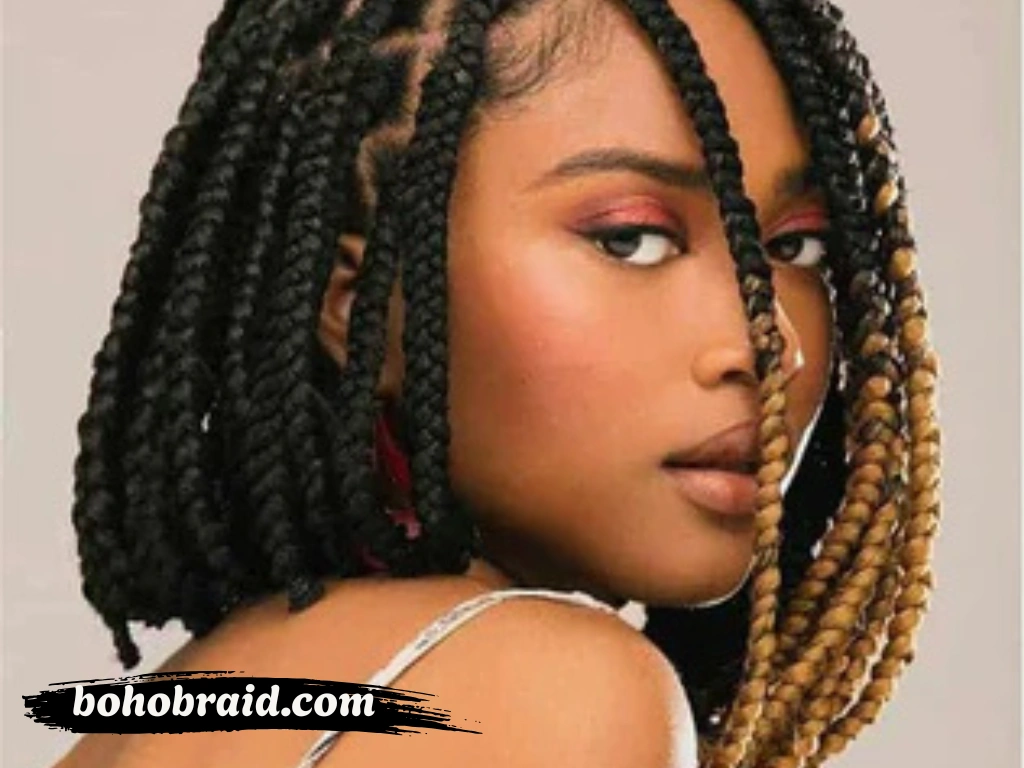
If you want a protective style that looks ultra-natural, lightweight, and versatile, small knotless braids are one of the best options. They’re known for a flatter base (no bulky knot), a more seamless blend, and—when installed correctly—less tension on the scalp than many traditional braided styles. That matters, because dermatologists consistently warn that tight hairstyles (including braids) can contribute to traction alopecia when tension is persistent or painful.
In this step-by-step guide, you’ll learn exactly how to choose the right braid size, prep your hair, communicate with your braider, and maintain your style for weeks—without sacrificing your hairline.
What Are Small Knotless Braids?
Small knotless braids are a knot-free version of box braids where the extension hair is fed in gradually, instead of starting with a visible knot at the root. The “small” part refers to the section size—smaller parts create more braids, a fuller look, and often more styling flexibility.
Why people love them
- Flatter, more natural base (especially in ponytails and updos)
- Lightweight feel (when installed with proper tension)
- Flexible parting options (box, triangle, brick-lay)
- High style variety (buns, half-up styles, curls added, accessories)
Real talk: “knotless” does not automatically mean “no tension.” Technique matters more than the style name. Dermatology guidance emphasizes that repeated pulling and tight styling can inflame follicles and lead to hair loss over time.
Small vs Medium vs Large Knotless: Which Size Should You Choose?
Choose small knotless braids if you want:
- A sleek, detailed finish and long-lasting “fresh” look
- More styling options (they wrap and stack beautifully)
- A style that can last several weeks with good maintenance
Choose medium/large if you want:
- Faster install time
- Lower cost
- Less weight (especially if you’re sensitive)
How long do knotless braids last?
Many hair brands and salons commonly estimate knotless braids can last up to ~3 months depending on size, hair texture, and care routine.
That said, for small knotless braids, most people find the “sweet spot” is often 6–10 weeks before frizz, slippage, and buildup make a refresh or takedown the healthier choice (especially around edges).
The Health Factor: How to Protect Your Edges and Scalp
Braids can be protective—or they can become a slow source of breakage if tension is too high or the style stays in too long.
Signs your braids are too tight
- Pain that lasts beyond 24–48 hours
- Small bumps, redness, or “pimples” along parts
- Headache or facial tightness
- You see hair being pulled from the root
Dermatologists note that hair loss from traction can become permanent if tension continues for too long—so if your scalp is screaming, it’s not “normal.”
Pro tip to tell your braider:
“I want small knotless braids, but please keep the perimeter and nape extra low-tension. If you see my scalp lifting, loosen it.”
Hair Prep Checklist (This Decides How Good Your Install Will Be)
A clean, stretched foundation helps your braids last longer and look neater.
24–48 hours before your appointment
- Cleanse your scalp thoroughly (remove sweat + product buildup)
- Deep condition to improve softness and reduce breakage
- Detangle gently from ends to roots
- Stretch your hair (blow-dry on low heat or banding method)
- Trim if needed (split ends cause tangling during takedown)
Avoid heavy oils right before braiding—they can make extension grip weaker and increase slippage.
Choosing Hair for Small Knotless Braids
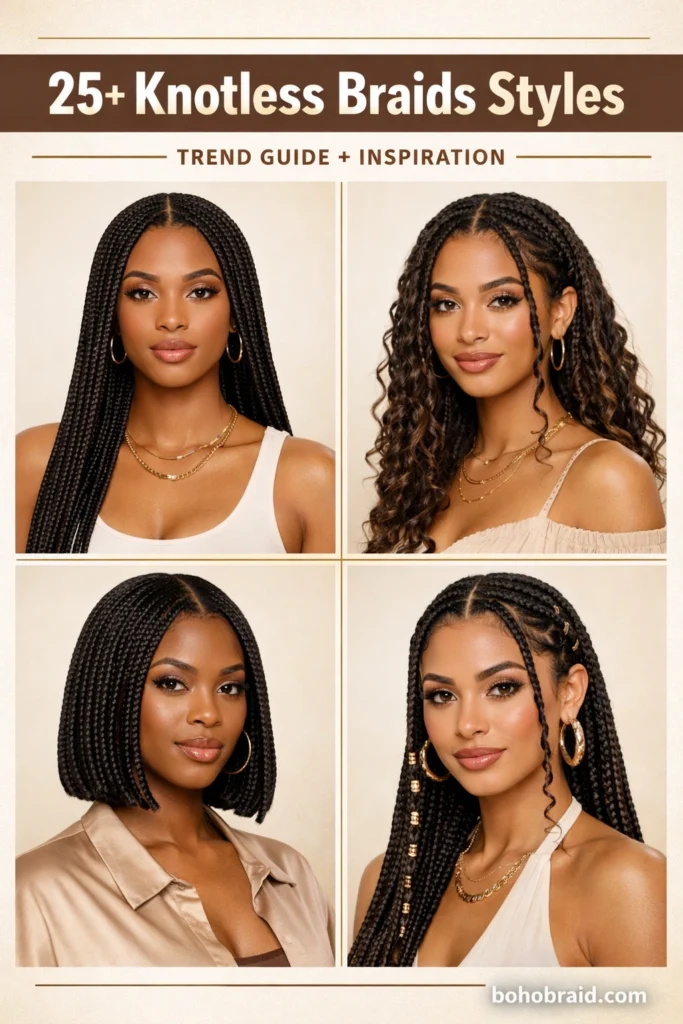
Best extension types
- Pre-stretched braiding hair (faster, cleaner finish)
- Lightweight synthetic fibers if you’re sensitive to heaviness
- Optional: human hair pieces for boho curls or a goddess finish
How much hair do you need?
For small knotless braids, you’ll usually need more packs than medium/large. Your exact number depends on:
- length (mid-back vs waist)
- density (fine vs thick)
- part size (micro-small vs standard small)
Rule of thumb: small = more braids = more hair + more time.
Parting Styles That Make Small Knotless Braids Look Expensive
Parting is the “invisible upgrade” that changes the whole vibe.
- Box parts: classic, clean, symmetrical
- Brick-lay parts: staggered pattern that looks fuller and hides scalp
- Triangle parts: trendy, bold, “Pinterest-ready” look
If you plan to wear high ponytails or buns, ask for brick-lay—it typically gives a more seamless look when hair is pulled up.
Small Knotless Braids Installation (What Happens in the Chair)
Here’s the simplified process your braider follows:
- Section & part the hair (box/brick/triangle)
- Start with your natural hair only (no knot at the base)
- Feed in extension hair gradually (creates the knotless look)
- Braid down to desired length
- Seal ends (hot water dip or alternative method)
- Finish & set (mousse, scarf wrap, edge gentle styling)
How long does it take?
Install time varies by braider speed, your hair density, and how small the parts are. Community reports often place small knotless installs in the multi-hour range (commonly around 4–8+ hours).
If you’re booking, assume a full session—and bring snacks.
Maintenance Routine: Keep Them Fresh Without Ruining the Roots
One reason people quit braids early isn’t the style—it’s itch, buildup, and frizz. This routine fixes that.
How often should you wash knotless braids?
Haircare experts commonly recommend washing every 2–3 weeks to remove buildup from sweat, oils, and products.
The easy cleansing method (low-frizz)
- Dilute shampoo with water in an applicator bottle
- Apply to scalp only (focus on parts)
- Massage gently with fingertips (not nails)
- Rinse carefully and squeeze water out (don’t rough towel)
- Use a light leave-in spray afterward
Moisture schedule (simple)
- 2–4x per week: water-based braid spray or leave-in mist
- 1–2x per week: very light scalp oil (if your scalp likes it)
- Daily (optional): edge hydration + soft brush, minimal gel
Night routine (the frizz killer)
- Wrap with a silk/satin scarf
- Or use a satin bonnet + pineapple method for length
- For extra sleekness: add mousse, then tie down 10–15 minutes
Styling Ideas for Small Knotless Braids
Small knotless braids are basically a styling playground. Try:
- Sleek high ponytail (wrap a braid around the base)
- Half-up half-down with face-framing pieces
- Low bun with braid cuffs
- Two braided buns (“space buns”)
- Side-swept braids with accessories
- Boho finish: add curled pieces for movement
If you’re adding curls, make sure the extra hair is lightweight, or it can increase tension at the roots over time.
Common Mistakes That Ruin Small Knotless Braids Fast
- Installing too tight (pain ≠ beauty)
- Skipping scalp cleansing (buildup causes itch + dullness)
- Overusing heavy gels/oils (sticky residue + faster grime)
- Keeping braids in too long (tangling + weak shedding release)
- Neglecting the perimeter (edges are the most fragile zone)
Safe Takedown: How to Remove Small Knotless Braids Without Breakage
- Cut extensions below your natural hair length
- Unravel gently from ends upward
- Detangle each section as you go (don’t wait until the end)
- Use conditioner or a detangling spray for slip
- After removing all braids: cleanse + deep condition + rest your hair
If you notice thinning at the hairline, dermatology guidance is clear: stop tight styles and give follicles time to recover.
FAQs
Are small knotless braids better than box braids?
They can be—mainly because the knotless method often creates a flatter base and can feel lighter. But the real “better” depends on tension, parting, and aftercare, not the label.
How long do small knotless braids last?
Many sources suggest knotless braids can last up to ~3 months, depending on hair type and care.
For small knotless braids specifically, many people aim for 6–10 weeks for the best balance of neatness and scalp comfort.
How often should I wash them?
Common expert advice is every 2–3 weeks to keep the scalp clean and reduce buildup.
Do knotless braids prevent traction alopecia?
No braid style “prevents” it by default. Traction alopecia is linked to prolonged tension from tight hairstyles, including braids and extensions.
Low-tension installs + breaks between styles are the real protection.
Conclusion
Small knotless braids are one of the best-looking, most versatile protective styles—when they’re installed low-tension and maintained like a scalp-first routine. Prioritize a clean foundation, smart parting, lightweight hair, and consistent cleansing. Your braids will look better, last longer, and your edges will stay happier for the next install.
