
Braids are one of the most timeless, versatile hairstyles in the world. From protective styles that help reduce daily manipulation to elegant looks for weddings and special occasions, there’s a braid for every vibe, hair texture, and skill level. In this complete guide, you’ll learn the types of braids that are most popular today, what makes each style unique, who it’s best for, and how to choose the right braid for your lifestyle.
Whether you’re a beginner learning your first three-strand braid or you’re looking for a new protective style, this article will help you confidently understand the best types of braids and how to wear them.
What Are Braids?
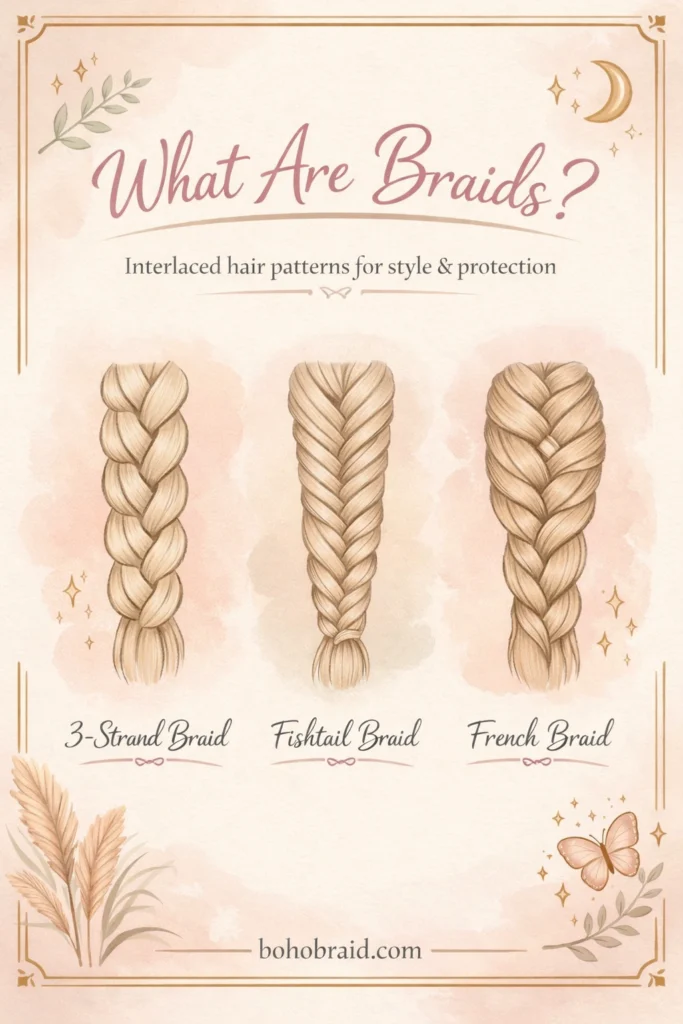
A braid is a hairstyle created by interlacing sections of hair in a structured pattern. Braids can be simple (like a basic three-strand braid) or complex (like cornrows, box braids, or fishtails). Some braids are mainly for fashion, while others are protective styles designed to help retain length by minimizing breakage.
Why braids are so popular:
- They can last from a few hours to several weeks (depending on the style).
- Many braided styles protect the hair from friction, tangling, and over-styling.
- Braids work for casual days, gym sessions, formal events, and everything in between.
How to Choose the Right Type of Braid
Before you pick a style, think about these factors:
Hair texture and length
Some braid styles hold best on textured hair (like cornrows), while others work beautifully on fine or straight hair (like French braids and fishtails).
Lifestyle and maintenance
If you want a low-maintenance style for weeks, consider protective braids like box braids or twists. If you want a quick everyday look, go for a French braid or a simple three-strand braid.
Scalp sensitivity
Tighter braided styles can cause discomfort if installed too tightly. If you have a sensitive scalp, choose looser styles or ask for a gentle installation.
Occasion
Romantic braids (waterfall, crown braids) are perfect for events, while sporty braids (Dutch braids) are great for workouts.
1) Three-Strand Braid (Classic Braid)
The three-strand braid is the foundation of most braid styles. It’s created by dividing hair into three sections and alternately crossing the outer strands over the middle strand.
- Best for: Beginners, all hair types, quick daily styling
- Why it’s great: Simple, fast, and versatile
- Pro tip: Add a little texturizing spray to help slippery hair grip better.
2) French Braid
A French braid starts at the top of the head and gradually adds hair into the braid as you go down. It lies flat and looks neat, elegant, and polished.
- Best for: Medium to long hair, work/school styles, special events
- Why it’s great: Keeps hair secure and tidy
- Pro tip: For a softer look, gently “pancake” the braid by tugging the sides.
3) Dutch Braid (Reverse French Braid)
A Dutch braid is like a French braid, but the strands cross **under** the middle section instead of over, making the braid pop outward in a 3D effect.
- Best for: Sports, thick hair, statement braids
- Why it’s great: Holds well and looks bold
- Pro tip: Dutch braids are ideal for “double braids” (two braids from front to back).
4) Fishtail Braid
A fishtail braid uses two sections instead of three. You alternate taking a small piece from the outside of one section and crossing it to the other.
- Best for: Medium to long hair, boho looks, date nights
- Why it’s great: Looks intricate but becomes easy with practice
- Pro tip: Make it messier on purpose for a trendy, relaxed finish.
5) Rope Braid (Two-Strand Twist Braid)
A rope braid is made by twisting two sections of hair in one direction and wrapping them around each other in the opposite direction.
- Best for: Quick styling, ponytails, all hair types
- Why it’s great: Fast and sleek
- Pro tip: Use a lightweight gel for a smooth, shiny rope braid.
6) Waterfall Braid
A waterfall braid is a French-braid variation where you drop one strand each time, letting pieces fall like a “waterfall” through the braid.
- Best for: Weddings, parties, romantic styles
- Why it’s great: Elegant and eye-catching
- Pro tip: Curl the loose hair underneath to enhance the waterfall effect.
7) Crown Braid (Halo Braid)
A crown braid wraps around the head like a headband or halo. It can be created using French or Dutch braiding techniques.
- Best for: Formal events, protective styling for ends, day-to-night looks
- Why it’s great: Beautiful, timeless, and practical
- Pro tip: Secure with bobby pins and a light hairspray for all-day hold.
8) Milkmaid Braid
Milkmaid braids typically involve two braids wrapped over the head and pinned in place, giving a classic, vintage-inspired look.
- Best for: Medium to long hair, elegant styling
- Why it’s great: Keeps hair off the face, very photo-friendly
- Pro tip: Create two Dutch braids for a fuller, more dramatic shape.
9) Boxer Braids
Boxer braids are usually two tight Dutch braids running from the front to the back of the head. They’re sporty, clean, and long-lasting for active days.
- Best for: Workouts, travel days, busy schedules
- Why it’s great: Extremely secure, minimal flyaways
- Pro tip: Apply edge control or gel at the hairline for a crisp finish.
10) Ladder Braid
A ladder braid is a more advanced style that creates a “ladder” effect using a combination of braiding and dropped sections.
- Best for: Intermediate to advanced braiders, statement hairstyles
- Why it’s great: Unique and visually impressive
- Pro tip: Practice on a mannequin head if you’re learning.
11) Cornrows
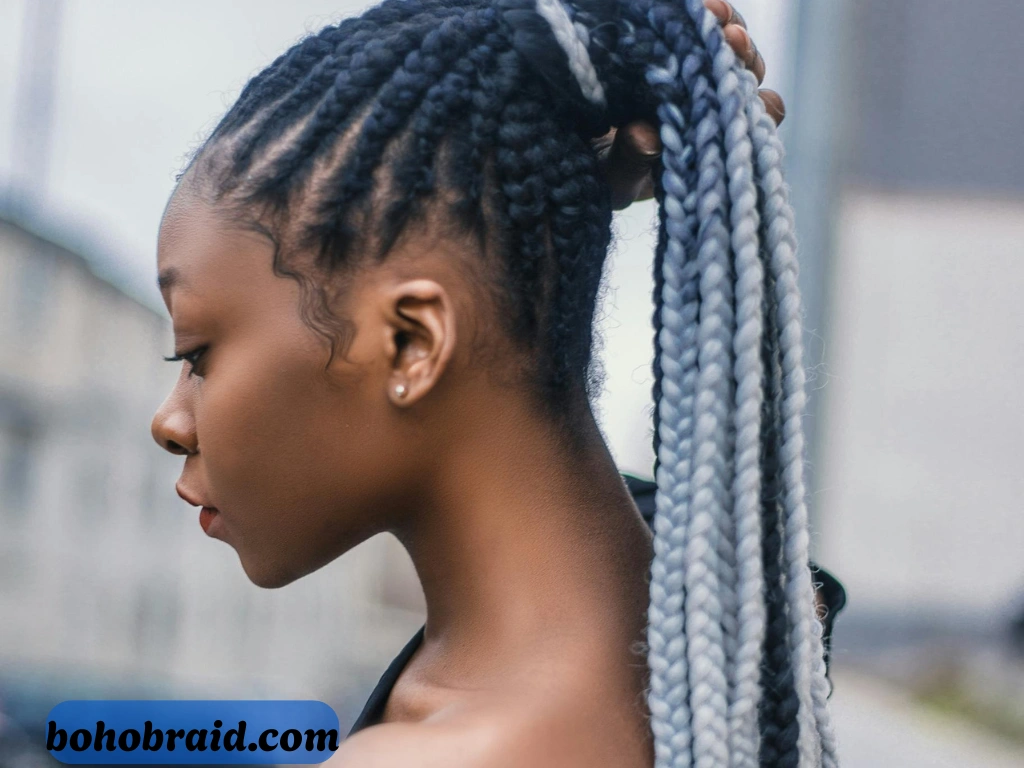
Cornrows are tight braids braided close to the scalp in straight lines or creative patterns. They’re a classic protective style and a foundation for many braided looks.
- Best for: Textured hair, protective styling, long-lasting results
- Why it’s great: Low maintenance once installed, versatile patterns
- Pro tip: Cornrows should never feel painfully tight—tension matters.
12) Box Braids
Box braids are individual braids sectioned into squares (“boxes”). Often installed with braiding hair extensions, they can last for weeks.
- Best for: Protective styling, length retention, low-daily effort
- Why it’s great: Many styling options (buns, ponytails, half-up looks)
- Pro tip: Keep the scalp clean with diluted shampoo and a scalp-friendly oil.
13) Knotless Braids
Knotless braids are similar to box braids but start with your natural hair first and gradually feed in extensions. This creates a flatter, more natural start and often reduces tension.
- Best for: Sensitive scalps, natural-looking installs
- Why it’s great: Lighter feel and cleaner finish
- Pro tip: Ask for smaller sections near the hairline for a realistic look.
14) Goddess Braids
Goddess braids are larger, thicker cornrows (often braided close to the scalp) with a bold, elegant look. They can be styled into updos or patterns.
- Best for: Special occasions, protective styling, bold looks
- Why it’s great: Regal appearance, less time than small cornrows
- Pro tip: Use mousse to reduce frizz and keep them looking fresh.
15) Fulani Braids
Fulani braids are inspired by traditional African braiding styles, often featuring cornrows at the top with individual braids at the back, plus beads or accessories.
- Best for: Protective styling with personality
- Why it’s great: Culturally inspired, stylish, customizable
- Pro tip: Choose lightweight accessories to avoid pulling.
16) Micro Braids
Micro braids are very small, delicate individual braids that can take longer to install but offer lots of movement and styling flexibility.
- Best for: People who want a very natural flow
- Why it’s great: Can be styled like loose hair
- Pro tip: Be cautious with removal—take your time to avoid breakage.
17) Passion Twists (Twist Braid Style)
While technically twists rather than traditional braids, passion twists are often included in braid conversations. They’re soft, curly twists that look romantic and modern.
- Best for: Protective styling, soft boho look
- Why it’s great: Lightweight and trendy
- Pro tip: Sleep with a satin bonnet to preserve curl definition.
18) Senegalese Twists
Senegalese twists use two strands and usually include extensions. The result is sleek, rope-like twists that look polished.
- Best for: Protective styling, clean look
- Why it’s great: Elegant, long-lasting, less frizz than some styles
- Pro tip: Use a foam mousse weekly to keep twists neat.
How to Make Braids Last Longer
No matter which braid style you choose, these habits help you keep them fresh:
Protect at night: Satin bonnet or silk pillowcase reduces frizz and dryness.
Moisturize smartly: Use a light leave-in or braid spray; avoid heavy buildup.
Clean the scalp gently: Diluted shampoo or scalp cleansing foam works well.
Avoid over-tension: Tight styles can cause breakage and traction alopecia.
Refresh edges and frizz: Mousse + a scarf wrap for 10–15 minutes helps smooth.
Common Mistakes to Avoid With Braids
Braiding too tight
Pain is a warning sign. Tight braids can lead to scalp irritation and hair loss around the hairline.
Ignoring scalp care
A healthy scalp supports healthy hair. Even in protective styles, scalp care matters.
Leaving braids in too long
Most protective braids are best kept 6–8 weeks (sometimes less depending on hair condition and braid size). Leaving them too long can lead to matting and breakage during removal.
Skipping trim or detangling before installation
Healthy ends and properly detangled hair lead to cleaner braids and less tension.
Conclusion
With so many types of braids available, you can always find a style that matches your hair type, skill level, and lifestyle. If you want an everyday braid, start with a three-strand, French, or Dutch braid. If you want a protective style that lasts for weeks, box braids, knotless braids, cornrows, or twists can be excellent options—especially when installed with the right tension and maintained with scalp care.
Try one new braid style at a time, take pictures of what you love, and don’t be afraid to experiment. Braids aren’t just a hairstyle—they’re a form of self-expression.
