
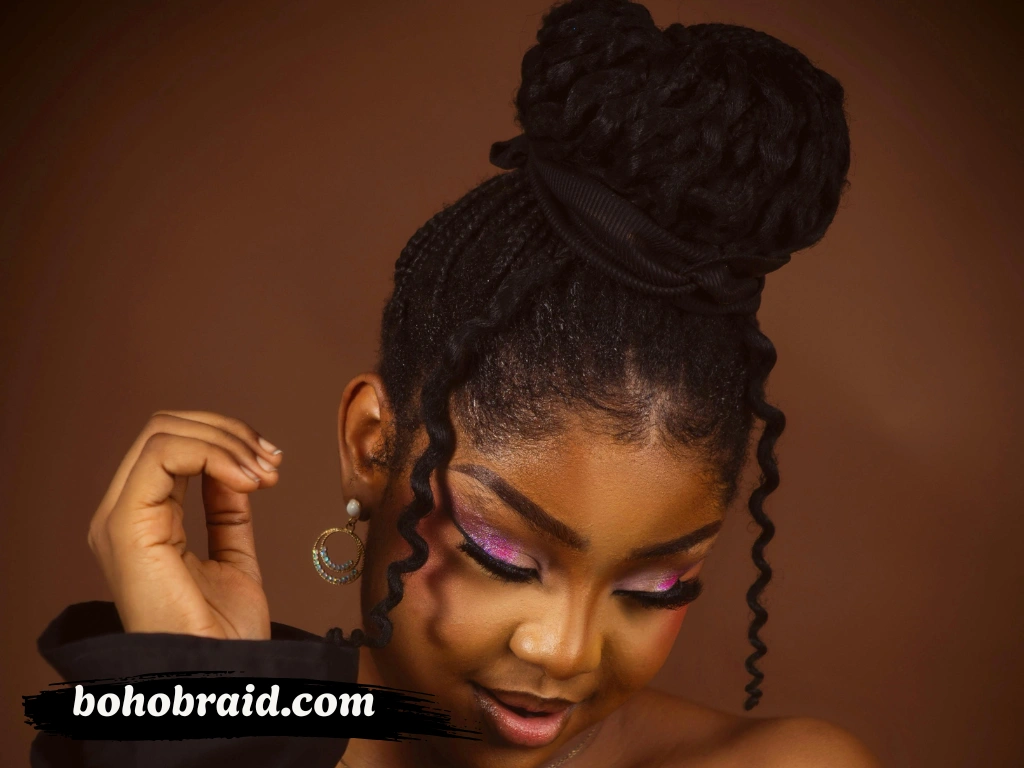
Fulani goddess braids are one of the most-requested protective styles right now because they blend Fulani-inspired parting and accessories with the soft, curly “goddess/boho” finish—so you get structure and movement. If you want a look that photographs beautifully, works for everyday wear, and still respects scalp health, this guide breaks down exactly how to choose, install, and maintain fulani goddess braids without the common mistakes that cause itching, buildup, or tension.
You’ll also find practical timelines (how long to wear them), stylist checklists, and care routines grounded in dermatologist guidance about tension and traction alopecia.
What Are Fulani Goddess Braids?
Fulani goddess braids combine two ideas:
- Fulani braids (Fulani-inspired style): Traditionally associated with the Fulani people of West Africa, often featuring a signature braid layout and decorative elements like beads or cowries.
- Goddess braids (boho/goddess effect): Braids with loose curly strands added through the braid or left flowing at the ends for a soft, undone look.
The result: clean sections and striking symmetry from the Fulani influence + airy curls that make the style look more “lived-in,” romantic, and less boxy than classic braids.
Why People Love This Style
- Versatility: elegant enough for events, casual enough for daily wear
- Visual softness: curls frame the face and add dimension
- Protective potential: reduces daily manipulation when installed and maintained correctly (key point!)
Fulani Goddess Braids vs. Regular Fulani Braids vs. Standard Goddess Braids
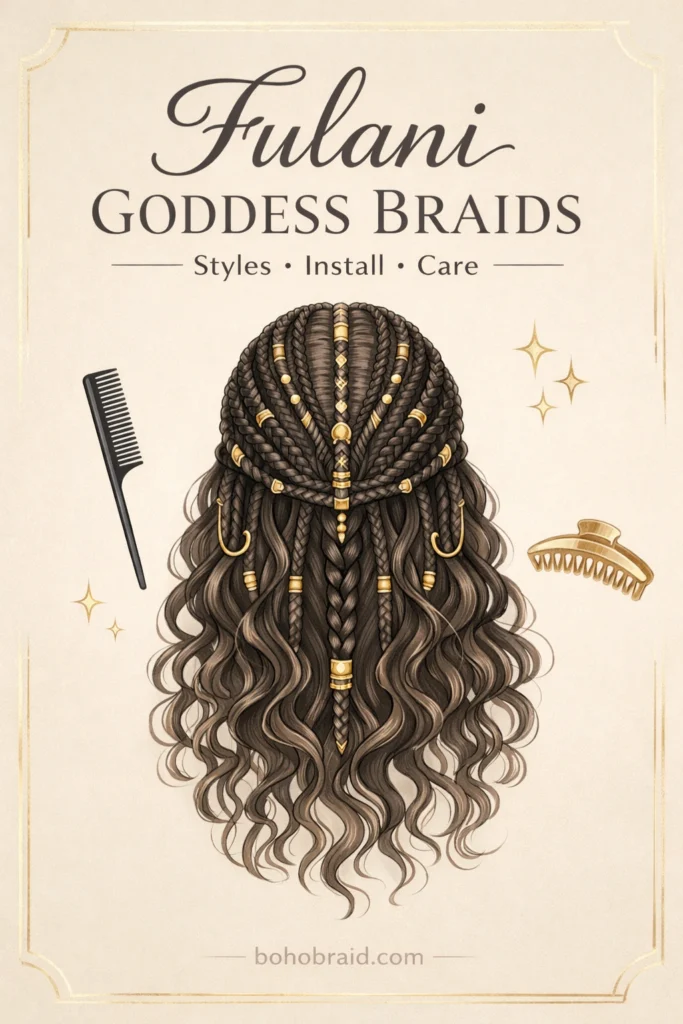
This is where many clients get confused—so here’s the simplest comparison:
- Regular Fulani braids: usually sleeker, more uniform braids, accessories are the statement.
- Standard goddess braids: often box-braid based with curly strands; the braid pattern can be more generic.
- Fulani goddess braids: Fulani-style parting/structure plus curly strands strategically placed (mid-shaft curls, ends, or both).
Best choice if you want: the cultural-inspired layout and the trendy boho texture in one look.
Choosing the Best Version for Your Face Shape, Hair Type, and Lifestyle
Fulani goddess braids are customizable. The best set isn’t “the prettiest photo”—it’s the one that matches your daily routine.
Size (Small, Medium, Large)
- Small: most detailed and long-lasting visually, but can increase install time and tension risk if too tight.
- Medium: the sweet spot for most people—balanced fullness, easier takedown.
- Large/Jumbo: faster install, lighter on tension in many cases, but may look “older” sooner.
Length
- Shoulder to mid-back: practical, less pulling, easier sleep and wash routine
- Waist length+: dramatic, but heavier—be extra careful with tension and accessories
Curly Hair Add-Ins (synthetic vs human hair)
- Human hair curls: softer, more natural, less frizzing for many people—usually pricier
- Synthetic curls: budget-friendly, but can tangle/frizz faster depending on fiber and care
Lifestyle Filters
- Gym/sweaty routine → pick a curl type that won’t mat easily, commit to scalp cleansing
- Swimming → plan for extra maintenance; curls can tangle if not protected
- Busy schedule → medium size + fewer loose curls often lasts “neater” longer
Install Breakdown: What to Ask Your Braider (and What to Avoid)
If you want fulani goddess braids that look good and keep your edges safe, the install matters more than the hair brand.
Before Your Appointment (Prep Checklist)
- Clarify your scalp condition (flakes, sensitivity, eczema/psoriasis tendencies)
- Wash and thoroughly dry hair (many stylists prefer blow-dried/stretch hair for clean parts)
- Bring reference photos showing: parting pattern + curl placement + braid size
During Install (Non-Negotiables)
- Tension should never hurt. Pain, bumps, or headaches are red flags for excessive pull. Dermatology guidance warns that repeated tight styles can contribute to traction alopecia.
- Ask for edge-friendly tension at the hairline: looser grips, thicker sections, or knotless approach where possible.
- Keep accessories lightweight—heavy adornments can add pulling force.
Time + Cost (Realistic Expectations)
Install time often ranges widely depending on size/length; many stylists quote several hours for goddess/boho braid installs. Costs also vary by location and complexity; published beauty estimates commonly place goddess braid services in a broad range (example: $150–$300 in some markets).
Maintenance Routine (Scalp Health + Frizz Control + Curl Definition)
This section is the difference between braids that look amazing for weeks—and braids that feel itchy by day 6.
1) Cleanse Your Scalp (Yes, Even With Braids)
Product buildup + sweat is one of the fastest paths to itching and dullness. Aim for gentle scalp cleansing regularly (frequency depends on activity). Beauty and dermatologist sources emphasize scalp hygiene and not ignoring irritation.
Easy method:
- Dilute shampoo or use a scalp cleanser in an applicator bottle
- Focus on scalp lines/parts
- Rinse thoroughly (a handheld shower head helps)
- Pat-dry with microfiber towel, then air-dry fully
2) Moisturize Without Overloading
Lightweight hydration beats heavy grease.
- Use a water-based leave-in spray (light mist)
- Seal lightly on scalp if needed (small amount; avoid clogging)
3) Protect at Night
- Silk/satin scarf or bonnet
- Optional: loose pineapple/bun to reduce curl tangling
This reduces frizz and helps curls stay defined longer.
4) Keep the Curls Pretty
Curly strands are the “goddess” signature—also the first thing to frizz.
- Use a small amount of mousse/foam and scrunch curls
- Finger-detangle gently (avoid ripping through curls)
- If curls mat, isolate the section and detangle with conditioner + water
How Long Should You Keep Fulani Goddess Braids In?
Most hair-care guidance commonly recommends removing braids around 6–8 weeks, with many sources advising not to push beyond ~8 weeks to reduce matting, buildup, and breakage during takedown.
A practical timeline:
- Weeks 1–2: best “fresh” look
- Weeks 3–5: still great with light maintenance and edge touch-ups
- Weeks 6–8: consider removal or professional refresh, especially if you notice shedding tangles, heavy buildup, or tension signs
If you feel pain, see bumps, or notice thinning near edges, stop and reassess—tight hairstyles are a known risk factor for traction alopecia.
Takedown Day: Prevent Breakage and Shedding Tangles
A lot of “braids damaged my hair” stories happen during removal.
Safer takedown steps:
- Pre-soak braids with a slippery conditioner + water mix
- Cut only below natural hair length (if you cut)
- Unbraid slowly from ends upward
- Detangle each section immediately after unbraiding
- Wash, then deep condition
- Give hair a break before reinstalling another high-tension style
Best Fulani Goddess Braids Styles to Try (Quick Inspiration List)
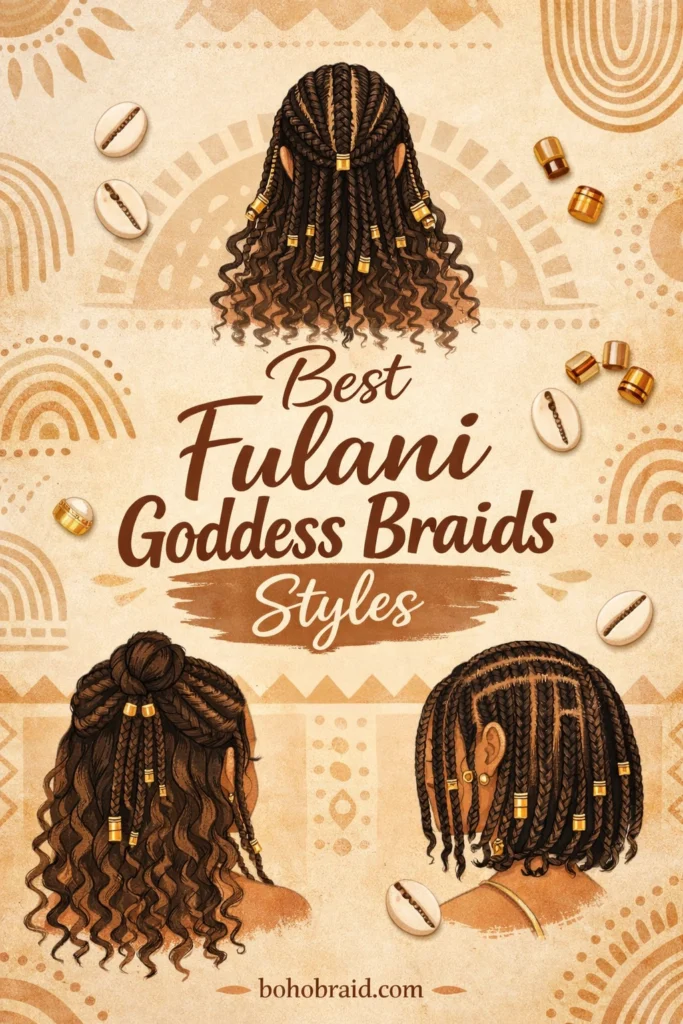
- Classic Fulani center braid + side feed-ins with curly ends
- Knotless Fulani goddess braids (lighter feel at the roots)
- Fulani goddess braids with cuff beads/cowries (keep them lightweight)
- Half-up half-down with curly tendrils
- Bob-length fulani goddess braids (super wearable, less heavy)
- Pop of color: caramel/burgundy curls on dark braids for dimension
FAQs
Are fulani goddess braids good for hair growth?
They can support length retention by reducing daily manipulation, but they’re not magic. Growth happens at the scalp; your results depend on tension, scalp health, cleansing, and takedown technique.
Do fulani goddess braids damage edges?
They can if installed too tightly or worn too long, especially with heavy accessories. Dermatology sources warn that repeated tension can contribute to traction alopecia.
What hair should I use for fulani goddess braids?
Many people use braiding hair for the braid base plus curly hair (synthetic or human hair) for the goddess pieces. Your best choice depends on budget, frizz tolerance, and how long you plan to wear the style.
Can I wash fulani goddess braids?
Yes—gentle scalp cleansing helps reduce itching and buildup. Keep curls protected and dry thoroughly to avoid odor and irritation.
How can I refresh the style without reinstalling?
Use mousse/foam for frizz control, re-lay edges gently, and consider a partial touch-up around the perimeter if needed. If tension is present, prioritize comfort over a “snatched” look.
Conclusion
Fulani goddess braids are the best of both worlds: a bold braid pattern with soft, romantic curls. The “secret” to making them last isn’t piling on products—it’s a smart install, low tension, consistent scalp hygiene, and a careful takedown. If you treat them like a protective style (not a set-it-and-forget-it style), you’ll get the beauty and keep your hair and edges in a healthier place long-term.
