
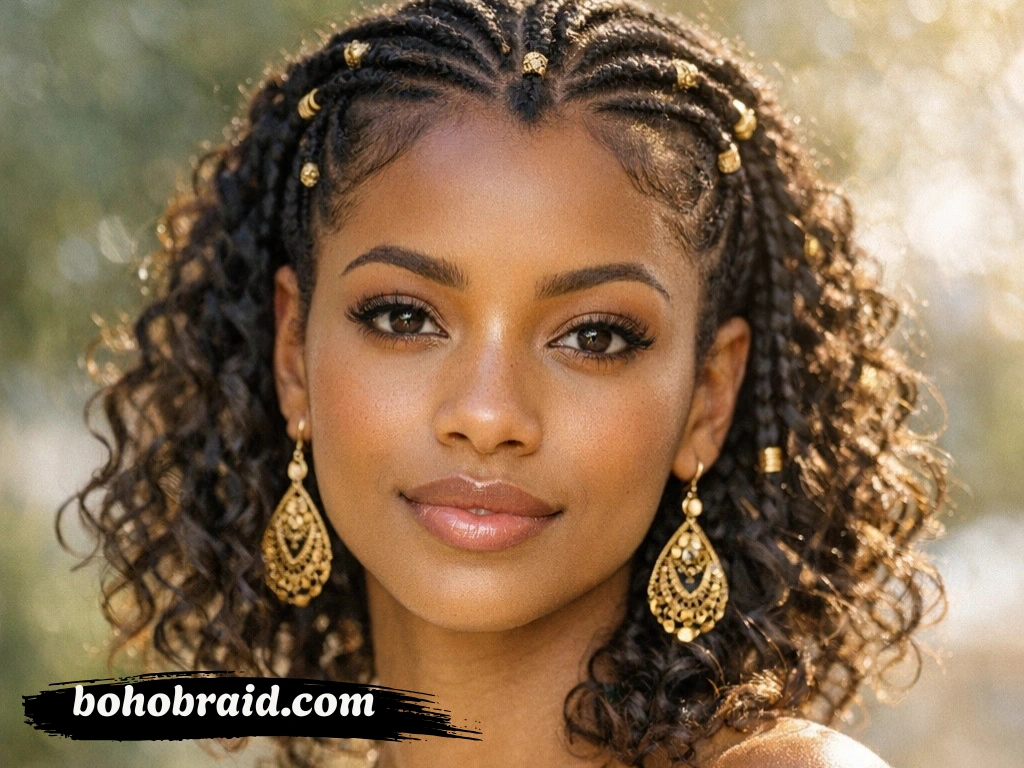
If you’ve been searching for a protective style that looks fresh, feminine, and ultra-wearable, fulani flip over braids might be your next go-to. This look blends the signature details of Fulani-inspired braiding—clean parts, scalp braids, and a signature front moment—with the modern “flip-over” finish that lets you sweep your braids to one side for instant volume and face-framing drama.
The best part? Fulani flip over braids can be customized for short, medium, or long lengths, and they work with curls, beads, or sleek ends depending on your vibe.
In this guide, you’ll learn exactly what they are, how to request them at a salon, how to install them step-by-step, and how to maintain them so they stay neat and lightweight for weeks.
What Are Fulani Flip Over Braids?
Fulani flip over braids are a modern variation of Fulani-inspired braids that feature a defined front section designed to be swept (“flipped”) to one side. Traditional Fulani styles often include one or more cornrows going straight back, plus individual braids and decorative elements like beads or cuffs. The flip-over version keeps those classic details, but the styling focuses on creating a side-swept braid curtain—often achieved by installing braids with a deliberate parting plan (like a deep side part or a flexible middle-to-side part) and leaving a slightly lighter, movable top section.
Many stylists pair this look with knotless braids for a flatter, more natural finish, or add curly hair pieces for a boho effect. The result is a protective style that can look polished for everyday wear and glamorous for photos—without requiring complicated daily styling.
Why Fulani Flip Over Braids Are So Popular
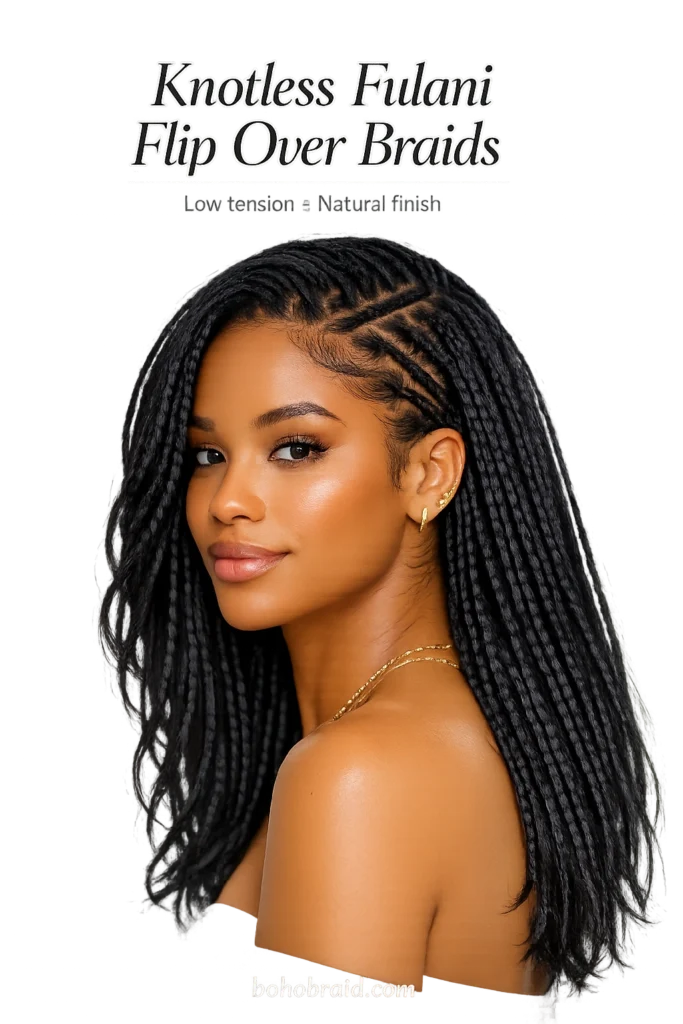
Fulani flip over braids aren’t just a trend—they’re practical. Here’s why they’re winning:
- Instant volume + shape: Flipping braids to one side gives a fuller look without teasing or heat.
- Face-framing effect: The front section naturally highlights cheekbones and softens the hairline.
- Protective and low manipulation: Once installed, you’re not styling daily with tension or tools.
- Highly customizable: Add curls, beads, a heart-shaped part, stitch braids, or extra length.
- Photogenic from every angle: The flip-over creates a “finished” look even on casual days.
If you want a style that looks like you tried—without actually trying every morning—this is it.
Best Hair Types and Lengths for Fulani Flip Over Braids
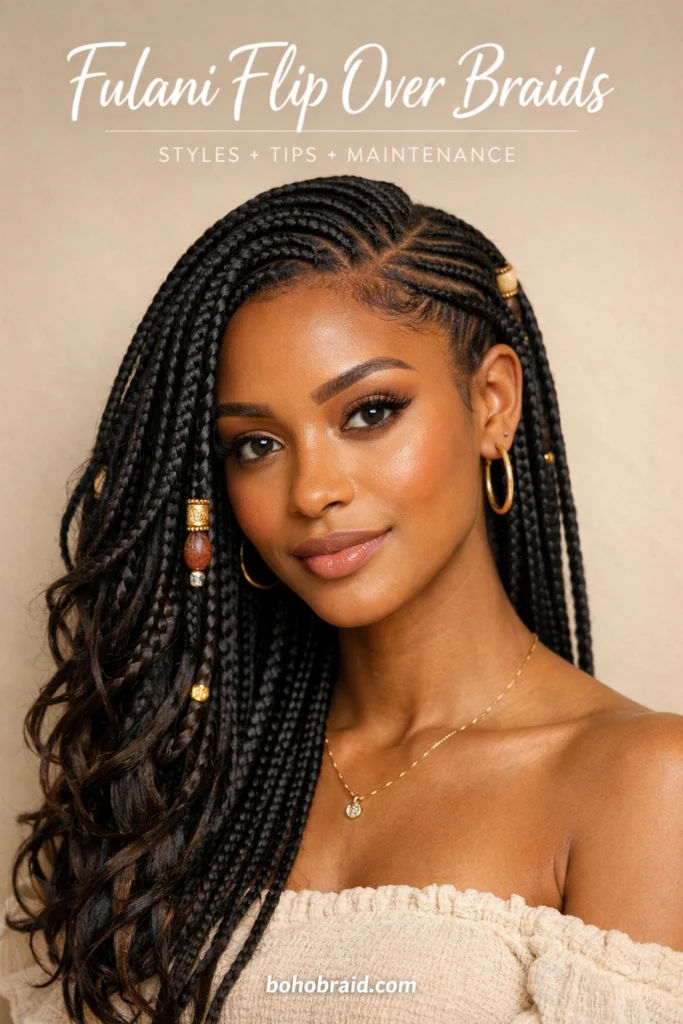
The good news: fulani flip over braids work across many hair textures, including natural, relaxed, and transitioning hair. What matters most is scalp health, tension control, and how the braids are anchored.
Ideal candidates
- Natural hair (Type 3 and Type 4 especially)
- Fine hair (with smaller sections and lightweight extensions)
- Thick hair (with clean parting and controlled tension)
- Short to medium hair (using knotless technique and strong foundation)
Length options
- Shoulder length: Lightweight, easier maintenance, super wearable
- Mid-back: Most popular balance of movement + drama
- Waist length: Statement look, but heavier—requires careful installation
Pro tip: If you’re sensitive to tension, ask for knotless fulani flip over braids and avoid ultra-heavy hair packs.
What to Ask for at the Salon (So You Actually Get the Look)
When you say “Fulani,” stylists may interpret it differently. Use this simple checklist to describe your ideal fulani flip over braids clearly:
- “I want Fulani-inspired stitch braids in the front, with individual braids in the back.”
- “I want a deep side part (or flexible middle part) for a flip-over effect.”
- “Please do knotless (if you want less tension and flatter roots).”
- “Braids: small/medium (choose your size).”
- “Optional: add boho curls (human hair) or keep ends sleek.”
- “Add accessories: beads, cuffs, or leave it minimalist.”
If you bring reference photos, choose ones that show:
- the parting pattern, 2) the hairline/front detail, and 3) the flipped final look.
Fulani Flip Over Braids: What You’ll Need (DIY-Friendly)
If you’re installing at home, prep your tools first:
- Braiding hair (pre-stretched is easiest)
- Rat-tail comb + clips for sectioning
- Braiding gel or pomade (for clean parts)
- Edge control (light hold)
- Braid mousse (for finishing)
- Boho curls (optional: human hair for braids)
- Hot water + towel (for sealing ends)
- Satin scarf + bonnet (for setting)
Optional but helpful: a mirror setup (front + back) and a friend for the parting.
Step-by-Step: How to Install Fulani Flip Over Braids
1) Start with healthy prep (don’t skip this)
Clean hair lasts longer. Do:
- Clarifying shampoo (especially if product buildup exists)
- Deep conditioner
- Thorough detangle
- Stretch hair (blow-dry on low/medium with heat protectant or braid-out)
2) Map the flip-over part first
The flip-over look depends on parting. Choose one:
- Deep side part: strongest flip-over drama
- Soft middle part that can shift: versatile styling
- Diagonal part: trendy, lifts the front naturally
Create a front triangle or curved section where you want the braid curtain to fall.
3) Create the Fulani foundation
Most Fulani-inspired layouts use:
- 1–3 stitch braids/cornrows going straight back (center or side)
- Optional feed-in cornrow framing one side
- The rest: individual braids (knotless or traditional)
Keep parts clean and consistent—this style looks best with sharp sectioning.
4) Install the flip-over braids on the top/front
In the “flip zone,” use:
- Slightly smaller sections so the braids move easily
- Knotless technique for flexibility and a flatter finish
- Controlled tension at the root (snug, not painful)
This is the key: the flip-over section should be lighter and more movable than the rest.
5) Finish the back with matching size and density
Continue with individual braids toward the back. You can:
- Keep the same braid size for uniformity, or
- Go slightly larger in the back to reduce install time and weight
6) Optional: Add boho curls
For boho fulani flip over braids, add curls at:
- The front flip section (most impact)
- Mid-length throughout for soft texture
- Ends only for a lighter look
7) Set and seal
- Mousse the braids
- Wrap with a scarf for 10–20 minutes
- Dip ends in hot water (if synthetic hair allows)
- Snip flyaways carefully (don’t cut your natural hair)
Maintenance Routine: Keep Fulani Flip Over Braids Fresh for Weeks
A good routine makes fulani flip over braids look new longer.
Night routine (5 minutes)
- Lightly moisturize scalp (not daily—2–3x/week is enough)
- Tie down edges and front section with a satin scarf
- Wear a bonnet or sleep on a satin pillowcase
Scalp care (2–3x/week)
Use a lightweight oil or braid spray. Focus on:
- itchy spots
- part lines
- hairline (gentle, minimal product)
Refresh method (weekly)
- Apply mousse
- Wrap with scarf
- Use warm dryer air for a few minutes (optional)
When to take them down
Most people wear them 4–6 weeks comfortably. Remove sooner if:
- scalp is irritated
- edges feel stressed
- excessive buildup develops
Styling Ideas: How to Wear Fulani Flip Over Braids
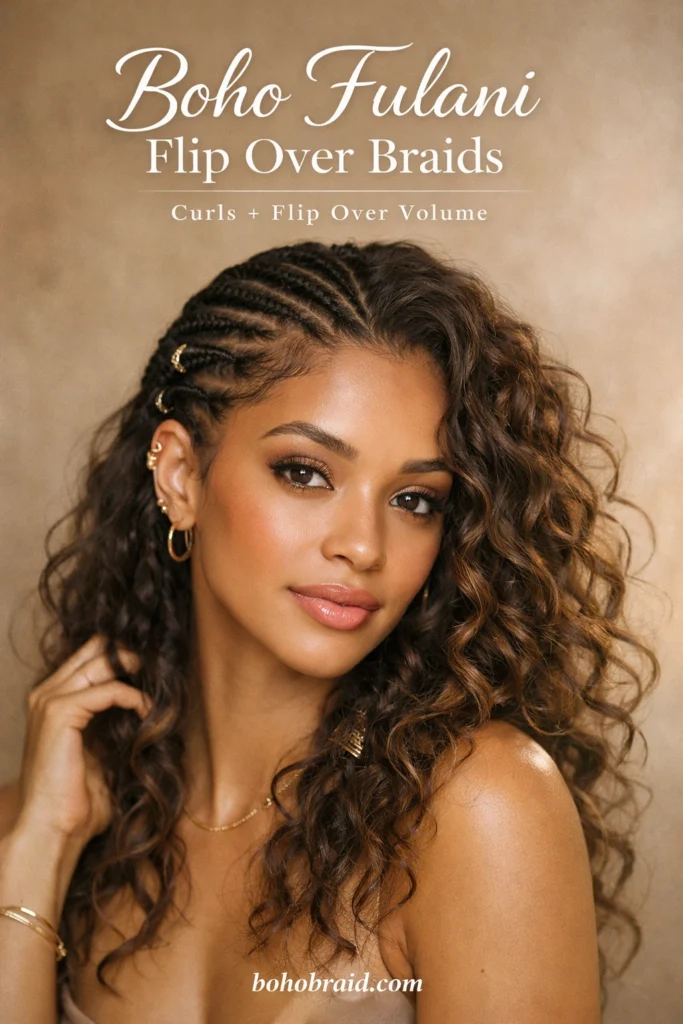
One reason fulani flip over braids rank high in “most wearable” protective styles is the variety:
- Classic flip-over: deep side sweep, big volume
- Half-up half-down: keep the flip, lift the crown
- Low ponytail: sleek, professional, still face-framing
- Claw clip twist: fast and cute, minimal tension
- Side bun: keeps the flip detail visible
- Accessorized front: beads/cuffs on 2–4 face braids
Quick tip: For the smoothest flip-over, lightly mist with water + mousse, then brush the braids gently with your fingers into place.
Common Mistakes to Avoid
- Too much tension at the hairline: causes soreness and edge stress
- Heavy extension packs: the flip section should be lightweight
- Messy parting: Fulani styles rely on clean lines for that premium look
- Over-oiling the scalp: leads to buildup and itch
- Skipping wrap time: scarf-setting is what keeps roots neat
FAQs
How long do fulani flip over braids take to install?
Typically 3–6 hours, depending on braid size, length, density, and whether you add boho curls.
Are fulani flip over braids good for thin edges?
Yes—if done knotless with low tension. Ask your stylist to keep the hairline gentle and avoid tiny, tight parts on the edges.
Can I wash my hair with fulani flip over braids?
You can cleanse the scalp carefully using diluted shampoo or a scalp cleanser. Focus on the scalp and rinse gently. Always dry thoroughly to avoid odor and buildup.
What’s the difference between fulani flip over braids and knotless flip over braids?
Fulani flip over braids include Fulani-inspired front cornrows/stitch braids and a Fulani pattern, while knotless flip-over braids may be all individual braids without the Fulani foundation.
Do I need human hair for the boho curls?
For the softest, most natural curls that resist tangling, many people prefer human hair, but synthetic curly pieces can work with the right care.
Conclusion
If you want a protective style that’s stylish, flexible, and easy to wear daily, fulani flip over braids are a top-tier choice. The secret is in the plan: a clean Fulani-inspired foundation plus a lightweight front section designed to move. Whether you go sleek and minimal or boho with curls and accessories, this style gives you that “done” look the moment you flip your braids to the side—no heat, no stress, no long morning routine.
