
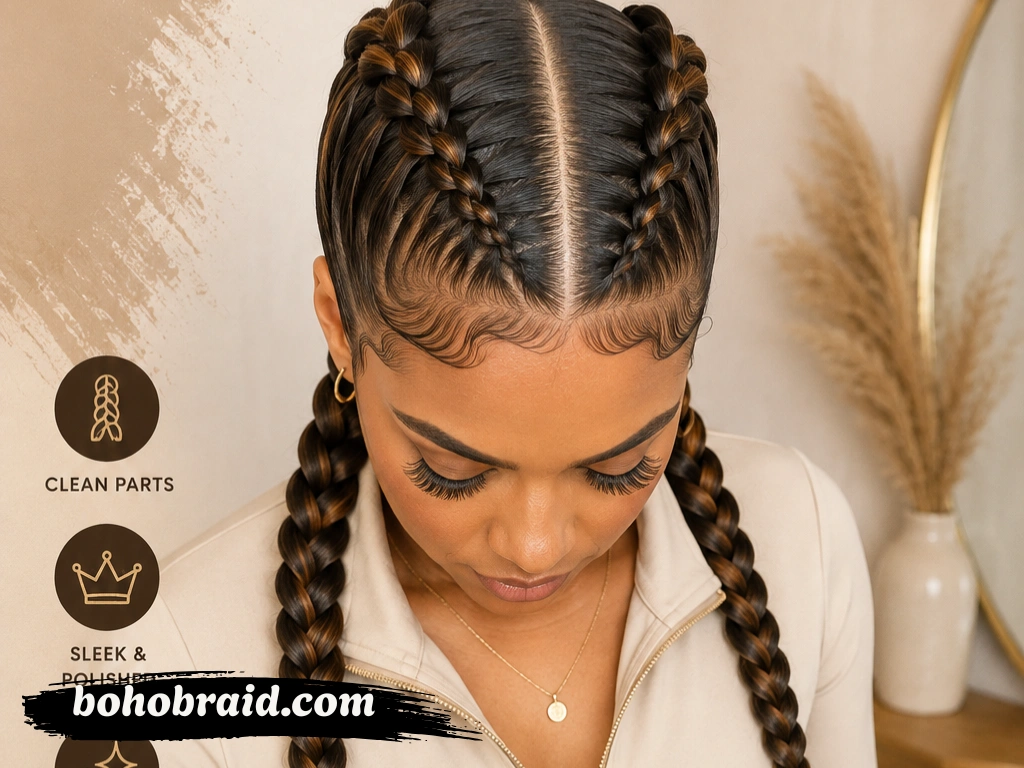
A Dutch braid is one of the most recognizable braided hairstyles, loved for its raised, dimensional appearance and versatility. Unlike a traditional French braid, the strands are crossed underneath one another, making the braid sit prominently on top of the hair. This simple technique can be used to create everything from casual everyday braids to polished ponytails, romantic updos, and sporty double-braid hairstyles.
Whether you are learning how to Dutch braid for the first time or searching for fresh Dutch braid hairstyles, there are countless ways to customize the look for different hair lengths, textures, and occasions. Below, you will discover nine stylish Dutch braid ideas, along with practical tips for achieving a cleaner, longer-lasting finish.
1. Classic Dutch Braid
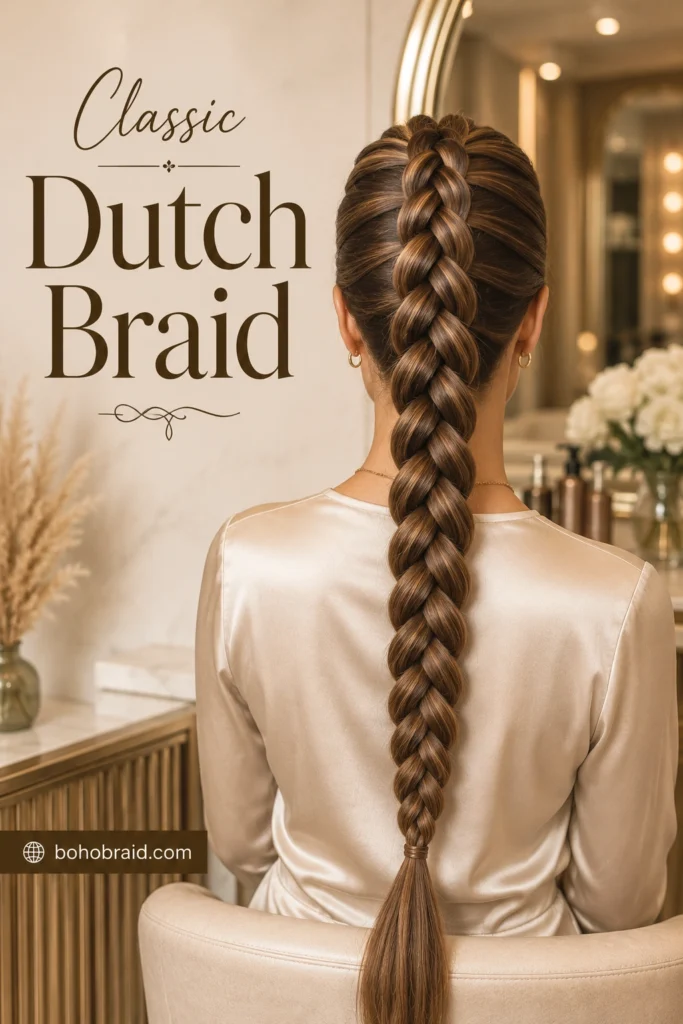
The classic Dutch braid is the perfect place to start if you want to understand the basic technique behind this popular hairstyle. It usually begins near the crown and continues down the back of the head, creating a bold braid that appears to sit above the surrounding hair.
To create the look, divide a small section of hair into three strands. Instead of crossing the outside strands over the middle strand, pass them underneath while gradually adding more hair from each side.
This underhand technique gives Dutch braids their signature three-dimensional appearance.
Classic Dutch braids work especially well for medium to long hair because there is enough length to showcase the structure of the braid. You can leave the braid tight and polished or gently pull the edges outward for a softer, fuller effect.
A classic Dutch braid is ideal for:
- Everyday hairstyles
- School or work
- Gym sessions
- Casual weekends
- Travel days
- Outdoor activities
For better control, detangle the hair before braiding and use a small amount of styling cream or lightweight gel to reduce flyaways.
2. Double Dutch Braids
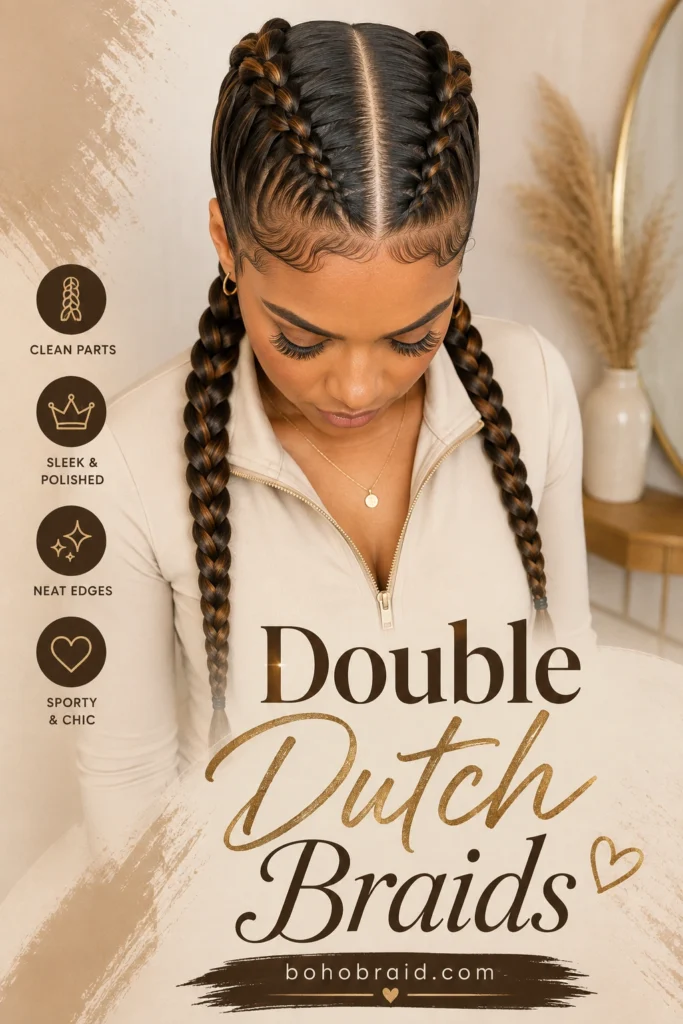
Double Dutch braids are one of the most popular variations of the hairstyle. Instead of creating one braid down the center of the head, the hair is divided into two sections, with one Dutch braid created on each side.
This hairstyle is sometimes associated with sporty or street-style looks, but it can easily be adapted for casual, elegant, or festival-inspired outfits.
Begin by creating a clean center part from the forehead to the nape. Secure one side while working on the other. Start the first braid near the hairline and gradually add small sections of hair as you continue toward the back.
Repeat the same process on the opposite side.
Double Dutch braids are especially useful when you want a hairstyle that keeps the hair secure throughout the day. They can also help create beautiful waves when the braids are removed after several hours.
For a more dramatic finish, gently loosen the outer edges of each braid. This technique, often called pancaking, can make the braids appear thicker and more voluminous.
3. Dutch Braid Ponytail
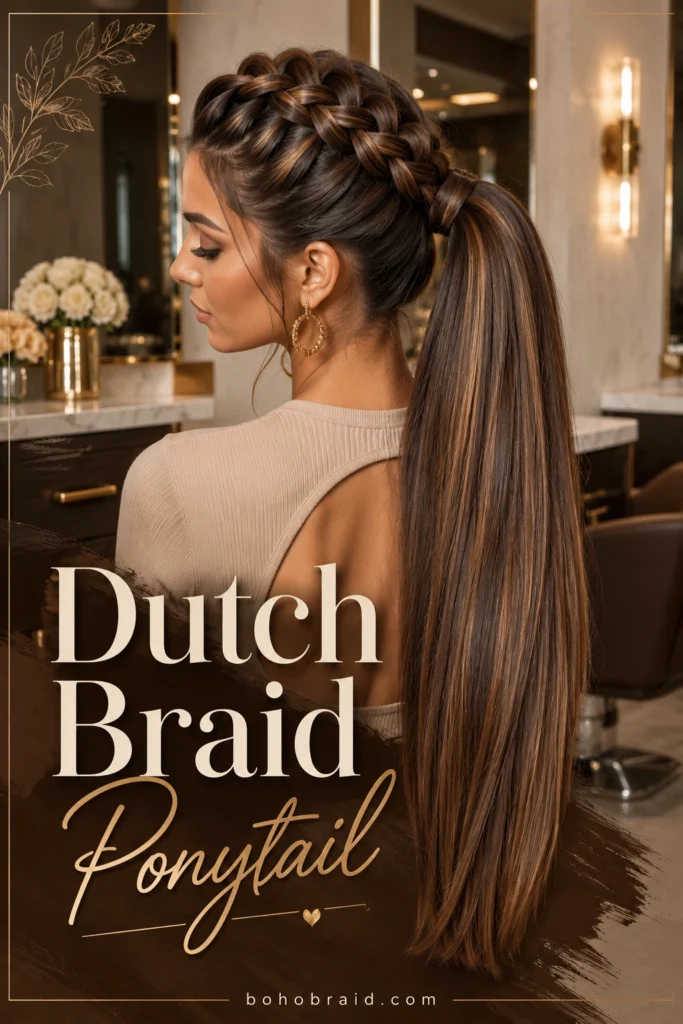
A Dutch braid ponytail combines the detailed appearance of a braid with the practicality of a ponytail. It is a great choice when you want your hair pulled away from your face without creating a fully braided hairstyle.
One popular version starts with a Dutch braid at the top of the head. The braid continues toward the crown before being gathered together with the remaining hair into a high or mid-height ponytail.
You can also create Dutch braids along the sides of the head and connect them into one ponytail at the back.
For a sleek style, smooth the ponytail with styling gel and wrap a small section of hair around the elastic.
For something more relaxed, leave the ponytail textured or curled.
A Dutch braid ponytail works beautifully for:
- Workouts
- Summer hairstyles
- School
- Brunch
- Festivals
- Casual parties
It is also an excellent option for second-day hair because the braid can help disguise areas that may no longer look freshly styled.
4. Dutch Braid with a Bun
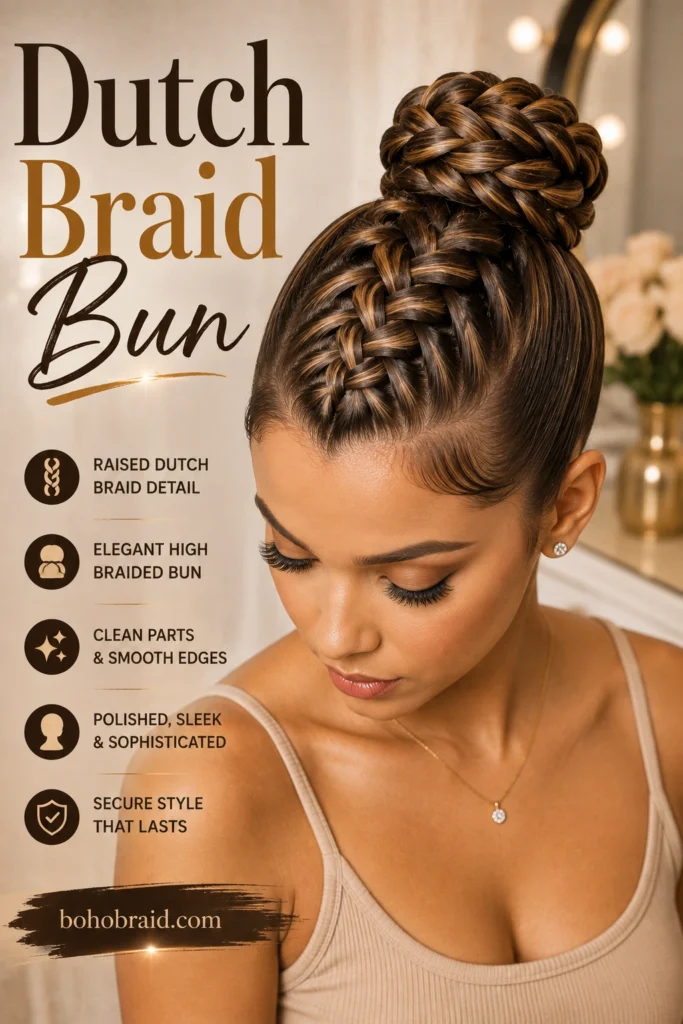
A Dutch braid bun offers a polished combination of texture and structure. The braid adds visual interest, while the bun keeps the hairstyle neat and sophisticated.
There are several ways to create this style.
One option is to create a Dutch braid beginning at the front hairline and continuing toward the crown. Once you reach the desired position, gather all the hair into a high bun.
Another popular variation is the upside-down Dutch braid. In this hairstyle, the braid begins at the nape of the neck and travels upward toward the crown before ending in a bun.
This version is especially striking because the braid remains visible from the back.
You can create:
- A sleek high bun
- A messy textured bun
- A braided bun
- A low Dutch braid bun
For weddings, parties, or formal events, adding decorative pins, pearls, or small accessories can give the hairstyle a more elegant finish.
5. Dutch Braid Half-Up Hairstyle
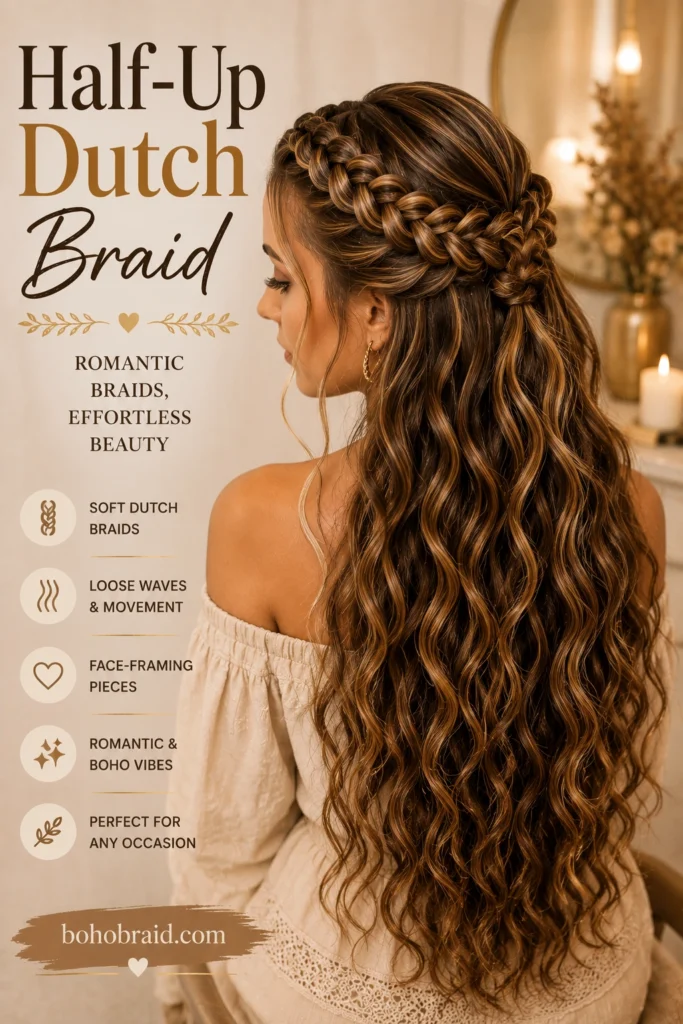
A half-up Dutch braid hairstyle is a softer alternative to fully braided styles. It allows you to keep most of your hair loose while still adding texture around the crown.
To create the style, take a section of hair from each side near the temples. Create small Dutch braids and guide them toward the back of the head.
The braids can then be joined using a small elastic, decorative clip, or barrette.
Another variation involves creating one central Dutch braid beginning near the forehead and ending at the crown while leaving the rest of the hair loose.
This hairstyle works particularly well with:
- Loose curls
- Beach waves
- Straight hair
- Natural texture
For a romantic appearance, gently loosen the braid and leave a few soft pieces of hair around the face.
The half-up Dutch braid can work for weddings, date nights, festivals, birthdays, or everyday hairstyles when you want something more interesting than a basic half-up ponytail.
6. Side Dutch Braid
A side Dutch braid creates an elegant asymmetrical hairstyle that works especially well with longer hair.
Instead of beginning directly at the center of the forehead, start the braid slightly toward one side. Continue adding hair while guiding the braid diagonally around the head.
Depending on the direction of the braid, it can finish near the opposite shoulder or continue down one side of the hair.
Side Dutch braids look particularly beautiful when slightly loosened because the fuller braid creates a romantic, effortless appearance.
This hairstyle pairs well with:
- Maxi dresses
- Casual outfits
- Wedding guest looks
- Summer fashion
- Festival outfits
You can also leave a few face-framing strands loose for a softer effect.
If your hair is naturally fine, using a small amount of texturizing spray before braiding can provide additional grip and help the braid appear fuller.
7. Dutch Braid with Curls
Combining a Dutch braid with curls creates a beautiful contrast between structured braiding and soft texture.
One of the easiest ways to create this style is by making a Dutch braid along the crown or side of the head while leaving the remaining hair loose and curled.
Another option is to create two small Dutch braids near the hairline and connect them at the back while allowing the curls to fall naturally underneath.
The style works especially well for special occasions because it feels more decorative than a traditional braid while still looking natural.
Popular variations include:
- Dutch braid with loose curls
- Side Dutch braid with curls
- Half-up Dutch braid with curls
- Double Dutch braids with curly ends
- Dutch braid crown with curls
If you are using a curling iron or other heated styling tool, apply heat protection beforehand.
For naturally curly hair, you may only need a curl-defining product to enhance the existing texture.
8. Dutch Braid Crown
A Dutch braid crown wraps around the head to create an elegant halo-like appearance. It is one of the most impressive Dutch braid hairstyles and works beautifully for weddings, festivals, formal events, and summer occasions.
The hairstyle typically begins near one side of the head. As you continue braiding, follow the natural shape of the hairline while gradually incorporating new sections of hair.
Once the braid circles the head, the remaining length can be secured underneath the braided section with bobby pins.
A Dutch braid crown can look polished or deliberately relaxed.
For a softer bohemian effect, gently loosen the braid and pull out a few small face-framing pieces.
You can also add accessories such as:
- Small flowers
- Decorative pins
- Pearls
- Gold hair cuffs
- Bridal hair accessories
Because crown braids involve braiding around the entire head, they may require more practice than a basic Dutch braid. Using two mirrors can make it easier to see the back sections while styling.
9. Loose and Voluminous Dutch Braid
A loose Dutch braid is perfect when you prefer a softer hairstyle with more volume. Instead of keeping the braid extremely tight, the sections are gently expanded after the braid is finished.
The technique starts with a regular Dutch braid. Once secured, carefully pull the outer edges of each braided section.
Work gradually from the bottom toward the top.
Avoid pulling too aggressively because this can cause the braid to lose its structure.
The result is a fuller braid that can make even relatively fine hair appear thicker.
For additional volume, consider using:
- Dry shampoo
- Texturizing spray
- Volumizing mousse
- Light backcombing near the crown
Loose Dutch braids are particularly popular for romantic hairstyles, bohemian looks, festivals, engagement photos, and casual summer outfits.
They also pair beautifully with subtle highlights or dimensional hair color because the raised braid helps showcase different tones throughout the hair.
Dutch Braid vs. French Braid: What Is the Difference?
Although Dutch braids and French braids use similar three-strand techniques, the direction in which the strands are crossed creates a noticeable difference.
With a French braid, the outside strands are crossed over the center strand. This causes the braid to blend more closely into the surrounding hair.
With a Dutch braid, the outside strands are crossed underneath the center strand. The result is a raised braid that appears to sit on top of the hair.
Because of its dimensional structure, the Dutch braid often looks more prominent and textured.
Both techniques can be adapted into ponytails, buns, half-up hairstyles, crowns, and double braids.
If you already know how to French braid, learning the Dutch braid technique may simply require practicing the opposite crossing motion.
How to Make a Dutch Braid Look Better
Creating a clean Dutch braid becomes easier with practice, but a few styling techniques can improve the final result.
Start with thoroughly detangled hair. Knots can make it difficult to create even sections while braiding.
Keep the amount of hair you add to each section relatively consistent. Uneven sections can cause the braid to look unbalanced.
Maintain steady tension while braiding. Pulling too tightly may feel uncomfortable, while braiding too loosely can make the style fall apart.
Once the braid is complete, gently loosen the edges if you want additional volume.
A small amount of hairspray can help control flyaways and keep the braid looking neat throughout the day.
Most importantly, do not worry if your first attempts are not perfect. Dutch braiding requires coordination between both hands, and the technique usually becomes significantly easier with repetition.
Conclusion
The Dutch braid is a timeless hairstyle that can be adapted to almost any occasion. Its distinctive raised appearance makes it ideal for creating everything from simple everyday braids to dramatic ponytails, romantic half-up hairstyles, braided crowns, and elegant buns.
Beginners can start with a classic Dutch braid before experimenting with styles such as **double Dutch braids**, Dutch braid ponytails, side braids, or Dutch braids with curls.
The secret to achieving a beautiful result is consistent sectioning, steady tension, and regular practice. Once you understand the basic underhand braiding technique, you can customize Dutch braid hairstyles to suit your hair length, texture, personal style, and occasion.
FAQs
What is a Dutch braid?
A Dutch braid is a three-strand braid created by crossing the outside strands underneath the center strand while gradually adding hair. This technique creates a raised braid that sits visibly on top of the hair.
Is a Dutch braid the same as a French braid?
No. The techniques are similar, but the strands move in different directions. French braid strands cross over the center section, while Dutch braid strands cross underneath it.
Are Dutch braids difficult for beginners?
Dutch braids can feel challenging at first because you need to hold several sections while adding new hair. However, most beginners improve quickly with consistent practice.
How long does hair need to be for Dutch braids?
Dutch braids can be created on many hair lengths, although medium and long hair usually provide more styling options. Shorter hair may require smaller sections or additional pins to keep loose pieces secure.
