
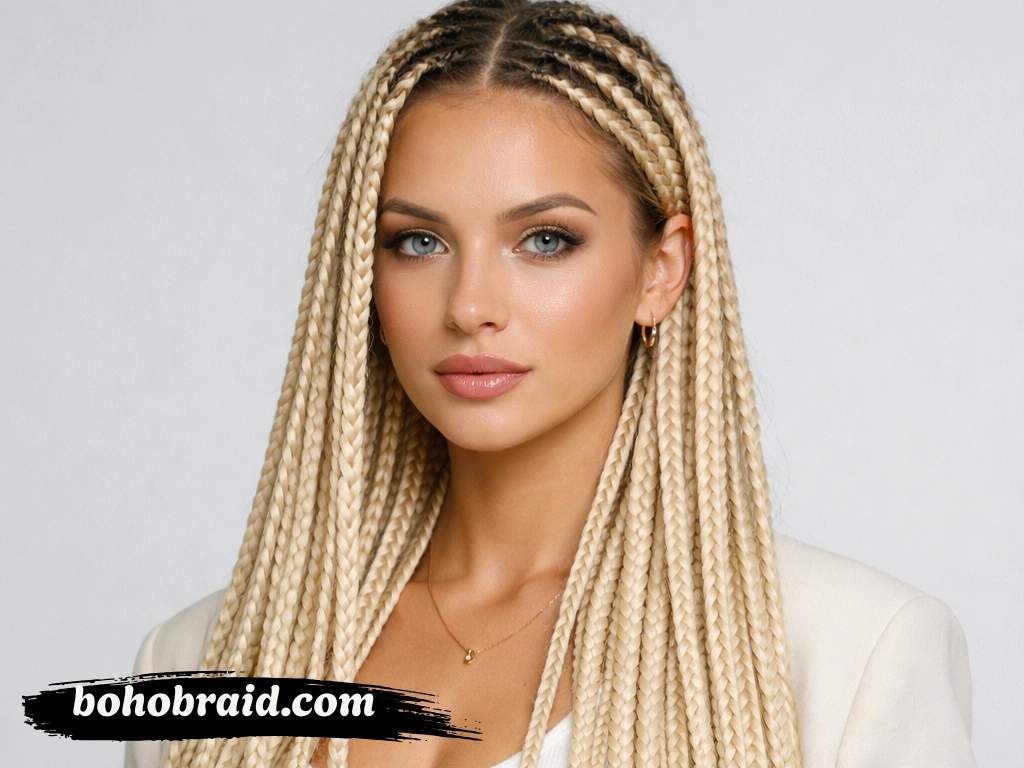
Blonde box braids are one of the most eye-catching ways to wear a protective style—bright, versatile, and instantly uplifting on camera and in real life. But going blonde isn’t only about picking a pretty shade. The right tone (honey, ash, champagne, platinum), the right braid method (traditional vs. knotless), and the right maintenance routine all matter for scalp comfort, braid longevity, and—most importantly—hairline health. Dermatology organizations repeatedly warn that tight braids and extensions can contribute to traction alopecia (hair loss from constant pulling), so blonde box braids should look good and feel safe.
In this guide, you’ll get a practical, step-by-step plan—shade selection, prep, install tips, upkeep, and removal—plus stylist-level ideas to keep blonde box braids fresh without sacrificing your edges.
Why Blonde Box Braids Are Trending
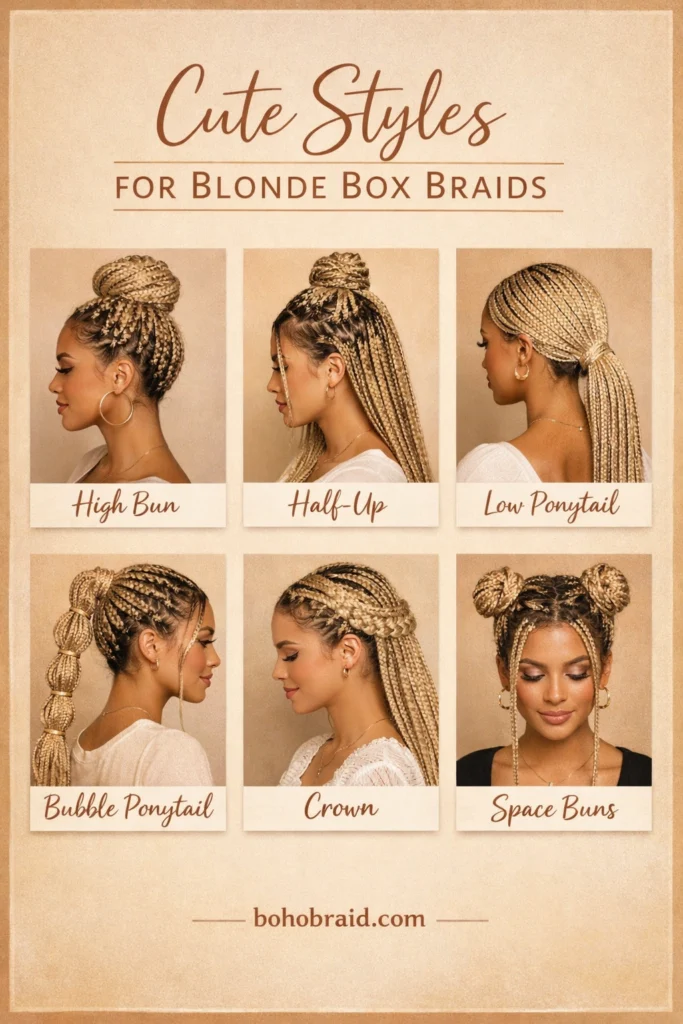
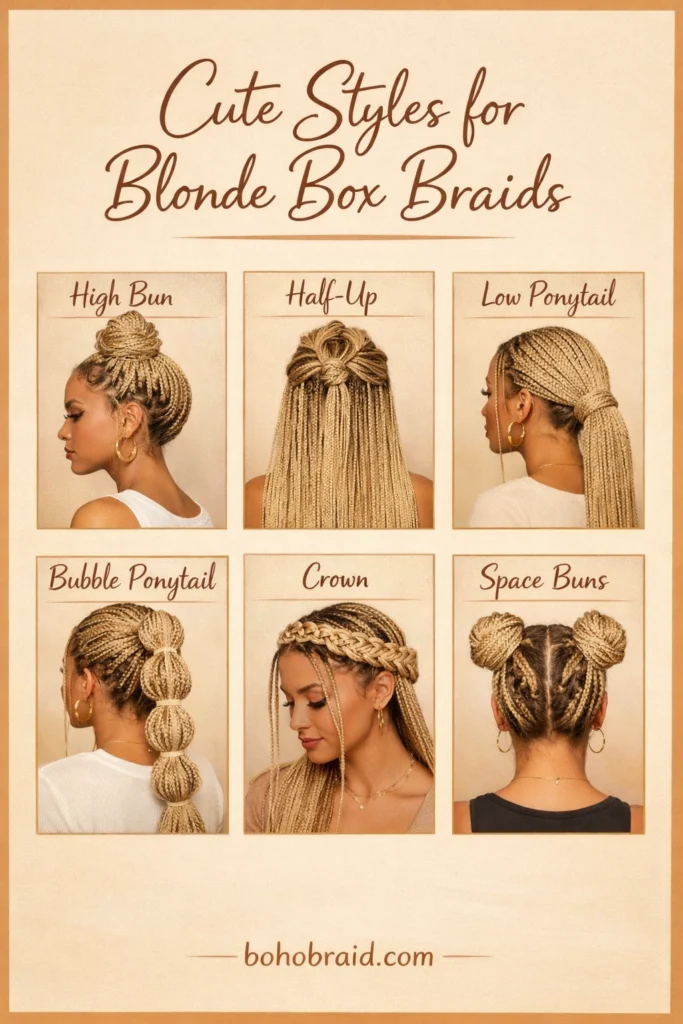
Blonde box braids work because they’re customizable: you can go soft and natural (honey blonde), cool and modern (ash blonde), bold and editorial (platinum/613), or dimensional (blonde ombré). They photograph beautifully and give you endless styling options—half-up, high bun, bubble ponytail, low braided chignon, or braided crown.
Who they flatter most:
- Anyone who wants a bright protective style without daily heat styling
- People who love contrast (blonde against dark roots looks especially crisp)
- Anyone looking for “lighter” vibes while still keeping a braid routine
But the non-negotiable: your scalp should never feel like it’s being pulled. Tight braids and extensions are repeatedly listed as a risk factor for traction alopecia, and early warning signs can include itching, redness, bumps, scaling, or broken hairs around the hairline.
Choosing the Best Blonde Shade for Your Skin Tone
Use these quick matching rules to pick a blonde that looks intentional (not “too yellow” or “too gray”):
Warm undertones
- Honey blonde (27), caramel blonde, golden blonde
- Looks natural, brightens the face, easy to blend with dark roots
Cool undertones
- Ash blonde, beige blonde, cool champagne
- Gives a clean, modern finish—especially with knotless parts
Neutral undertones
- Champagne blonde, sandy blonde, mixed blonde highlights
- Balanced tone that works in every season
Want the boldest look?
- Platinum/613 blonde
- Stunning, but shows frizz and buildup faster—maintenance matters more
Pro tip for realism: If you’re nervous about full blonde, start with T1B/27 (natural black into honey blonde) or a blonde ombré mix. It grows out prettier and looks less harsh at the scalp.
Blonde Box Braids vs. Knotless Blonde Box Braids
Traditional blonde box braids
- Extension hair is added at the base with a knot
- Can feel secure, but may create more tension at the root for some people
Knotless blonde box braids
- Extensions are fed in gradually
- Typically feels lighter and more “scalp-friendly” when installed correctly
If you’re sensitive or protective of your hairline, knotless is often chosen because it can reduce that tight “pulling” sensation—while still giving you the blonde impact.
How Long Do Blonde Box Braids Last?
Most people aim for 6–10 weeks, depending on braid size, hair type, and upkeep. Smaller braids usually last longer, but they also take more install time.
For hair and scalp health, it’s smart to avoid leaving braids in indefinitely. Johns Hopkins Medicine specifically mentions removing braids around the three-month mark.
Prep Checklist Before You Install Blonde Box Braids
A clean, hydrated base = better results.
1) Clarify the scalp
Remove buildup so your scalp can breathe during the first weeks of wear.
2) Deep condition + moisturize
Braids can be drying—especially lighter synthetic hair.
3) Stretch gently (optional)
Light blow-drying on low heat can help with neat parts and reduce tangling during braiding.
4) Decide braid size + length
- Jumbo: fastest install, bold look, shorter lifespan
- Medium: best balance
- Small: longest wear, most time-consuming
Installation Tips for Healthier Blonde Box Braids
This is where results are made—or ruined.
Ask for “comfortable tension”
Dermatology guidance is consistent: hairstyles that pull (including tight braids and extensions) can lead to traction alopecia over time. If it hurts, it’s too tight.
Avoid heavy, ultra-long braids if your hairline is fragile
DermNet notes traction can also be related to weight (excessively long hair).
Protect your edges
Request:
- slightly larger parts around hairline
- less extension density near the front
- knotless in the perimeter (even if the rest is traditional)
Watch for red flags the same day
- headache
- bumps/folliculitis
- burning sensation
If these happen, fix the tension immediately.
Maintenance: Keep Blonde Box Braids Fresh Without Frizz
Blonde shades show everything—lint, buildup, fuzz—so your routine should be lightweight and consistent.
1) Cleanse regularly (but gently)
A common stylist guideline is washing braids about every 2–3 weeks to reduce buildup and itching.
Use diluted shampoo, focus on the scalp, and squeeze—don’t rub—down the length.
2) Moisturize the scalp (lightly)
Think: scalp mist or a few drops of lightweight oil. Heavy products = faster dullness and more buildup.
3) Control frizz the smart way
- braid mousse/foam for flyaways
- hot water dip (only if your extension hair type allows it)
- trim stray fibers carefully (never cut your real hair)
4) Night protection is mandatory
Sleep in a satin bonnet/scarf to reduce fuzz and preserve shine.
5) Touch-up strategy
Instead of redoing the full head, refresh:
- hairline braids
- parting around the crown
- your go-to ponytail sections
Styling Ideas for Blonde Box Braids (Beginner-Friendly)
Try these when you want a new look without stress:
- High bun + two face-framing braids (soft, flattering)
- Half-up half-down (perfect for length)
- Low sleek ponytail (professional and clean)
- Braided crown (great for events)
- Bubble ponytail (trendy and quick)
- Space buns (fun, youthful vibe)
Common Mistakes That Ruin Blonde Box Braids
- Too tight at the root → increases risk of traction alopecia
- Leaving braids in too long → tangles, shedding, thinning risk (aim to remove by ~3 months max)
- Heavy oils and waxy edge controls → buildup, dull blonde, itchy scalp
- Skipping cleansing → flaking, odor, irritation
- Rough takedown → breakage that people mistake for “hair loss”
Safe Removal + Aftercare (Don’t Skip This)
Step-by-step takedown
- Cut extension length below your natural hair
- Unravel gently from ends upward
- Detangle each section as you go (don’t wait until the end)
Post-braid reset
- Clarify scalp
- Deep condition
- Moisturize + low-tension styles for 1–2 weeks
If you notice persistent thinning at the edges or irritated follicles, give your scalp a break from tight styles—this is a core prevention tip echoed by dermatology sources.
FAQs
Are blonde box braids damaging?
They can be safe as a protective style—if installed without excessive tension. Tight braids and extensions are known contributors to traction alopecia over time.
How long should I keep blonde box braids in?
Many people wear them 6–10 weeks, but for scalp and hairline health, avoid leaving them in too long. Johns Hopkins highlights removing braids around three months.
How often should I wash blonde box braids?
A common stylist recommendation is every 2–3 weeks, focusing on the scalp with gentle cleansing to avoid buildup and itching.
What blonde hair color codes are best?
Popular options include 27 (honey blonde), 613 (platinum blonde), and blends like T1B/27 for a natural-root look.
Knotless or traditional for blonde box braids?
If you’re sensitive at the scalp or protecting your edges, knotless is often preferred because it can feel lighter and less “pulling” when done correctly.
Conclusion
Blonde box braids are the perfect mix of bold color and protective styling—when you treat scalp comfort as part of the beauty standard. Choose a blonde tone that complements your undertone, prioritize tension-free installation, cleanse gently on a schedule, and remove on time. That’s how you get the Instagram look and keep your hairline thriving.
