
Choosing between box braids vs knotless braids can feel confusing because both are beautiful, long-lasting protective styles. But the truth is: they don’t feel the same on your scalp, they don’t install the same way, and they don’t always suit the same hair types or lifestyles.
In this guide, you’ll get a clear, experience-based comparison of box braids vs knotless, including comfort, tension, price, maintenance, longevity, and who each style is best for—so you can pick the right look with confidence.
Box Braids vs Knotless: The Core Difference (Installation Method)
When comparing box braids vs knotless, the biggest difference is how the braid starts at the root.
Box braids usually begin with a small knot at the base. Your stylist sections your hair into “boxes,” adds extension hair, and secures it with a firm start. That knot helps grip the extension hair quickly and keeps the braid secure.
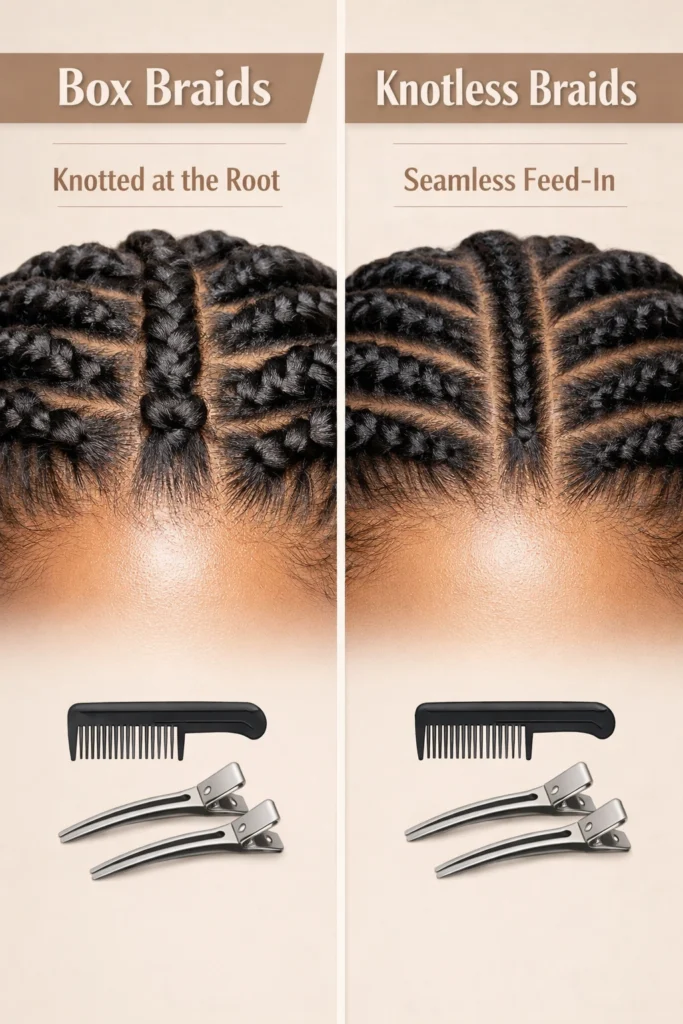
Knotless braids start with your natural hair first, then the stylist gradually feeds in extension hair (a “feed-in” method). There’s no bulky knot at the scalp, which makes the braid lay flatter and often feel lighter.
Quick summary:
- Box braids: knot at the root, strong hold, slightly bulkier base
- Knotless: no knot, feed-in method, flatter and usually more comfortable
Box Braids vs Knotless: Comfort, Tension & Scalp Health
Most people choose knotless braids because they’re gentler—especially for sensitive scalps.
With box braids, the knot at the root can create more tension, especially if the stylist braids too tight. That may cause soreness during the first few days and can be risky if you’re prone to traction alopecia (hair loss from pulling).
With knotless braids, tension is often lower because the braid begins with your natural hair and gradually adds weight. This can mean:
- less pain after installation
- less scalp stress
- better comfort for sleeping and styling
Best choice for sensitive scalp:
✅ Knotless braids usually win the box braids vs knotless comfort test.
Box Braids vs Knotless: Look, Volume & Styling Flexibility
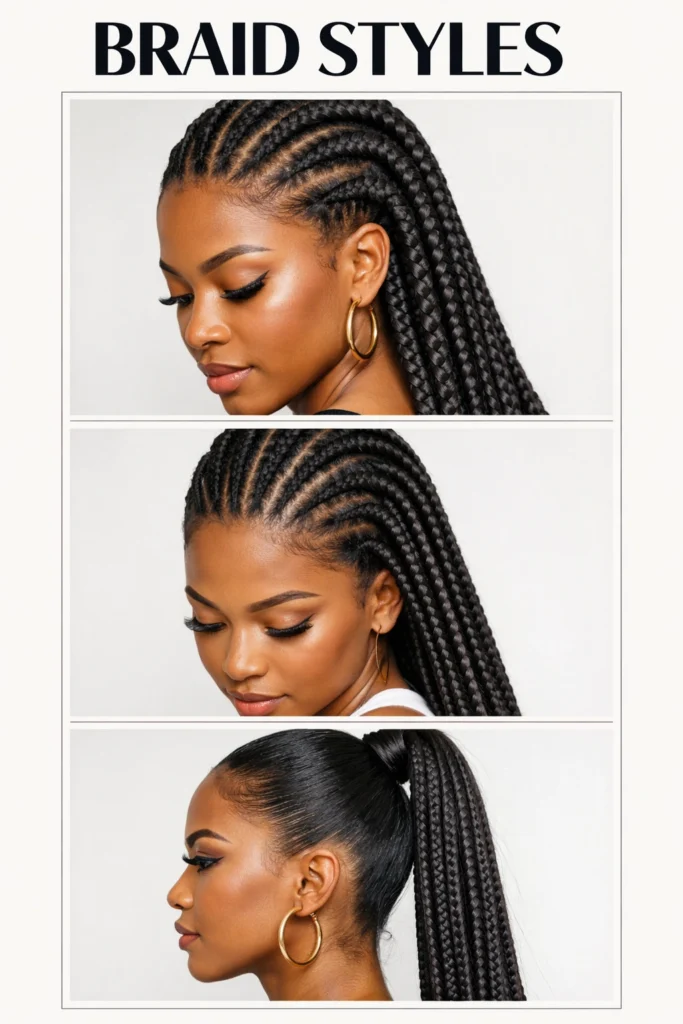
In the box braids vs knotless debate, appearance matters a lot—and both styles look amazing, but in different ways.
How box braids look
- slightly more “structured” and bold
- more volume at the roots
- classic, defined braid shape
How knotless braids look
- flatter and more natural at the scalp
- more movement and lighter feel
- easier to wear in high ponytails without bulky knots
If you want a super sleek, scalp-realistic finish (especially for photos), knotless braids are often the top pick. If you want that iconic, fuller “braided look,” box braids are still a favorite.
Box Braids vs Knotless: Time, Cost & Durability
This is where many people make the final decision.
Installation time
- Box braids: usually faster to install
- Knotless: takes longer because the feed-in method is more detailed
Cost
- Box braids: often cheaper
- Knotless: usually more expensive because it requires more time and skill
Durability
Both can last a long time, but traditional box braids can feel more “locked in” at the root because of the knot. Knotless braids stay secure too, but they rely heavily on the stylist’s technique and your aftercare.
Typical wear time (average):
- Box braids: ~4–8 weeks
- Knotless braids: ~4–8 weeks (sometimes slightly shorter if your hair is very soft/slippery)
So in box braids vs knotless, box braids often win on price + speed, while knotless often wins on comfort + natural finish.
Box Braids vs Knotless: Maintenance, Wash Routine & Best Hair Types
Your results depend a lot on how you care for the style.
Maintenance tips (for both styles)
- cleanse scalp weekly or every 10 days (diluted shampoo or scalp cleanser)
- moisturize with light leave-in + scalp oil (avoid heavy buildup)
- sleep with satin scarf/bonnet
- avoid tight updos daily (protect edges)
Which is better for your hair type?
Choose box braids if:
- you want a lower budget option
- you like fuller roots and a classic look
- your hair grips well and you don’t mind slight tension initially
- you want faster install time
Choose knotless braids if:
- your scalp is sensitive
- you want a flatter, more natural look
- you plan to style in ponytails/buns often
- you’re concerned about edges and tension
- you want a lightweight protective style
In many cases, knotless braids are better for thin edges and fine hair, while box braids work well for thicker, stronger hair—but technique matters more than anything. A good stylist can make either style safe and long-lasting.
Conclusion
If your top priority is comfort, scalp health, and a natural-looking finish, then knotless braids are usually the better choice.
If your top priority is budget, speed, and a bold classic look, then box braids are a great option—just make sure they’re not installed too tight.
Best quick choice guide:
- Sensitive scalp / protecting edges: Knotless
- Cheaper + faster install: Box braids
- Flatter roots + high ponytails: Knotless
- Classic, fuller look: Box braids
FAQs
Are knotless braids better than box braids?
Knotless braids are often “better” for comfort and scalp tension. But box braids can last just as long and look great—especially with a skilled stylist.
Do knotless braids last longer?
They can last the same (4–8 weeks), but longevity depends on hair texture, installation technique, and maintenance.
Which hurts less: box braids or knotless?
Most people report knotless hurts less because there’s no tight knot pulling at the scalp.
Are box braids more damaging?
They can be if installed too tight or if you wear heavy braids for too long. Proper tension and good aftercare prevent damage.
Which is best for thin edges?
Usually knotless braids because they reduce tension near the hairline.
