
Crochet braids are one of the most practical protective styles for anyone who wants a fresh look without committing to hours of individual braiding. In this guide, you’ll learn exactly how a crochet braids braid install works (the cornrow base + crochet method), how long it lasts, what hair to buy, and how to keep your scalp healthy and your style looking new.
Whether you’re doing DIY crochet at home or booking a stylist, this post will walk you through the process step-by-step—with real care tips that help you avoid breakage, frizz, and uncomfortable tension.
What Is a Crochet Braids Braid?
A crochet braids braid style is a two-part install:
- A braided foundation (usually cornrows) created with your natural hair
- Extensions added with a crochet hook (latch hook) by looping hair through the cornrows
This technique became popular because it’s faster than traditional individual braids, yet still gives you tons of volume, length, and style flexibility. Many people choose crochet braids because the scalp remains more accessible than with sew-ins—so cleansing and moisturizing are easier when done correctly.
Why Crochet Braids Are So Popular (Benefits)
1) Time-saving installation
Depending on the braid pattern and the look you want, crochet installs are often quicker than box braids or small knotless styles. You’re crocheting hair onto cornrows rather than braiding each strand individually.
2) Style versatility
You can get:
- Curly crochet (deep wave, water wave, spring twists)
- Straight crochet
- Faux locs crochet
- Crochet twists (Senegalese, passion twist, Marley twist)
- “Invisible part” or “vixen” patterns for natural-looking parts
3) Protective styling (when done gently)
Crochet styles can reduce daily manipulation of your natural hair. But “protective” only counts if the install isn’t too tight and your hair/scalp stay healthy.
How Long Do Crochet Braids Last?
Most crochet installs are commonly worn around 4–6 weeks (sometimes longer), depending on:
- Hair type/texture (synthetic vs human hair)
- How tight the base is
- Your maintenance routine (washing, moisturizing, frizz control)
If your scalp feels sore, irritated, or you notice bumps around your hairline, don’t “push through.” High-tension styles can contribute to traction alopecia (hair loss from pulling).
Best Hair for Crochet Braids (What to Buy)
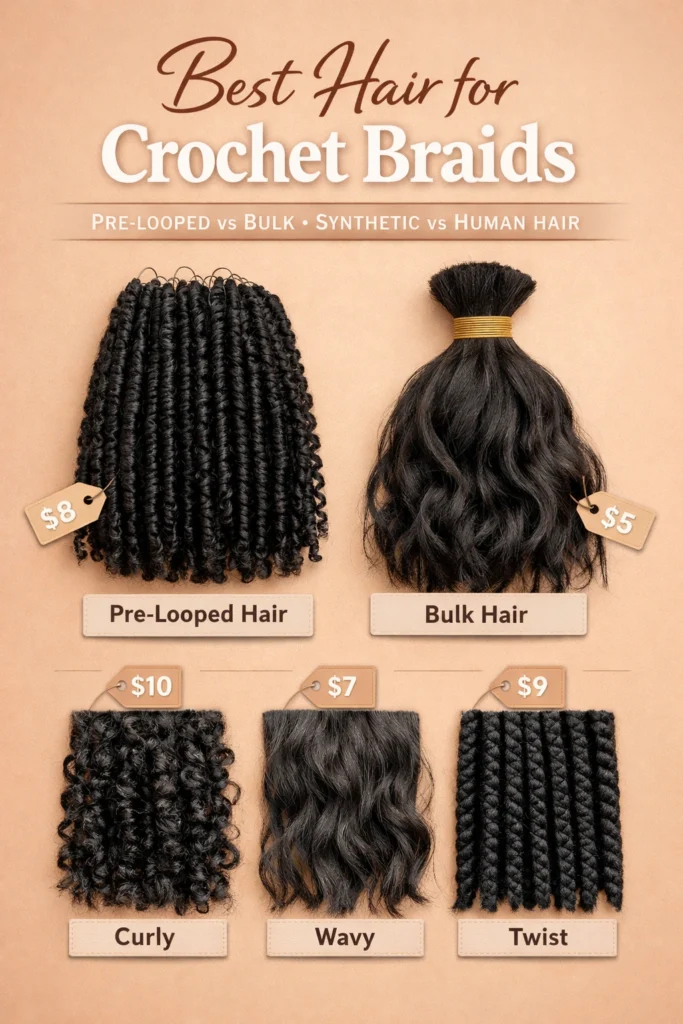
Choosing the right hair makes or breaks the final look. Here’s how to decide:
Pre-looped crochet hair (best for beginners)
- Comes with a loop already made
- Installs faster
- Great for twists, locs, curls
Bulk hair (for a more natural/custom finish)
- Requires you to create your own loop
- More flexibility for “invisible” installs
- Takes longer
Synthetic vs human hair
- Synthetic: affordable, holds curl well, can frizz faster
- Human hair: more natural movement, usually more expensive, may require extra styling and care
Pro tip: If you want a soft, natural twist look, Marley-type textures are forgiving. If you want bouncy curls, choose a curl pattern that matches your desired density (tighter curls look fuller; looser waves look longer).
Crochet Braids Braid Installation: Step-by-Step (Beginner Friendly)
Step 1: Prep your natural hair
- Clarify your scalp and strands
- Deep condition
- Stretch hair (blow-dry on low/medium heat with protectant if you prefer a smoother base)
Step 2: Create the braid pattern (foundation)
Common patterns:
- Straight-backs (simple, beginner-friendly)
- Beehive (great for full coverage)
- Invisible part (more realistic parting)
- Vixen / four-way (high styling versatility)
Key rule: Your cornrows should be secure but not painfully tight. Tight braids and extensions are a known risk factor for traction alopecia.
Step 3: Crochet the hair
- Slide the crochet needle under the cornrow
- Hook the hair (or the pre-loop)
- Close the latch and pull through
- Loop and secure (single knot or double knot depending on desired security)
Step 4: Blend + shape
- Separate curls/twists if needed (gently)
- Trim flyaways
- Set with mousse for frizz control (especially with synthetic hair)
Daily & Weekly Maintenance (Keep It Fresh Without Ruining the Style)
Night routine (non-negotiable)
- Satin bonnet or scarf
- Optional: loose pineapple/low bun to prevent tangling
Scalp care (every 2–3 days)
- Use a light oil or scalp serum on parts
- Focus on dryness and itch—not soaking the scalp
Cleansing (every 1–2 weeks for most people)
Because the scalp is accessible with crochet, many people cleanse by using diluted shampoo or targeted scalp cleansing methods to avoid excessive frizz.
If you work out often, you may need more frequent scalp cleansing—just keep it gentle and avoid rough rubbing.
How to Prevent Itch, Frizz, and Tension
If your crochet braids itch:
- Rinse synthetic hair before install (many people do this to reduce irritation)
- Use a calming scalp product (lightweight)
- Make sure the base isn’t too tight
If your crochet looks frizzy fast:
- Use mousse and tie down the hairline at night
- Avoid heavy creams on synthetic hair
- Trim flyaways instead of over-brushing
If the style feels tight or painful:
Pain is a warning sign. Dermatology sources consistently recommend avoiding high-tension hairstyles and reducing tension to prevent traction alopecia.
Pros and Cons of Crochet Braids Braid Styles
Pros
- Faster install than many braid styles
- Affordable compared to long individual braids
- Huge variety of textures and looks
- Easier scalp access than many extension methods
Cons
- Can look bulky if the braid pattern is large
- Synthetic hair can tangle/frizz
- Too much tension on the base can cause breakage or hairline stress
Best Crochet Styles to Try (Trend-Friendly Options)
- Curly crochet bob (short, low-maintenance, modern)
- Passion twist crochet (soft, boho texture)
- Crochet faux locs (protective look with less install time)
- Deep wave crochet (glam volume, great for updos)
- Invisible part crochet (most “scalp-realistic”)
FAQs
Are crochet braids good for hair growth?
They can support length retention by reducing daily manipulation—if the install isn’t tight and your scalp stays clean and moisturized. Tight braids/extensions can increase risk of traction-related hair loss.
Can I wash crochet braids?
Yes. Many people focus on gentle scalp cleansing (often with diluted products) to remove buildup without creating excess frizz.
How many packs of hair do I need?
It depends on the style and density you want. Curly styles often need more packs for fullness than twists. A short bob needs fewer than waist-length curls.
When should I take crochet braids out?
If you notice significant matting, heavy buildup, slipping braids, or scalp irritation—or if you’ve reached the typical wear window of a few weeks. Many installs are commonly worn around 4–6 weeks with good maintenance.
