
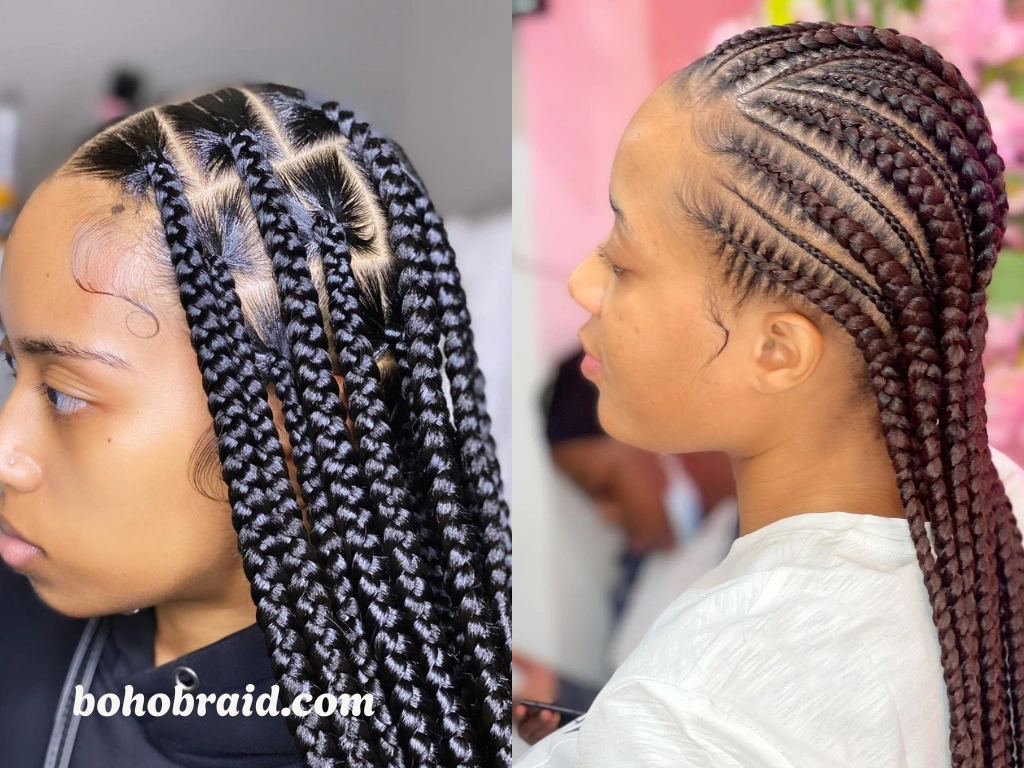
Fulani braids hairstyles are one of the most iconic protective styles—instantly recognizable for their mix of cornrows, individual braids, and signature center braid (often finished with beads, cuffs, or rings). Inspired by the Fulani people of West Africa, this look blends cultural roots with modern styling options, which is exactly why it stays trendy year after year.
If you’re considering Fulani braids, this guide walks you through the most popular variations, how to choose the right version for your hair, what to request at the salon, and how to care for them so they stay neat and comfortable.
What Are Fulani Braids?
Fulani braids (sometimes called “bohemian Fulani braids” or “Fulani-inspired braids”) usually follow a recognizable pattern:
- Cornrows braided close to the scalp, typically flowing toward the back or into a bun
- A center braid (or two) that frames the face or runs down the middle
- Individual braids added around the crown or sides for fullness
- Accessories like beads, cowrie shells, gold cuffs, or thread wraps
This combination makes them more customizable than plain straight-back cornrows, but often quicker and lighter than a full head of box braids.
Why Fulani Braids Are So Popular
1) They’re protective and low-maintenance
When installed correctly, Fulani braids help reduce daily manipulation—especially for natural hair that’s prone to dryness or breakage.
2) They flatter most face shapes
The face-framing center braid and optional side pieces can be adjusted to highlight cheekbones, soften a strong jawline, or balance a wider forehead.
3) The styling options are endless
You can keep them classic and minimal, or go full glam with curls, boho ends, color blends, or bold accessories.
12 Fulani Braids Hairstyles to Try
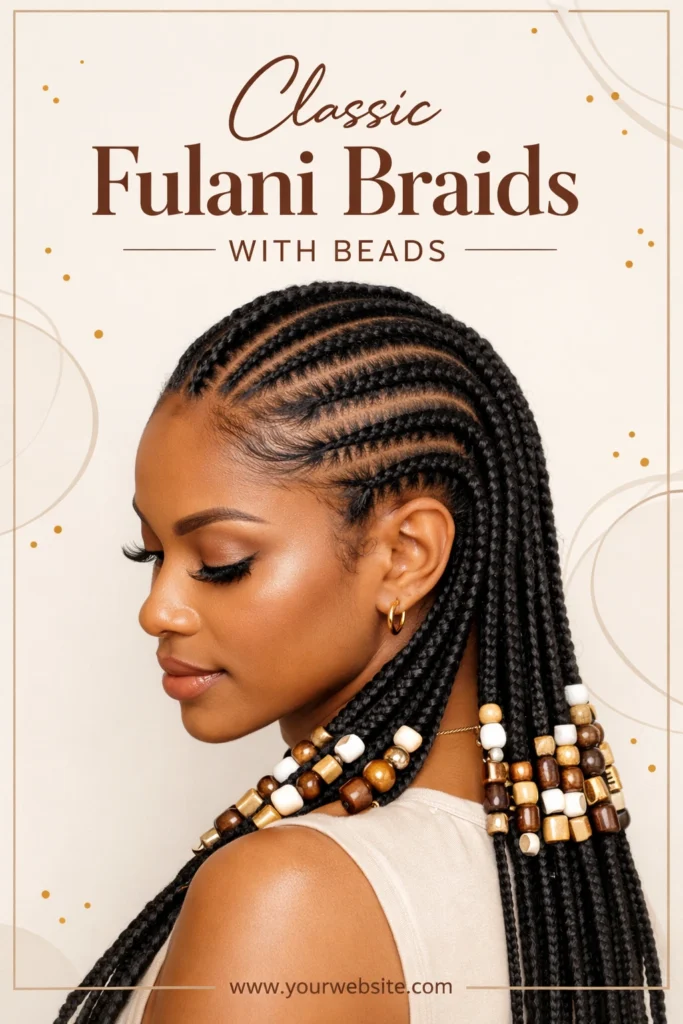
1) Classic Fulani Braids with Beads
This is the “true-to-style” look: cornrows with a neat center braid and beads at the ends. It’s clean, elegant, and ideal if you want something timeless.
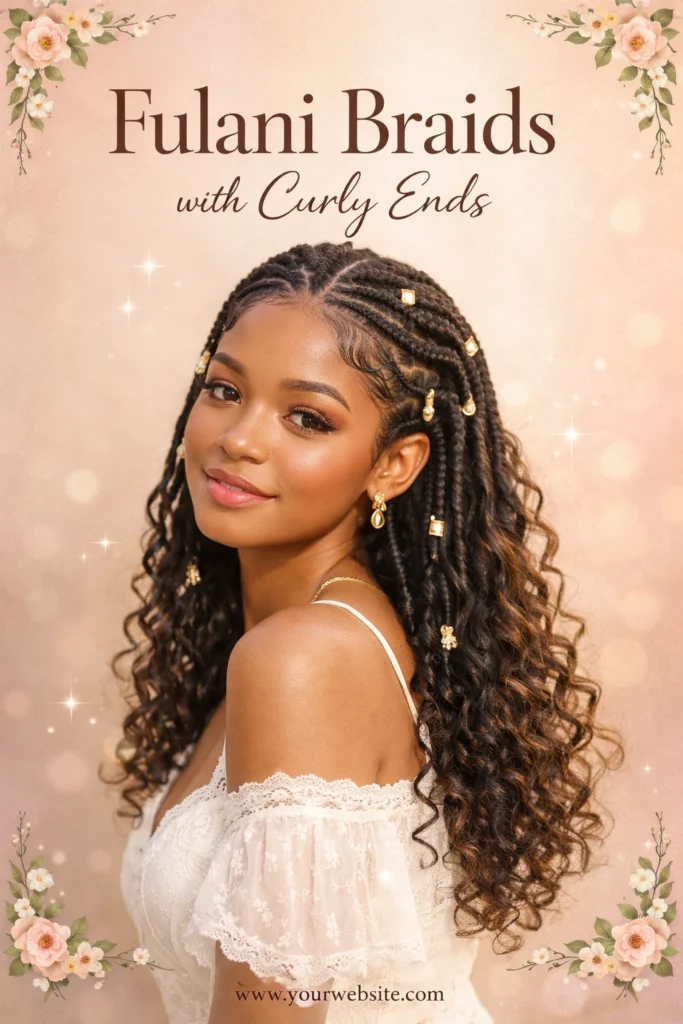
2) Fulani Braids with Curly Ends
A modern favorite: keep the scalp neat with cornrows, then add individual braids that end in loose curls. The curls give movement and softness—great for photos and special events.
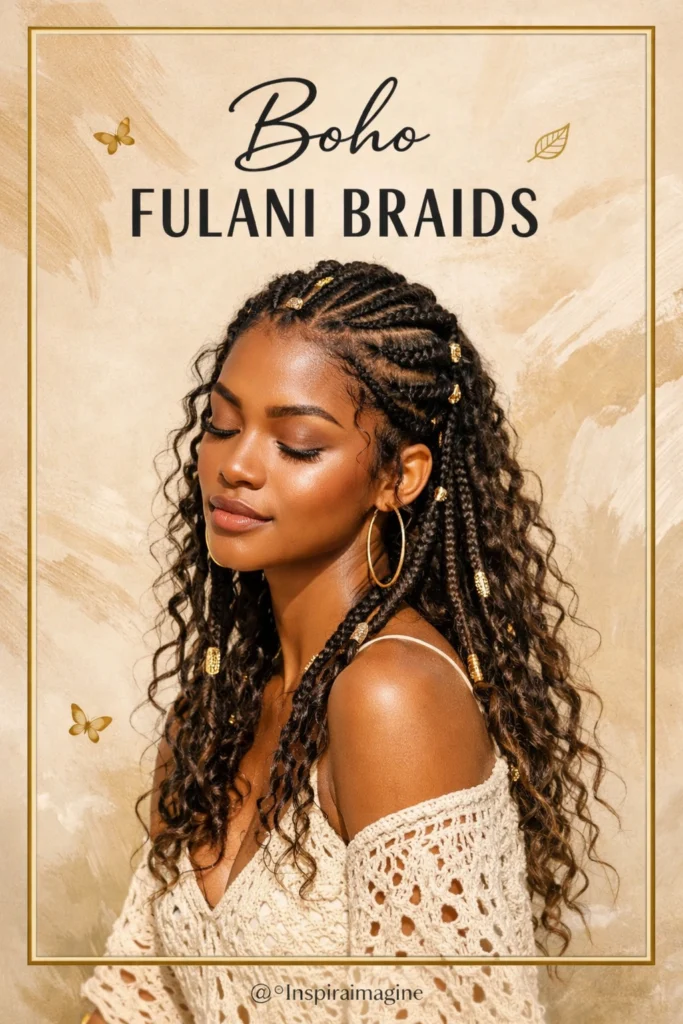
3) Boho Fulani Braids
Boho versions add wavy or curly strands throughout the braid pattern (not only at the ends). It looks airy and romantic, but does require more frizz management.
4) Fulani Braids into a Ponytail
Instead of letting the braids hang down, your stylist can feed the cornrows and individual braids into a high or mid ponytail. Sleek, sporty, and perfect for hot weather.
5) Fulani Braids Bun
A bun is ideal if you want something polished for work or travel. The scalp pattern still shines, but the hair stays out of your face.
6) Stitch Fulani Braids
“Stitch” braiding technique creates crisp, visible lines in the cornrows. This is the version to choose if you love sharp detail and a super clean finish.
7) Fulani Braids Bob
Shorter hair, less weight, faster drying. A bob-length Fulani style can look chic and modern while still keeping the protective benefits.
8) Side-Part Fulani Braids
Not everyone wants a center braid. A side part can look softer and more natural while still keeping the Fulani-inspired structure.
9) Fulani Braids with Triangle Parts
Triangle (or diamond) parting adds a trendy twist to the individual braid sections. It’s subtle, but it stands out.
10) Fulani Braids with Color
Try warm tones like honey brown, copper, or burgundy—especially flattering in sunlight. If you want “safe bold,” consider highlights mixed into a darker base.
11) Fulani Braids with Accessories (Cuffs, Rings, Shells)
Accessories can elevate the entire look in minutes. Gold cuffs add glam; cowrie shells lean more traditional; thread wraps give a handmade, artsy finish.
12) Fulani Braids for Kids
For children, go lighter and simpler: fewer accessories, not too tight, and a style that can be refreshed easily.
How to Choose the Best Fulani Braids for Your Hair
A good Fulani braids hairstyle isn’t just about what looks cute—it should match your hair’s needs and your lifestyle.
Choose smaller braids if:
- you want longer wear
- you like detailed styles
- you don’t mind a longer install time
Choose medium/large braids if:
- you want a faster install
- you prefer a lighter feel
- your scalp is sensitive
If your scalp is tender, prioritize comfort over tightness. A neat style should still feel breathable—pressure and headaches are not “normal.”
What to Ask Your Braider (Copy/Paste Friendly)
Bring 2–3 reference photos and ask:
- “Can we do Fulani-style cornrows with a center braid and individual braids around the crown?”
- “I want the braids secure but not tight—please avoid tension on the edges.”
- “Can you keep the front hairline natural and not over-gripped?”
- “I’d like light accessories (cuffs/beads), not too heavy.”
- “Please leave the ends sealed neatly (or curly, if boho).”
Pro tip: If you have fragile edges, ask for knotless individual braids in the sections that add weight.
How Long Do Fulani Braids Last?
Most people keep Fulani braids 2–6 weeks, depending on:
- braid size (smaller tends to last longer)
- your scalp oiliness and sweat level
- how well you protect them at night
- whether you chose boho curls (which can look “lived-in” sooner)
If you want maximum longevity, go for a cleaner, classic finish with minimal loose hair.
Fulani Braids Care: Keep Them Fresh Without Buildup
1) Protect at night
Use a satin scarf or bonnet. If you want edges laid, tie a scarf around the hairline first, then add a bonnet.
2) Clean your scalp gently
Every 1–2 weeks:
- apply diluted shampoo or a scalp cleanser between parts
- massage lightly (no aggressive scrubbing)
- rinse thoroughly and dry well
3) Moisturize the scalp (lightly)
A few times a week, use a lightweight oil or scalp serum—especially if your scalp gets dry. Avoid heavy greases that cause buildup.
4) Control frizz
Use a small amount of mousse or braid spray, then wrap with a scarf for 10–15 minutes. This helps keep the style neat.
Are Fulani Braids Good for Hair Growth?
They can support length retention because they reduce daily manipulation and protect ends—but growth comes from your scalp health and genetics. The key is low tension, clean scalp care, and proper removal.
When taking them down:
- use conditioner or oil to soften buildup
- detangle gently
- don’t rush (rushing is where breakage happens)
FAQs
Do Fulani braids hurt?
They shouldn’t. Mild tightness on day one can happen, but sharp pain, bumps, or headaches are a sign they’re too tight.
Can I do Fulani braids on thin hair?
Yes—choose medium braids, avoid heavy accessories, and keep tension minimal. Knotless techniques can help reduce stress on the roots.
Are Fulani braids cultural appropriation?
Fulani braids are rooted in West African traditions. Many people wear Fulani-inspired styles respectfully by acknowledging the origin, avoiding caricature, and not claiming the style as something it isn’t. If you’re unsure, keep it simple, learn the history, and focus on respect.
How long does installation take?
Typically 2–6 hours depending on braid size, pattern complexity, and whether you add curls or extensive accessories.
Conclusion
Fulani braids hairstyles offer something rare: a look that’s protective, stylish, and endlessly customizable. Whether you choose a classic beaded version, a soft boho finish, or a sleek ponytail, the best results come from two things—a clean pattern and healthy tension.
