
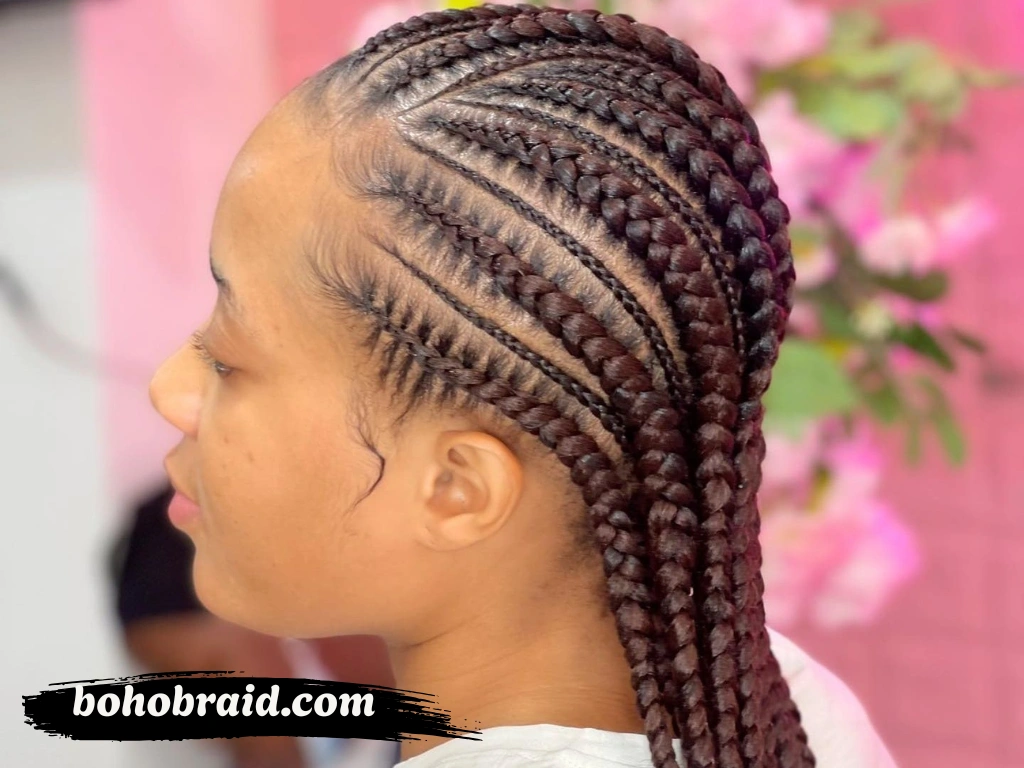
Fulani knotless braids are one of the most-requested protective styles right now—and for good reason. They combine the signature look of Fulani braids (think center parting, face-framing braids, and decorative details) with the comfort of knotless braids, which start more naturally at the scalp and feel lighter than traditional feed-in methods. The result is a style that looks polished, photographs beautifully, and is often gentler on the hairline.
In this guide, you’ll learn what fulani knotless braids are, how they’re installed, which hair to use, how long they last, and how to care for them so they stay neat and healthy-looking for weeks.
What Are Fulani Knotless Braids?
Fulani braids are inspired by traditional braiding patterns associated with the Fulani people of West Africa. The classic look usually features:
- A clean middle part
- One or more braids going straight back along the scalp
- Two face-framing braids (often with beads or cuffs)
- Neat sections and symmetrical design
Knotless braids are a modern braiding technique where extension hair is added gradually, creating a flatter start at the scalp. Unlike box braids that begin with a small knot, knotless installs tend to feel more comfortable and can reduce tension—especially around the edges.
So, fulani knotless braids blend cultural-inspired patterning with a lighter, more natural-looking installation.
Related keywords you’ll naturally see with this style: protective style, feed-in braids, scalp tension, edge-friendly braids, braiding hair extensions, boho finish, curly ends, braid pattern, middle part, hair accessories, beads, braid cuffs, and mousse set.
Why Fulani Knotless Braids Are So Popular
1) They look natural at the roots
Because the braid starts with your own hair and gradually adds extensions, the base is flatter and more “grown-from-the-scalp” than many traditional braid styles.
2) Less tension (when done correctly)
Many people choose knotless techniques because they can be gentler than tight, knotted starts. That said, any braid style can cause tension if installed too tightly—so technique matters.
3) They’re versatile
You can wear them sleek and classic, add curls for a boho vibe, or dress them up with beads, cuffs, and wraps. They work on short, medium, and long lengths.
4) Easy to style day-to-day
Once installed, your daily routine can be simple: moisturize, protect at night, and refresh the scalp. That’s exactly what many people want from a protective style.
Fulani Knotless vs. Regular Knotless Braids: What’s the Difference?
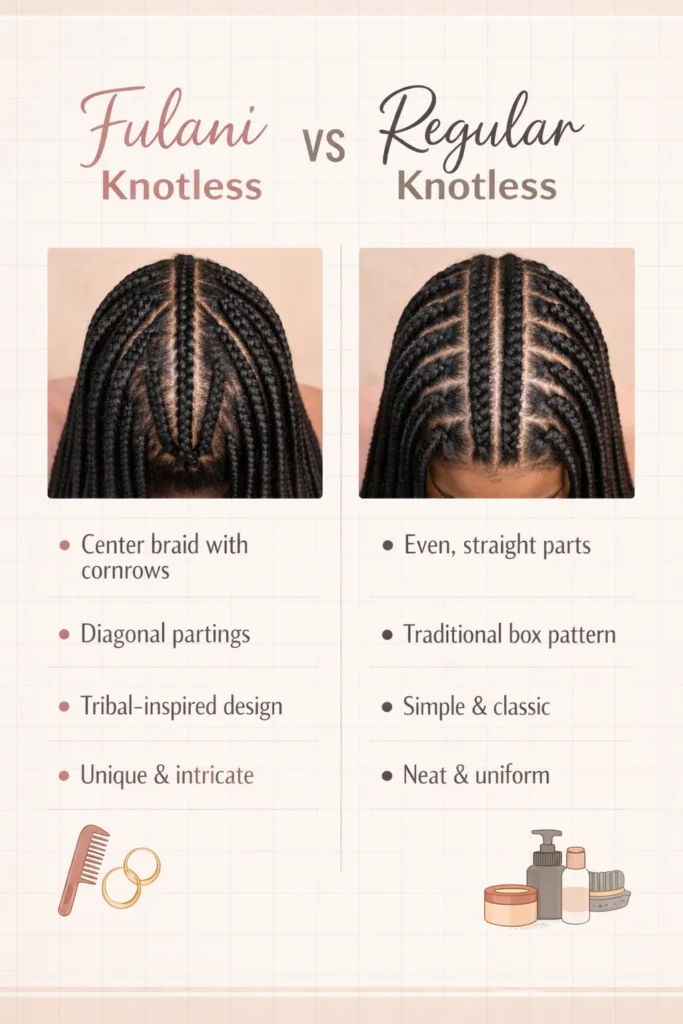
Both styles use the knotless method, but the pattern changes the entire look.
- Regular knotless braids: Typically uniform box sections across the head.
- Fulani knotless braids: Pattern-based—often with a middle part, cornrow-like sections, and face-framing braids, sometimes combining straight-back rows and individual braids.
If you love a style that feels “designed” instead of simply “all-over braids,” Fulani knotless braids deliver that instantly recognizable finish.
Best Hair to Use for Fulani Knotless Braids
Most stylists use pre-stretched braiding hair for a smooth, tapered finish. It helps the ends look cleaner and reduces bulk. Here are common options:
- Pre-stretched kanekalon braiding hair (popular and budget-friendly)
- Yaki texture braiding hair (more natural-looking)
- Human-hair blend curly pieces (for boho ends or curly accents)
Pro tip: If you want bead-friendly ends, ask for a finish that supports accessories—some prefer sealed ends, others prefer a slightly looser end to thread beads easily.
How to Prep Your Hair Before Installation
Good installs start with good prep. Aim to prep 24–48 hours before braiding.
- Cleanse the scalp with a clarifying or gentle shampoo.
- Deep condition to boost moisture and elasticity.
- Stretch the hair (blow-dry on low heat or banding method) to make sectioning easier.
- Trim ends if needed—healthy ends make braids look neater for longer.
- Communicate about tension: If you have a sensitive scalp, say it upfront.
If you deal with irritation easily, consider asking your stylist about pre-rinsing braiding hair (some people find it helps reduce itchiness).
How Fulani Knotless Braids Are Installed (Overview)
Exact steps vary by stylist and pattern, but the typical process looks like this:
Step 1: Mapping the braid pattern
A common layout includes a middle part, one or more braids going back, and face-framing pieces. Some patterns add side parts or curved rows for a softer look.
Step 2: Creating clean sections
Clean parting is a big part of the Fulani aesthetic. Crisp sections instantly make the style look high-end.
Step 3: Knotless feed-in technique
The stylist starts braiding with your natural hair, then adds extension hair gradually. This helps reduce the “knot bump” and can improve comfort.
Step 4: Length + finishing
Ends can be:
- Dipped in hot water for a sleek finish
- Left wavy/curly for a boho look
- Finished with beads, cuffs, or wraps for a traditional-inspired vibe
Timing: Depending on braid size and pattern complexity, fulani knotless braids can take anywhere from a few hours to most of a day.
Style Ideas: Fulani Knotless Braids You Can Try
Here are popular variations you can request:
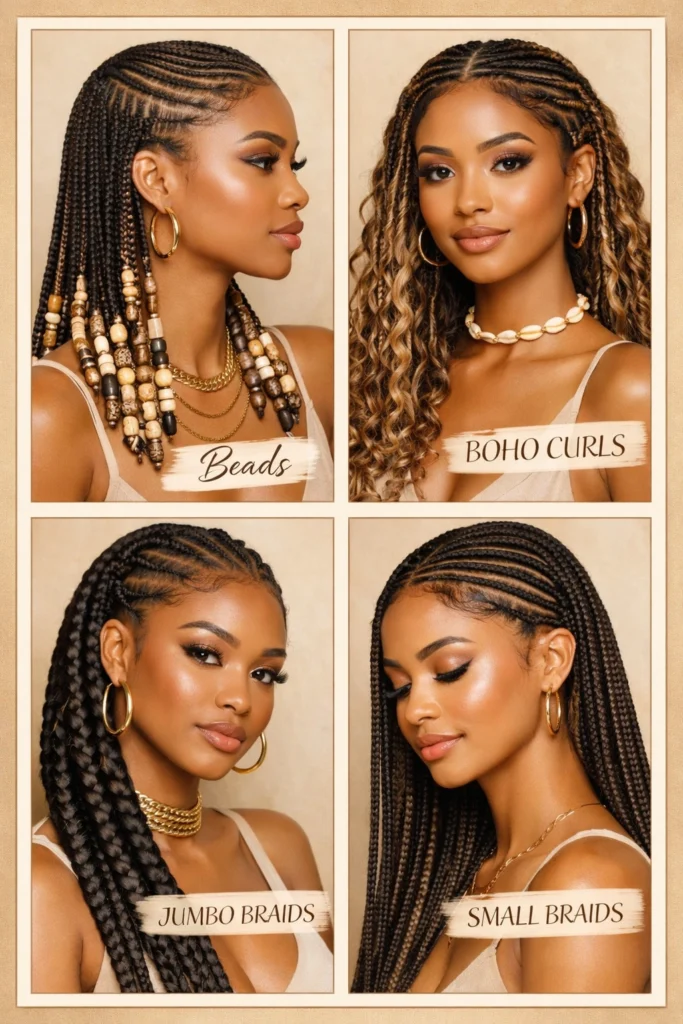
- Classic Fulani knotless: middle part + two face braids + neat rows
- Fulani knotless with beads: wooden beads, clear beads, gold cuffs
- Boho Fulani knotless: curly ends or curly pieces throughout
- Jumbo Fulani knotless: bigger sections for faster install and bold look
- Small Fulani knotless: longer-lasting, more detailed, but takes longer
- Color blends: 1B/30, 1B/27, or subtle highlight mixes for dimension
If you’re unsure, bring 2–3 reference photos and ask your stylist what will work best for your hair density and hairline.
Maintenance: How to Keep Fulani Knotless Braids Fresh
To make fulani knotless braids last and look clean, focus on scalp care, frizz control, and nighttime protection.
Scalp routine (2–4 times per week)
- Use a lightweight scalp oil or serum (avoid heavy buildup)
- If itchy, use a braid-friendly scalp spray
- Pat products onto the scalp rather than drenching the braids
Frizz control (as needed)
- Apply mousse to smooth flyaways
- Tie down with a scarf for 10–20 minutes after applying mousse
Night routine (every night)
- Sleep with a satin bonnet or scarf
- Use a silk/satin pillowcase as backup
- Put braids in a loose pineapple or low braid to reduce friction
Wash routine (every 1–2 weeks)
- Dilute shampoo and focus on the scalp
- Rinse thoroughly
- Towel-blot (don’t rub) and fully dry the scalp to avoid odor
How Long Do Fulani Knotless Braids Last?
Most people wear fulani knotless braids 4 to 8 weeks, depending on:
- Braid size (smaller often lasts longer)
- Scalp oiliness and product buildup
- How tightly the braids were installed (too tight isn’t worth it)
- Night protection consistency
If your edges feel stressed, your scalp is sore, or you see thinning along the hairline, remove the style sooner. Protective styles should protect—comfort is not optional.
Common Mistakes to Avoid
- Too much tension at the hairline: Ask for edge-friendly tension and skip overly tight face-framing braids if needed.
- Heavy products: Thick gels and waxes can cause buildup and dull the braids.
- Skipping nighttime protection: Friction is a major cause of frizz.
- Leaving braids in too long: Past 8 weeks, tangling and shedding can increase during take-down.
FAQs
Are Fulani knotless braids good for thin edges?
They can be, if installed with low tension and smart sectioning. Ask for slightly larger parts near the hairline and avoid tight pulling.
Do fulani knotless braids hurt less than regular braids?
Many people find knotless starts more comfortable. But pain usually comes from tension, not just technique—so choose an experienced braider.
Can I do fulani knotless braids on short hair?
Often yes, especially if your hair is long enough to grip for clean starts. A stylist can advise based on your length and shrinkage.
How do I refresh my style without reinstalling?
Mousse + scarf set, gentle scalp cleanse, and redoing only the front/edges (“touch-up” or “redo perimeter”) can make the style look new again.
Conclusion
Fulani knotless braids are the sweet spot between tradition-inspired beauty and modern comfort. With the right pattern, clean parts, and gentle tension, you get a protective style that’s lightweight, stylish, and easy to maintain. If you’re aiming for a look that turns heads while still being practical for daily life, this is one of the best braid options to consider.
