
Short Fulani braids are the perfect mix of culture, practicality, and style—especially if you love braids but don’t want extra length. This look is inspired by Fulani (Fula) braiding traditions and is typically known for its signature details: a center braid or cornrow, neat scalp patterns, and optional beads or cuffs. The “short” version keeps everything lightweight, quicker to style, and easier to maintain—without losing that iconic, statement-making finish.
Whether you prefer a sleek middle-part feed-in, a side-swept look, or Fulani braids with curly ends, short Fulani braids protect your natural hair, reduce daily manipulation, and can flatter every face shape when the parting is placed intentionally.
In this guide, you’ll find wearable style ideas, what to ask your braider for, the best hair to use, pain-free tips, and a full maintenance routine to keep your scalp calm and your braids fresh.
What Are Short Fulani Braids?
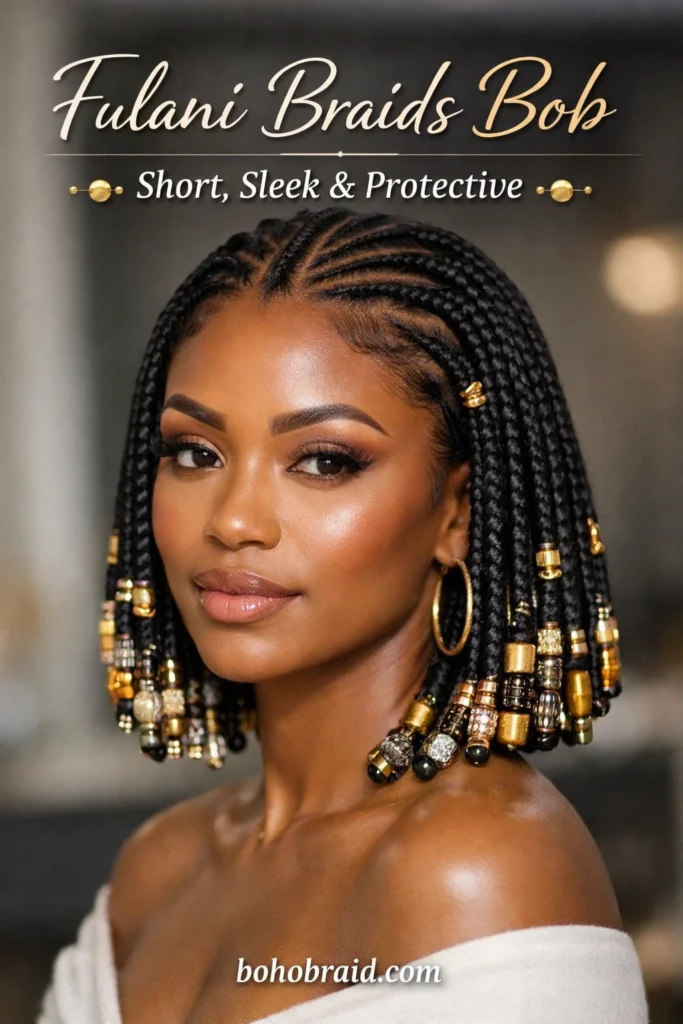
Short Fulani braids are a protective hairstyle featuring Fulani-inspired braid patterns, styled at bob length, neck length, or shoulder-grazing length. Most variations combine cornrows (stitch braids) and individual braids, often with a distinct central braid or center part, plus accessories like beads, braid cuffs, and hair rings.
What makes them different from standard box braids is the pattern and detailing: Fulani styles are designed to look intentional and sculpted—almost like braid “architecture.” Going shorter adds benefits like less tension from weight, faster drying time, and a cleaner everyday look (especially for work, school, and travel).
Why Short Fulani Braids Are a Smart Protective Style
Short Fulani braids aren’t just cute—they’re functional. Here’s why they’re trending for natural hair and relaxed hair alike:
- Lightweight feel: Less length = less pulling and less neck strain.
- Scalp-friendly option: When done with proper tension, short braids can be gentler than long, heavy installs.
- Low-maintenance styling: Many looks are “wake up and go,” especially a Fulani bob or shoulder length set.
- Faster install + faster takedown: Still detailed, but often quicker than waist-length styles.
- Versatile finishes: Sleek ends, blunt bob, curled ends, or boho pieces—short doesn’t mean boring.
If your priority is healthy edges and a clean, polished look, short fulani braids are one of the best braid choices to request.
17 Short Fulani Braids Styles You’ll Actually Wear
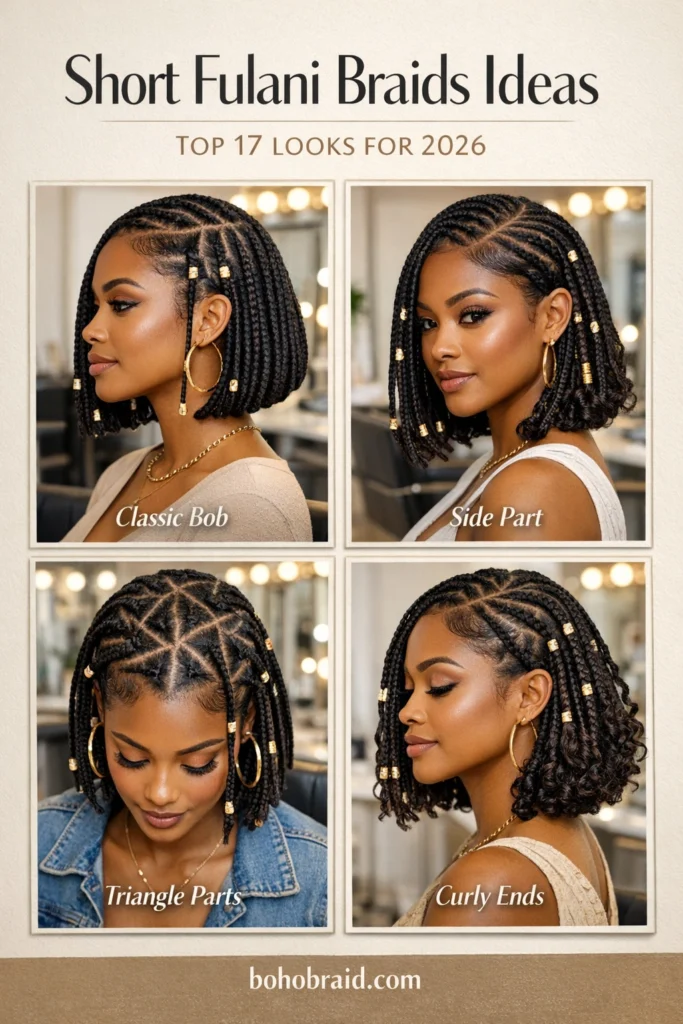
1) Classic Fulani Bob (Center Braid + Side Braids)
A signature center braid with neat scalp braids flowing into a blunt bob. Timeless and photo-ready.
2) Short Fulani Braids With Beads (Minimal + Chic)
Add a few statement beads near the front only—less noise, more elegance.
3) Side-Part Short Fulani Braids
A deep side part instantly softens the forehead and gives a more modern vibe.
4) Triangle-Part Fulani Bob
Triangle parting makes even a simple bob look premium and “high effort.”
5) Fulani Stitch Braids Into Short Individuals
Sleek stitch cornrows in front, individual braids in the back—great balance of detail + movement.
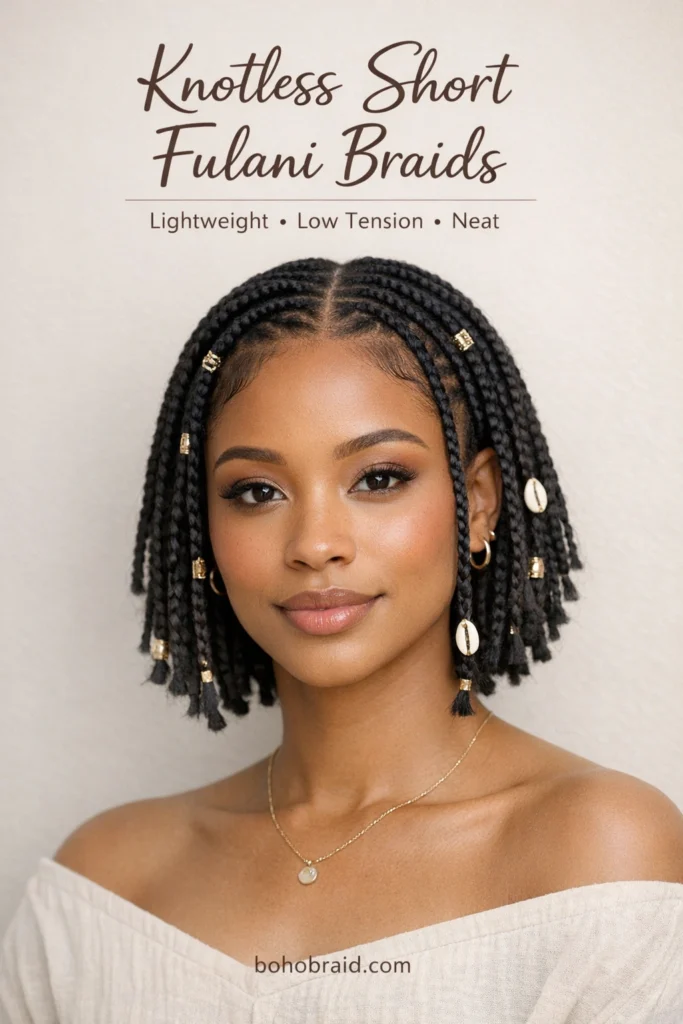
6) Knotless Short Fulani Braids
Knotless feed-in reduces bulk at the root and can feel more comfortable (especially for tender scalps).
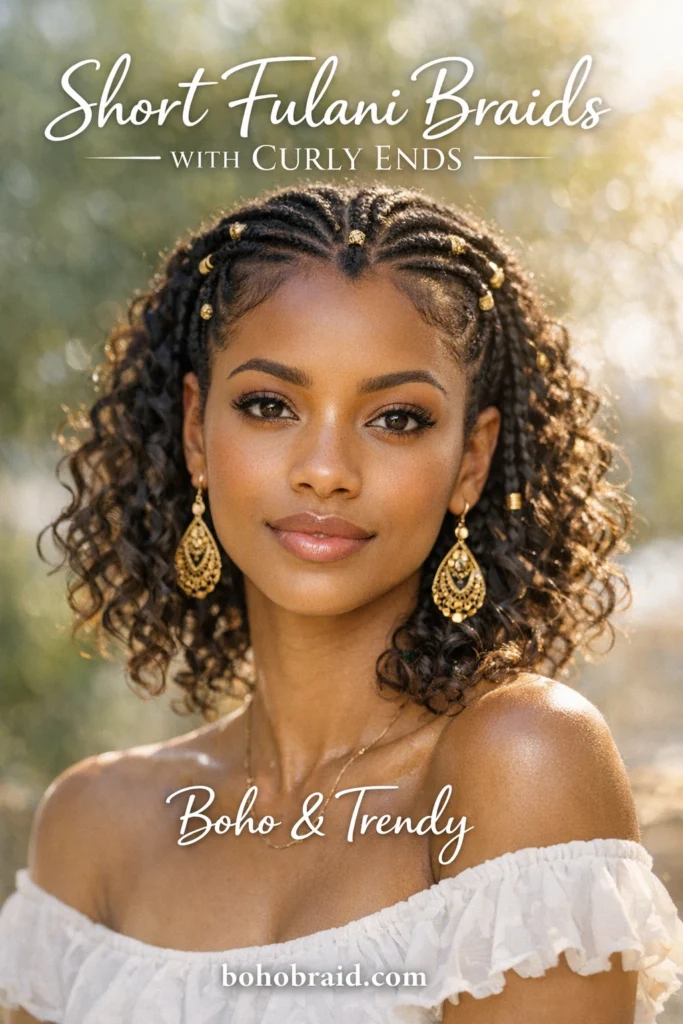
7) Fulani Braids With Curly Ends (Short Boho Finish)
Leave the last 2–4 inches wavy/curly for a soft bohemian effect.
8) Short Fulani Braids With Cuffs + Rings
Gold cuffs on 2–6 braids look luxe without needing full bead styling.
9) Fulani Bob With Two Face-Framing Braids
Keep two slightly longer braids in front for a snatched, face-slimming look.
10) Short Fulani Braids for Round Faces (Angled Bob)
Ask for a slightly longer front (A-line bob). It elongates the face beautifully.
11) Short Fulani Braids for Natural Hair (No Heat, No Stress)
A clean install that protects curls while you grow length underneath.
12) Fulani Braids With a Zig-Zag Part
The zig-zag center part adds personality while keeping the style professional.
13) Fulani Braids Bob With Colored Highlights
Try honey blonde, copper, or burgundy in thin accent braids rather than full color for a subtle pop.
14) Short Fulani Braids With Heart Parting
Perfect for birthdays, photoshoots, and content creators—super trendy.
15) Fulani Braids With Low Bun (Short Length Edition)
Even short braids can tuck into a small low bun using pins and a soft tie.
16) Fulani Braids With Headband Effect (Braided Front Row)
A thicker front row braid creates a natural “headband” look—great if you don’t like edges laid daily.
17) Micro Short Fulani Braids (Extra Neat, Long-Lasting Look)
Smaller braids look extremely clean and can last longer, but install time increases.
What to Ask Your Braider For (So You Get Exactly What You Want)
When you request short fulani braids, be specific about these details:
- Length: chin, jaw, neck, or shoulder
- Parting: center, side part, triangle, or freestyle Fulani pattern
- Technique: knotless feed-in vs traditional
- Braid size: small/medium (medium is fastest and still neat)
- Edges: request low-tension around hairline
- Accessories: beads/cuffs (how many, where placed)
- Ends: blunt ends, sealed ends, or curly/boho ends
Pro tip: Show 2–3 reference photos and point out exactly what you like (parting, thickness, accessories), not just “the vibe.”
Best Hair to Use for Short Fulani Braids (Quick Buying Guide)
For most short Fulani installs, you’ll want hair that braids smoothly and seals well:
- Pre-stretched braiding hair (kanekalon): easiest for a sleek finish
- Lightweight braiding hair: better if you’re sensitive to tension
- Human hair blend (optional): great for boho/curly ends, but more expensive
- Color choices: natural 1B/2 for classic, 27/30/33/350 for warm highlights
How many packs?
Short length usually needs fewer packs than long styles. Many installs fall in the 3–6 pack range depending on braid size and density (your braider may adjust based on your head size and desired fullness).
Step-by-Step: How Short Fulani Braids Are Installed
- Cleanse + deep condition (start with a healthy scalp)
- Stretch hair (blow-dry low heat or banding method to reduce tangles)
- Map the pattern (center braid + cornrow layout + individual sections)
- Feed-in the cornrows (stitch braids or classic scalp braids)
- Add individual braids (knotless or traditional)
- Trim to the perfect short length (this is what makes it look sharp)
- Seal ends (hot water dip if using kanekalon, or set curls if boho)
- Finish + soothe scalp (mousse + light oil, not heavy grease)
Maintenance Routine: Keep Short Fulani Braids Fresh for Weeks
Daily (2 minutes):
- Lightly moisturize edges (water-based spray or light leave-in)
- Apply a tiny amount of scalp oil if dry (avoid product buildup)
- Cover at night with a satin bonnet or scarf
2–3x per week:
- Use braid mousse to reduce frizz and keep braids neat
- Smooth flyaways with a soft brush and scarf for 10 minutes
Every 7–10 days:
- Clean scalp with diluted shampoo (or scalp cleanser) using a nozzle bottle
- Rinse carefully and dry thoroughly (short braids dry faster—huge win)
How long do short fulani braids last?
Often 3–6 weeks, depending on braid size, hair growth, and how well you protect them at night. Don’t keep them in so long that your roots mat or your scalp becomes irritated.
Scalp Health + Tension Tips (Edge-Friendly Fulani Braids)
- If it hurts the day of install, that’s a warning sign—not “normal.”
- Ask for bigger sections around the hairline to reduce tension.
- Skip heavy beads if your scalp is tender (or place beads only on a few braids).
- If bumps appear, use a cool compress and avoid tight ponytails.
- Consider knotless feed-in for a more comfortable root feel.
Healthy braids should feel secure, not painful.
FAQs
Are short Fulani braids good for short natural hair?
Yes. A skilled braider can feed-in and create clean patterns even if your natural hair isn’t long, as long as your hair can be sectioned and gently braided.
Do short Fulani braids damage edges?
They shouldn’t—if installed with low tension, especially around the hairline. Tension + heavy length is a common culprit, so shorter styles can actually be safer.
Can I do short Fulani braids at home?
If you’re experienced with parting and feed-in braiding, yes. Beginners often struggle with the pattern and symmetry, so starting with a simpler Fulani-inspired layout helps.
What’s the difference between Fulani braids and tribal braids?
In everyday styling language, people overlap the terms. Fulani braids typically refer to a classic Fulani-inspired pattern (often with a center braid and beads), while “tribal braids” is a broader modern category of patterned braiding styles.
What are the best accessories for a short Fulani bob?
Small cuffs, a few rings, or 2–6 beads in front look balanced. Too many accessories can feel heavy and cluttered on short length.
Conclusion
Short fulani braids are one of the most wearable protective styles right now because they’re lightweight, polished, and versatile. You can keep them classic with a clean Fulani bob, elevate the look with stitch braids, or soften everything with curly ends and subtle highlights. Most importantly, prioritize a neat pattern and gentle tension—because the best braid style is the one that looks amazing and keeps your natural hair thriving underneath.
