
Braids are more than a hairstyle—they’re a technique, a tradition, and one of the most versatile ways to style natural, relaxed, wavy, or straight hair. In this guide to types of braids, you’ll learn the most popular braid styles (from everyday classics to protective looks), what they’re best for, how long they typically last, and how to choose the right option for your hair type, lifestyle, and comfort level.
To keep this truly helpful (and not just a list), each braid type includes: what it looks like, who it suits, time/maintenance expectations, and scalp-health notes—because braids should protect your hair, not stress it.
Types of Braids at a Glance (Quick Pick List)
If you want a fast decision, start here:
- Best for beginners: Classic three-strand braid, French braid, Dutch braid, rope braid
- Best protective styles: Box braids, knotless braids, Senegalese twists, passion twists, cornrows (done gently)
- Best low-tension options: Knotless braids, loose feed-in braids, halo/crown braid
- Best for short hair: Dutch braids, mini braids, flat twists, cornrows, braided bob styles
- Best for workouts & travel: Cornrows, feed-in braids, boxer braids, goddess braids
- Best for events: Waterfall braid, fishtail, crown braid, braided updos
What Counts as a “Braid”? (And Why That Matters)
A braid is created by interlacing sections of hair in a repeated pattern. Some styles are free-hanging (like box braids), while others are anchored to the scalp (like cornrows or feed-in braids). That difference changes:
- Tension level (how much pulling your scalp feels)
- Longevity (how long it stays neat)
- Scalp access (how easy it is to cleanse/moisturize)
Scalp-tension matters because tight styles can contribute to traction alopecia (hair loss caused by repeated pulling). Dermatology guidance emphasizes avoiding tight hairstyles and reducing ongoing tension, especially if you notice pain, bumps, or thinning edges.
1) Classic Braids (Everyday Styles You Can Do at Home)
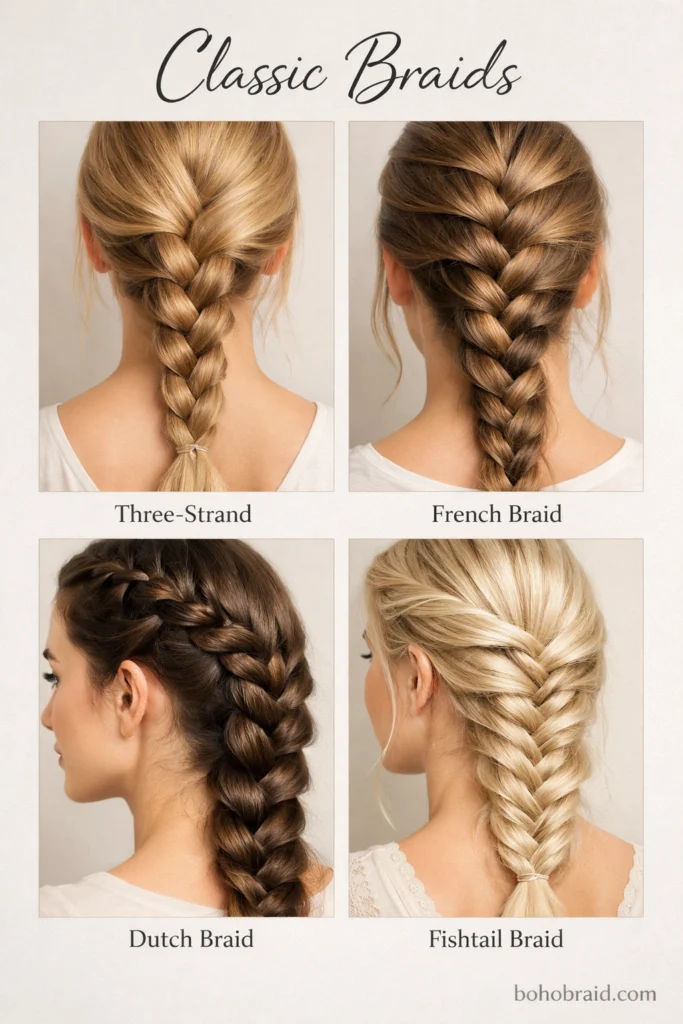
1. Three-Strand Braid (Classic Plait)
Best for: daily styling, quick protection, all hair types
Why people love it: simplest braid; great base for bigger styles
Tip: For thicker-looking braids, gently “pancake” (pull out) the loops after braiding.
2. French Braid
Best for: keeping hair off your face, medium-to-long hair
Look: braid starts at the crown and adds hair as you go
Pro: sleek and secure; great for workdays
Common variation: double French braids.
3. Dutch Braid (Inside-Out French)
Best for: more dimension, sports styles
Look: raised braid that “pops” off the scalp
Also called: “boxer braids” when done as two Dutch braids.
4. Fishtail Braid
Best for: weddings, photos, special occasions
Look: woven pattern using two sections (not three)
Pro: stunning texture
Con: slower to do than a three-strand braid.
5. Rope Braid (Twist Braid)
Best for: fine hair, quick styling
Look: two twisted sections wrapped together
Tip: Works well with a light mousse for hold.
6. Waterfall Braid
Best for: romantic half-up styles
Look: sections “drop” through the braid like a waterfall
Pro: beautiful with curls or waves.
7. Crown / Halo Braid
Best for: formal events, protective updos
Pro: low manipulation once pinned
Watch-out: don’t pin too tightly around edges.
2) Scalp Braids (Neat, Long-Lasting, Great for Active Days)
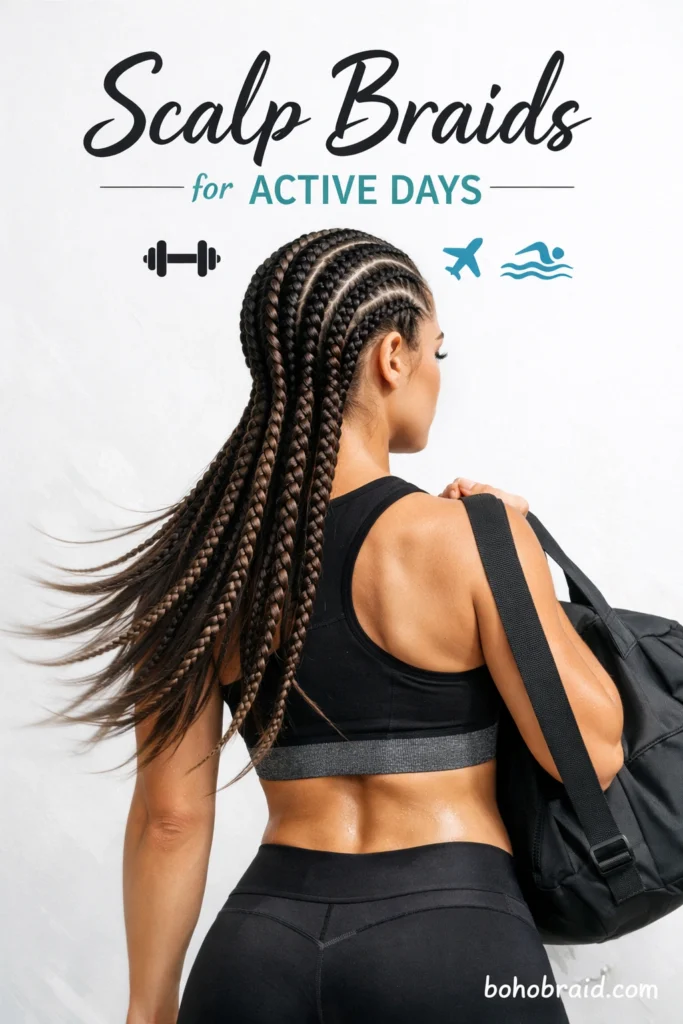
8. Cornrows
Best for: low-maintenance weeks, gym routines, travel
Look: tight, continuous braid rows along the scalp
Cultural note: cornrows have deep roots in African braiding traditions and history.
Scalp health tip: keep them comfortable, not tight—pain is a red flag for traction.
9. Feed-In Braids
Best for: a natural-looking braid that grows thicker
Look: extensions added gradually (instead of a big knot at the start)
Why it’s popular: cleaner hairline + customizable thickness.
10. Ghana Braids (Often a Feed-In Variant)
Best for: bold, thick scalp braids
Look: larger raised cornrow-style braids
Pro: dramatic and protective
Con: takes longer to install than simple cornrows.
11. Stitch Braids
Best for: ultra-crisp parts, “Instagram neat” styles
Look: sleek, patterned feed-in braids
Tip: requires strong technique + good parting.
12. Lemonade Braids
Best for: side-swept statement look
Look: feed-in braids that angle to one side
Great for: vacations and events.
3) Protective Braid Styles (Extensions + Longevity)
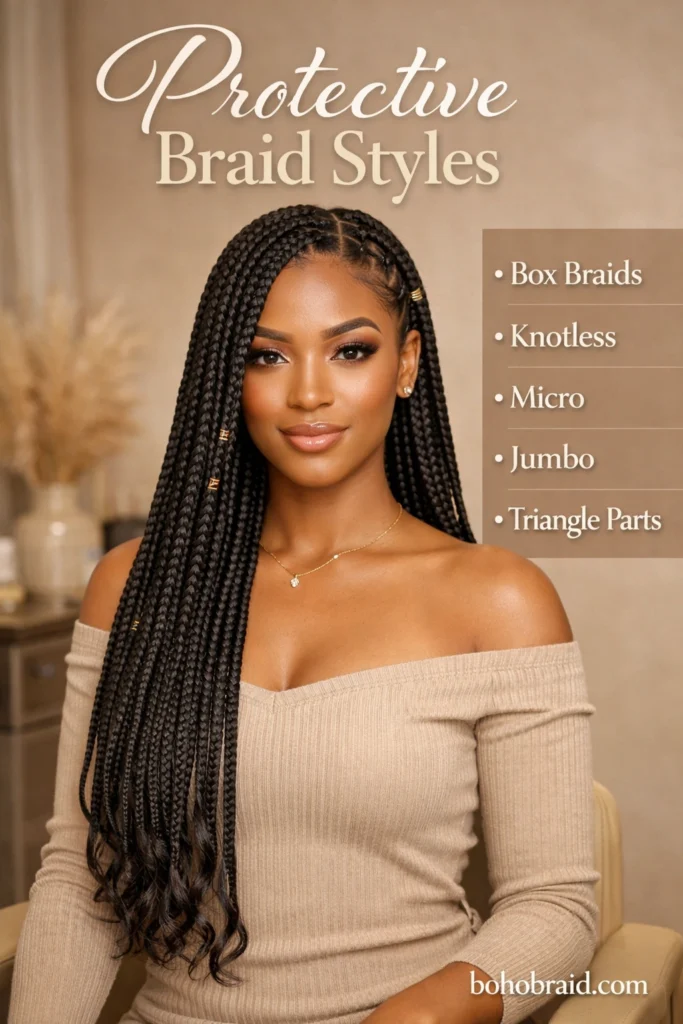
These are the styles most people mean when they search types of braids for protective wear.
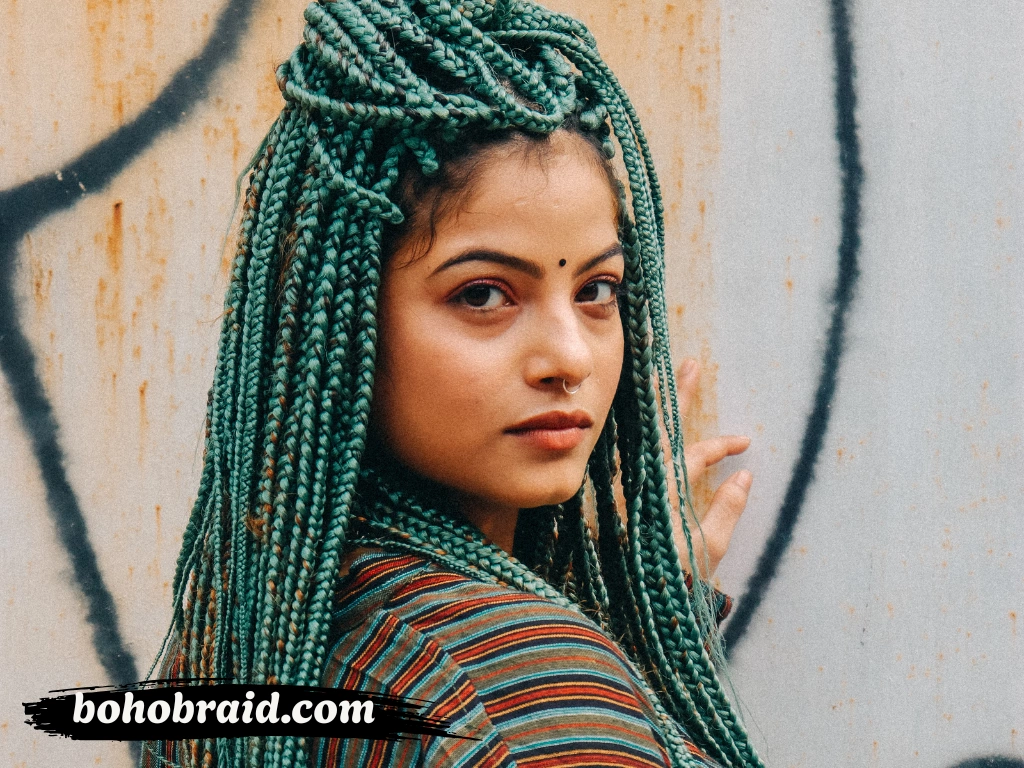
13. Box Braids
Best for: protective styling, versatility, long wear
Look: individual braids with square/box-shaped parts
Typical wear window: many guides and stylists recommend around 4–8 weeks depending on maintenance and your hair/scalp.
Why it matters: leaving braids in too long can increase tangling, buildup, and breakage during takedown.
14. Knotless Braids
Best for: lower tension, more natural start at the root
Look: braids start with your natural hair and “feed in” extensions
Why people choose them: less pulling at the scalp compared with traditional knots
Typical wear window: often discussed as 6–8 weeks for many people, with care and touch-ups.
15. Micro Braids / Mini Braids
Best for: long-lasting detail, very natural movement
Pro: extremely versatile styling
Con: installation and takedown take time—be patient to avoid breakage.
16. Jumbo Braids
Best for: faster install, bold look
Pro: less time in the chair
Con: can slip sooner and may not last as long as smaller braids.
17. Goddess Braids (Large, Often Scalp-Based)
Best for: elegant protective looks
Look: thicker braids, sometimes like oversized cornrows
Pro: beautiful updos and patterns.
18. Triangle Part Braids
Best for: a modern twist on box braids
Look: triangular parting instead of squares
Pro: instantly looks “different” even with classic lengths.
4) Twist-Braid Hybrids (Same Vibe, Different Technique)
Many people group these into “types of braids” because they’re installed similarly and worn as protective styles.
19. Senegalese Twists
Look: two-strand twists (sleek and rope-like)
Best for: lightweight protective styling
20. Passion Twists
Look: softer, more boho texture than Senegalese twists
Best for: beachy, romantic styles
21. Marley Twists
Look: chunkier twists using textured hair
Best for: natural-looking volume
22. Faux Locs (Butterfly, Distressed, Soft Locs)
Look: loc-like finish installed as a protective style
Best for: a loc aesthetic without committing long-term
(These are often featured alongside braids in modern style lists.)
How to Choose the Right Braid Style (A Simple Decision Framework)
Use these 5 questions:
- How long do you want to wear it?
- A few hours: French, Dutch, fishtail
- 1–2 weeks: cornrows, feed-in styles
- Several weeks: box braids, knotless, twists
- How sensitive is your scalp?
If you’re tender-headed or prone to edge thinning, prioritize low-tension installs and avoid “pain = normal.” Dermatology sources warn repeated tension can contribute to traction alopecia. - Do you want a natural finish or bold volume?
- Natural: knotless, small/medium box braids
- Bold: jumbo braids, thick Ghana braids, stitch patterns
- How much daily maintenance can you do?
- Minimal: scalp braids, larger knotless
- Medium: box braids with routine moisturizing
- Higher: boho/curly ends, faux locs
- What’s your hair length right now?
Short hair can still do Dutch braids, cornrows, mini braids, or feed-in styles with the right technique.
Braid Care That Actually Extends Wear (Without Scalp Drama)
Clean your scalp (yes, even with braids)
Target the scalp with a gentle cleanser or diluted shampoo and rinse carefully. Beauty editors and stylists commonly recommend washing in intervals (often every couple of weeks, depending on scalp and activity).
Moisturize lightly, consistently
Think: hydrating mist + light oil on the scalp (not heavy grease that attracts buildup).
Protect at night
Satin scarf/bonnet reduces frizz and helps braids stay neat longer.
Watch the warning signs
Remove or loosen braids if you notice:
- persistent soreness
- bumps along the hairline
- thinning edges
- headaches from tension
Tight hairstyles can stress follicles over time; medical sources flag tight braids and repeated pulling as a risk factor for traction alopecia.
FAQs
What are the most popular types of braids right now?
Box braids, knotless braids, feed-in braids, cornrows, stitch braids, and passion twists are among the most requested styles in recent style roundups.
Which braid style is best for hair growth?
Braids don’t magically make hair grow faster—but low-tension protective styles can help you retain length by reducing daily manipulation. The key is gentle installation and scalp care.
How long should I keep braids in?
Many style guides and stylists commonly suggest a window around 4–8 weeks, depending on the style, your scalp, and how well you maintain it.
Are knotless braids better than box braids?
Knotless braids are often described as lower tension because they start without a tight knot at the root, which can feel more comfortable for many people.
