
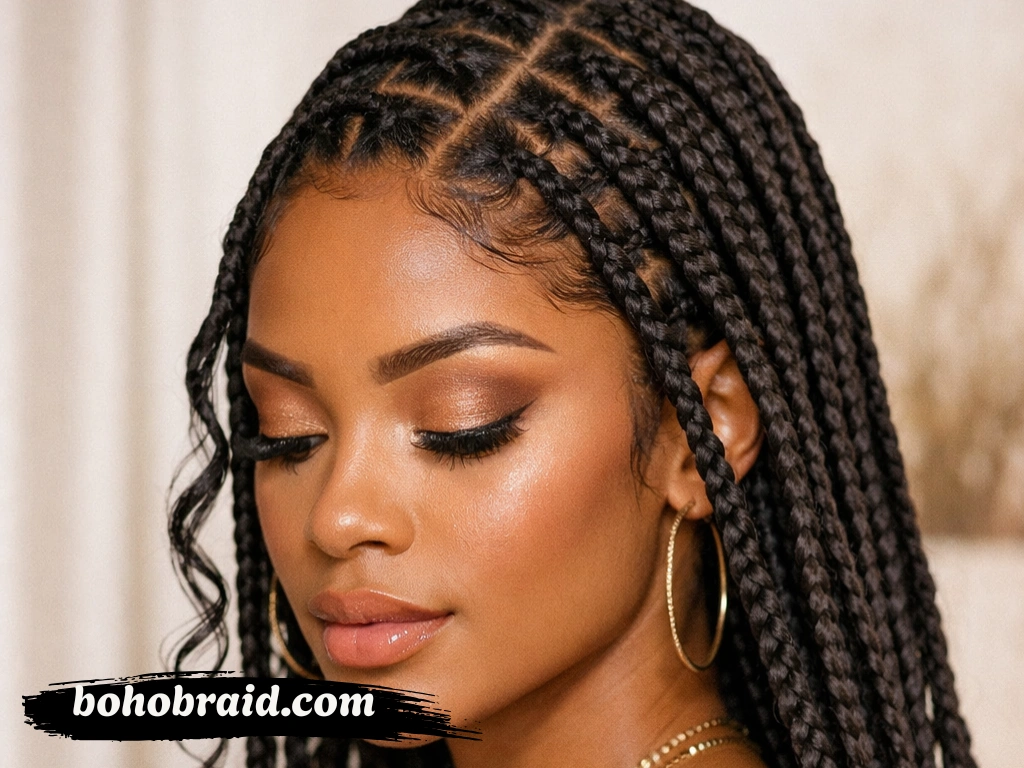
Fulani goddess braids are one of the most beautiful protective hairstyles, blending the traditional elegance of Fulani braids with the soft, curly texture of goddess braids. This hairstyle has become a top choice for women who want a look that is stylish, feminine, and practical at the same time. Fulani goddess braids often feature neat cornrows, braided sections, decorative parts, and loose curly strands that add movement and charm.
They work well for casual days, special events, vacations, and even professional settings. Because they combine culture, beauty, and versatility, Fulani goddess braids continue to trend in salons and on social media. In this guide, you will learn everything you need to know before choosing this hairstyle.
1. What Are Fulani Goddess Braids?
Fulani goddess braids are a modern variation of the classic Fulani braid style inspired by the Fulani people of West Africa. Traditional Fulani braids usually include a center braid or central cornrow, side braids, and unique parting patterns. The goddess version adds loose curly strands or curly extensions throughout the braids for a softer and more glamorous finish. This combination creates a hairstyle that looks both cultural and trendy.
Fulani goddess braids can be worn long, medium, or short depending on personal preference. They also allow room for creativity with beads, cuffs, shells, and different parting styles. For many women, this hairstyle offers the perfect mix of beauty, heritage, and everyday convenience.
2. Why Fulani Goddess Braids Are So Popular
The growing popularity of Fulani goddess braids comes from their ability to combine fashion and function. Many women love this hairstyle because it protects natural hair while still looking stylish and fresh. The curly strands soften the overall appearance and create a romantic, effortless effect that stands out. Fulani goddess braids are also highly customizable, which means they can suit different face shapes, hair textures, and style preferences.
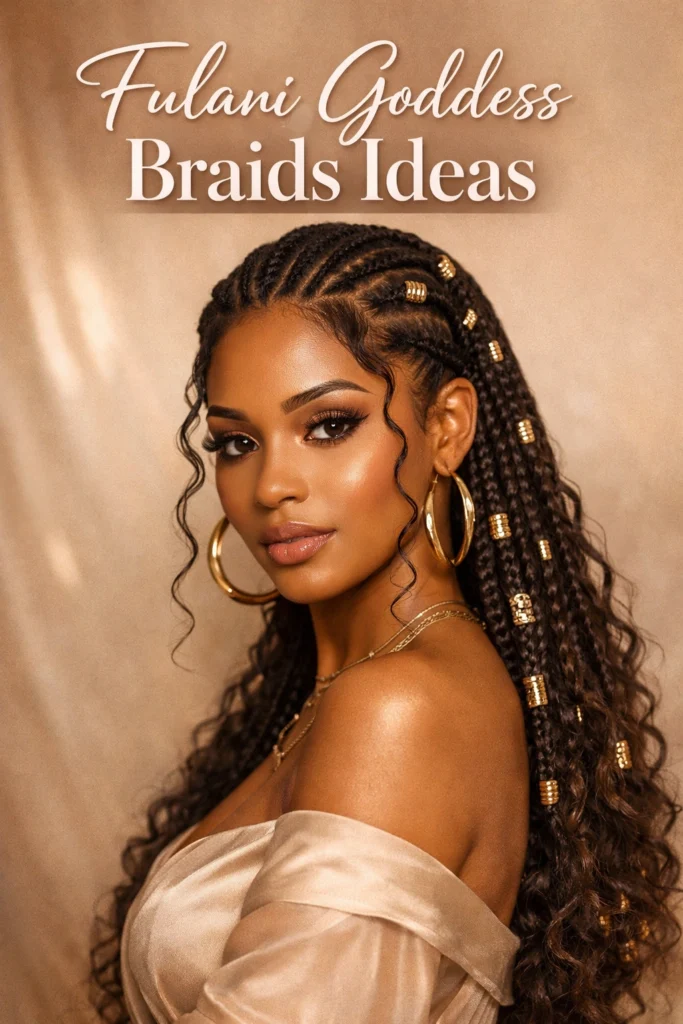
Whether someone wants a bold festival look or a polished everyday hairstyle, this braid style can adapt beautifully. Social media has also helped fuel its popularity, as influencers and hairstylists showcase creative versions online. Overall, it is a hairstyle that offers versatility, beauty, and cultural richness.
3. Best Hair Types and Lengths for Fulani Goddess Braids
Fulani goddess braids can work on many hair types, especially natural textured hair, relaxed hair, or stretched hair. Stylists often recommend starting with clean, moisturized, and detangled hair for the best result. While medium to long hair may make installation easier, even shorter hair can achieve this look with the help of braiding extensions. Hair density also matters because fuller hair can support the braid structure well, though thinner hair can still look stunning with the right technique.
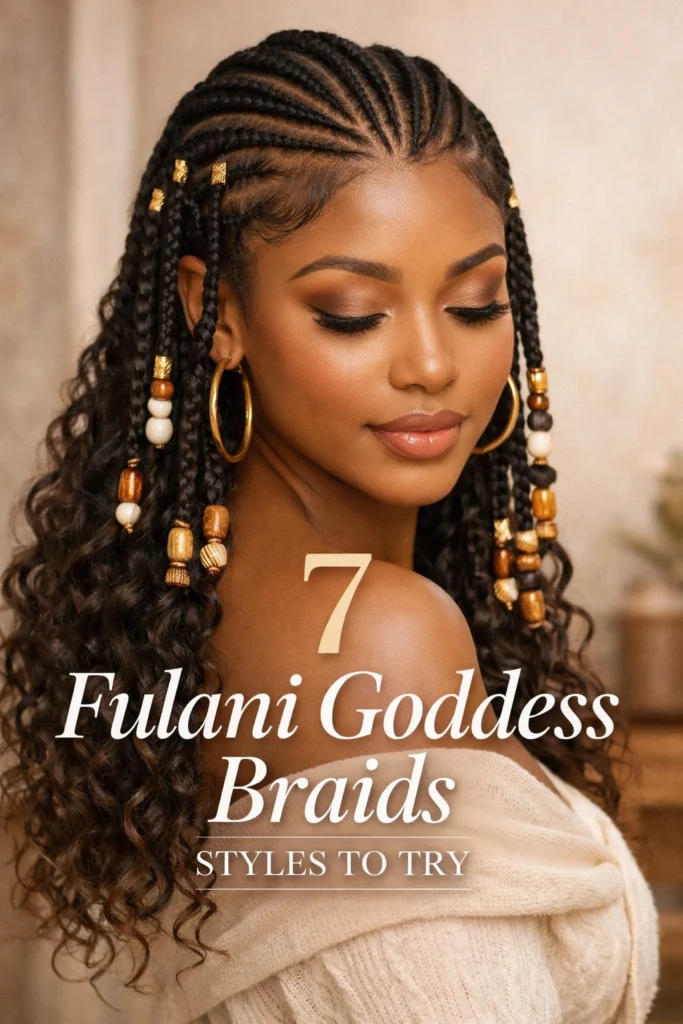
The final appearance depends more on the stylist’s skill and the chosen braid size than on natural length alone. Whether your hair is coily, curly, or kinky, Fulani goddess braids can be tailored to match your texture and desired level of volume.
4. Fulani Goddess Braids Styling Ideas
One reason Fulani goddess braids remain in demand is the wide range of styling possibilities. You can wear them with a middle part, tribal-inspired side braids, or long knotless sections with curly ends. Some women prefer waist-length braids for a dramatic finish, while others choose shoulder-length styles for easy maintenance. Accessories like beads, gold cuffs, clear beads, cowrie shells, and colored strings can elevate the final look.
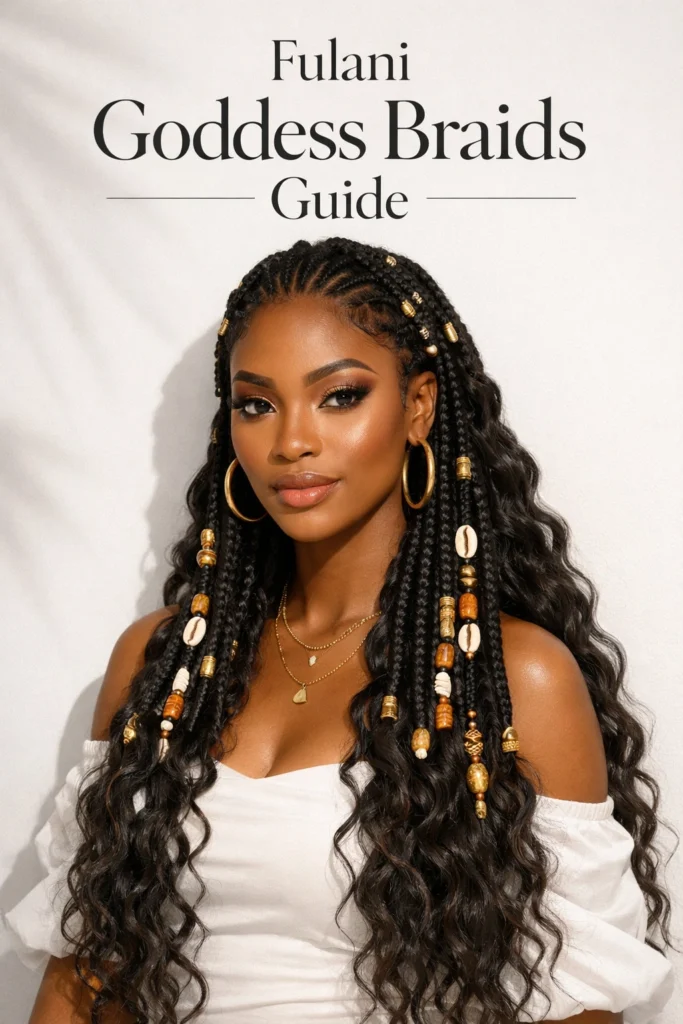
You can also experiment with hair colors such as black, brown, burgundy, honey blonde, or ombré shades to create a more personalized hairstyle. Fulani goddess braids can be worn down, tied into a ponytail, styled in half-up looks, or wrapped into a bun. This flexibility makes them ideal for any occasion.
5. How to Maintain Fulani Goddess Braids
Proper care is essential if you want your Fulani goddess braids to stay neat and attractive for weeks. Start by protecting your braids at night with a satin bonnet or silk scarf to reduce frizz and preserve the curly pieces. Keep your scalp clean by using a lightweight scalp cleanser or diluted shampoo between the braid parts. Moisturizing the scalp with braid spray or light oil can help prevent dryness and itching.
It is also important to avoid heavy product buildup, as this can make the hairstyle look dull and messy. Refreshing the curly strands with mousse or water-based curl spray can bring back softness and bounce. With good care, Fulani goddess braids can remain beautiful and comfortable for longer.
6. How Long Fulani Goddess Braids Last
Fulani goddess braids typically last between two and six weeks depending on braid size, hair texture, maintenance routine, and how fast your natural hair grows. Smaller braids may last longer because they hold their structure better, while larger braids may loosen sooner. The curly strands often need extra care because they can tangle or lose definition over time. If you want the style to remain fresh, regular touch-ups around the edges and proper nighttime protection are important.
Many people choose to keep the style for around four weeks to balance beauty and scalp health. Leaving braids in for too long can lead to buildup, dryness, or tangling at the roots. A healthy removal process is just as important as installation.
7. Are Fulani Goddess Braids Worth It?
For many women, Fulani goddess braids are absolutely worth it because they offer both protective benefits and a striking appearance. This hairstyle helps reduce daily manipulation of natural hair, which can support length retention when done correctly. At the same time, the curly pieces and unique braid pattern create a fashionable look that feels modern and expressive.
Fulani goddess braids are suitable for vacations, weddings, birthdays, and everyday wear, making them a versatile investment. While installation may take several hours and require regular care, the final result is often worth the time and effort. If you want a hairstyle that celebrates tradition while embracing current beauty trends, Fulani goddess braids are an excellent option to consider.
Conclusion
Fulani goddess braids are more than just a trendy hairstyle. They are a beautiful fusion of tradition, creativity, and protective styling. With their signature braid patterns, soft curly strands, and endless styling options, they continue to appeal to women who want elegance with personality. This hairstyle works for many hair lengths and textures, and it can be customized with accessories, colors, and braid sizes to fit individual taste.
With the right installation and maintenance, Fulani goddess braids can stay fresh and beautiful for weeks. Whether you want a bold new look or a practical protective style, Fulani goddess braids are a timeless choice that delivers both beauty and confidence.
FAQs
1. What is the difference between Fulani braids and Fulani goddess braids?
Fulani braids usually feature traditional cornrow patterns and braided sections, while Fulani goddess braids include loose curly strands or curly ends for a softer and more glamorous look.
2. How long do Fulani goddess braids last?
They usually last between two and six weeks, depending on maintenance, braid size, and hair growth.
3. Are Fulani goddess braids a protective style?
Yes, they are considered a protective hairstyle because they reduce daily manipulation and help protect natural hair when installed and removed properly.
4. Can Fulani goddess braids work on short hair?
Yes, short hair can achieve this look with the help of braiding extensions and a skilled stylist.
5. How do I keep the curly parts looking fresh?
Use mousse, curl refresher spray, or light water-based products, and protect the braids with a satin scarf or bonnet at night.
6. Are Fulani goddess braids good for special occasions?
Yes, they are perfect for weddings, parties, vacations, festivals, and everyday styling because they look elegant and eye-catching.
7. Do Fulani goddess braids hurt?
They should not be painfully tight. A professional stylist should install them securely but gently to avoid scalp tension or breakage.
