
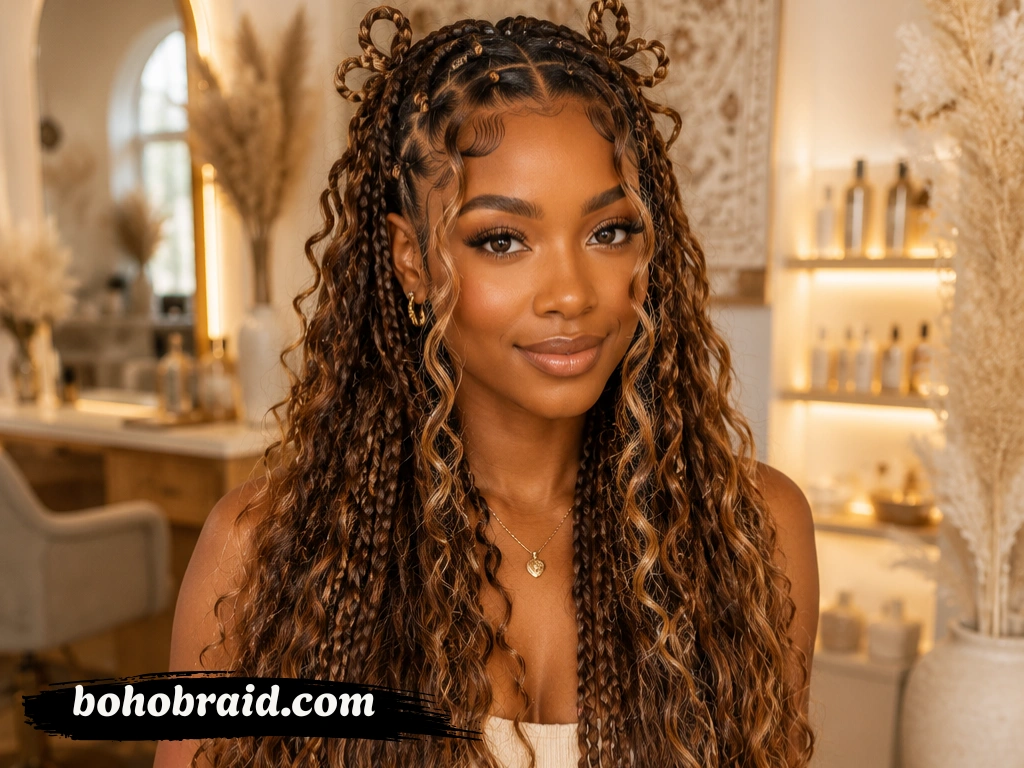
Butterfly braids are a stylish protective hairstyle known for their soft, textured, and slightly distressed appearance. Unlike traditional box braids, this look features loose loops and fluffy sections that create a beautiful butterfly-wing effect throughout each braid. The hairstyle combines elegance, volume, and a relaxed bohemian finish, making it suitable for vacations, special occasions, and everyday wear.
Whether you prefer long butterfly braids, a short braided bob, colorful extensions, or curly ends, there are many ways to personalize the style. This guide explores the most popular butterfly braid hairstyles, installation methods, hair requirements, maintenance advice, and styling ideas to help you choose a look that suits your hair, lifestyle, and personality.
1. Classic Long Butterfly Braids
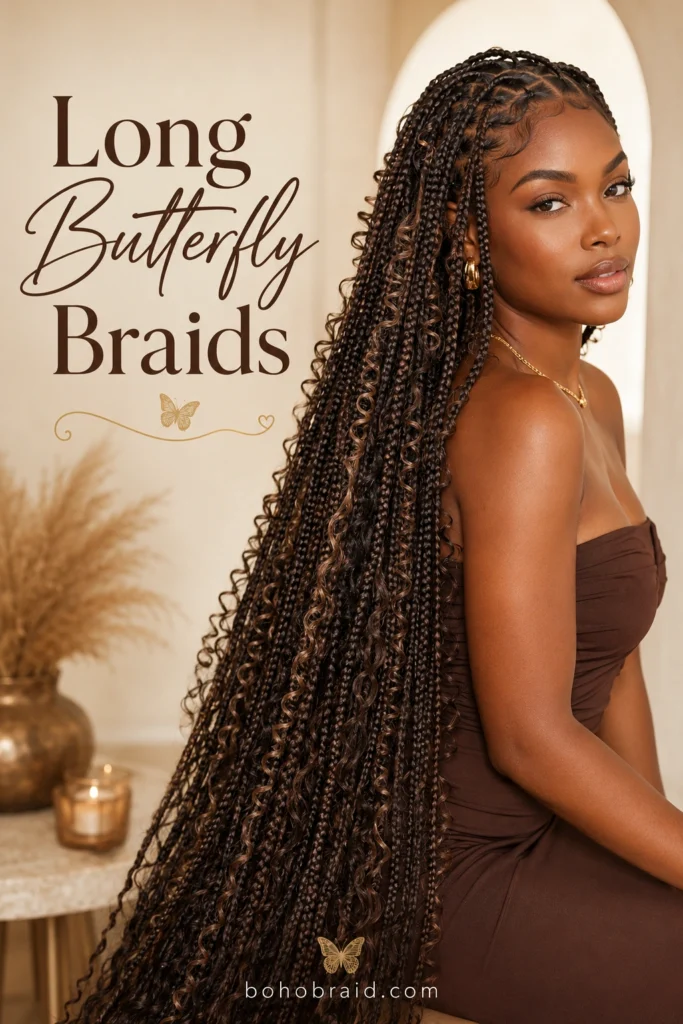
Long butterfly braids are one of the most popular versions of this protective hairstyle. They typically fall below the waist and feature large, fluffy loops throughout the braided length.
The extra length creates dramatic movement and allows the butterfly texture to stand out clearly. Long braids can be worn loose, swept over one shoulder, tied into a low ponytail, or styled in a half-up look.
Although long butterfly braids create a striking appearance, they can feel heavier than shorter styles. Ask your braider to avoid using too much extension hair, especially around the hairline. Lightweight installation helps reduce unnecessary tension and makes the style more comfortable to wear.
For an elegant finish, choose natural black, dark brown, or warm chocolate extensions. Honey-blonde highlights can also add dimension without overpowering the hairstyle.
2. Short Butterfly Braids
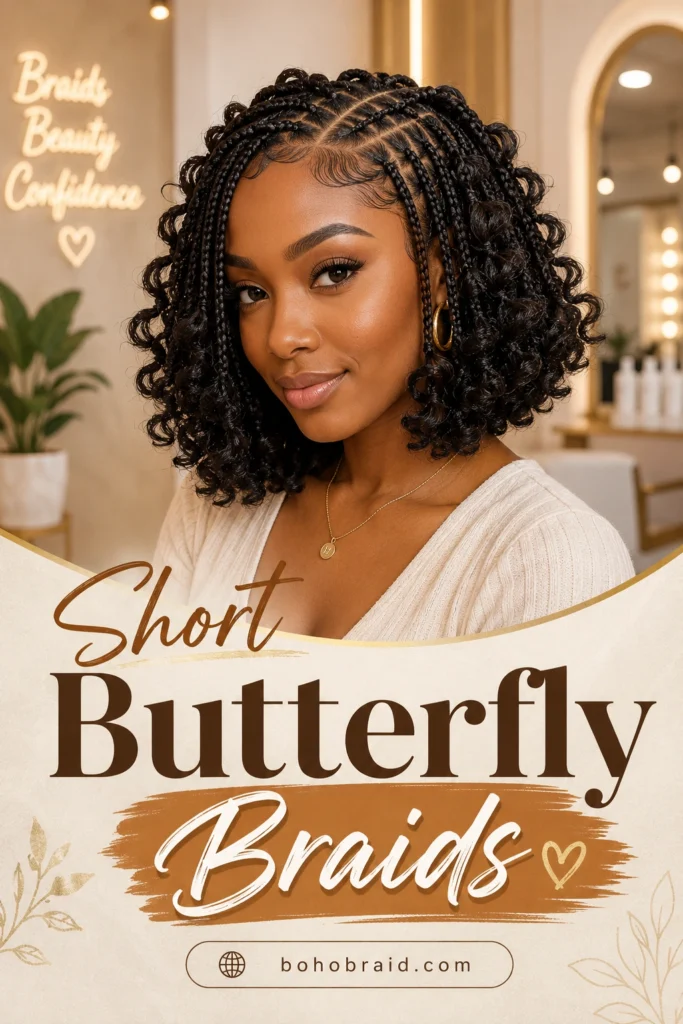
Short butterfly braids are a practical option for anyone who wants the textured look without the weight of long extensions. The braids may fall around the chin, shoulders, or upper back, depending on the desired length.
A short butterfly braid bob looks modern, playful, and easy to manage. It can be styled with a middle part, deep side part, or asymmetrical shape. Decorative cuffs and beads can make the shorter length feel even more distinctive.
Short styles are usually quicker to install and easier to wash, moisturize, and sleep in. They are also a good choice for warm weather because less extension hair is used.
To create a polished shape, make sure the braid ends are trimmed evenly. Curled or sealed ends can help the bob maintain a clean silhouette while preserving the hairstyle’s soft texture.
3. Jumbo Butterfly Braids
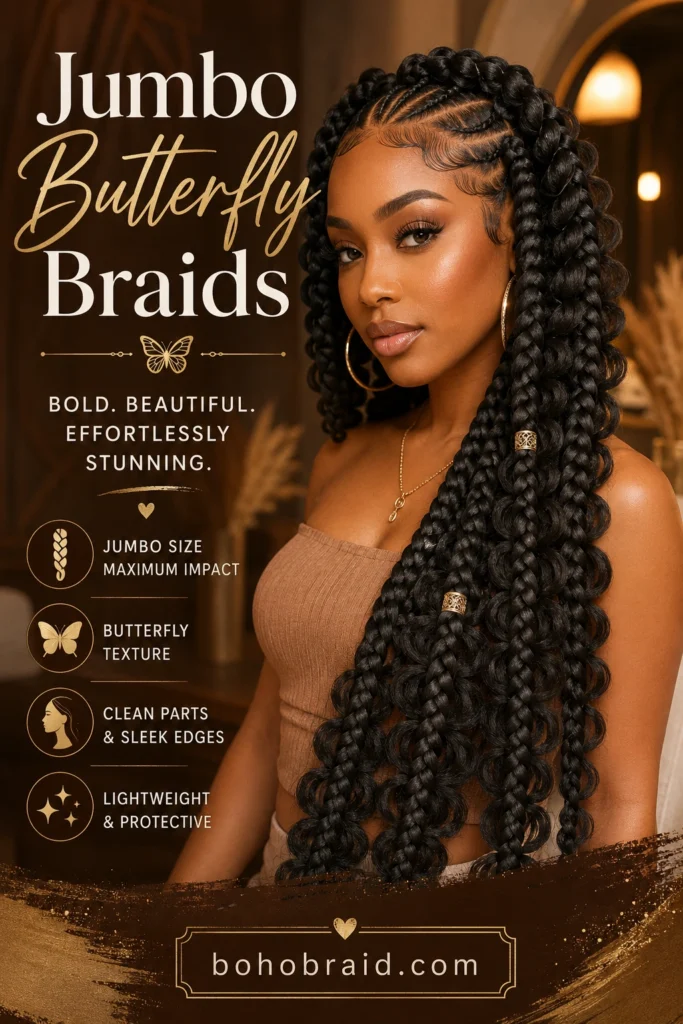
Jumbo butterfly braids create a bold look using large braid sections and thick extension hair. Because fewer individual braids are required, the installation process may be faster than small or medium butterfly braids.
The oversized sections highlight the distressed loops and give the hairstyle a full, sculptural appearance. Jumbo braids work especially well with long lengths, high ponytails, and statement accessories.
However, larger braids should still feel comfortable at the roots. Extremely heavy extensions can pull on the scalp and place stress on fragile edges. A skilled braider should create neat sections without making the style excessively tight.
For a balanced result, choose lightweight pre-stretched braiding hair and avoid adding too many accessories to every braid. A few well-placed cuffs or rings can enhance the look without increasing its weight.
4. Medium Butterfly Braids
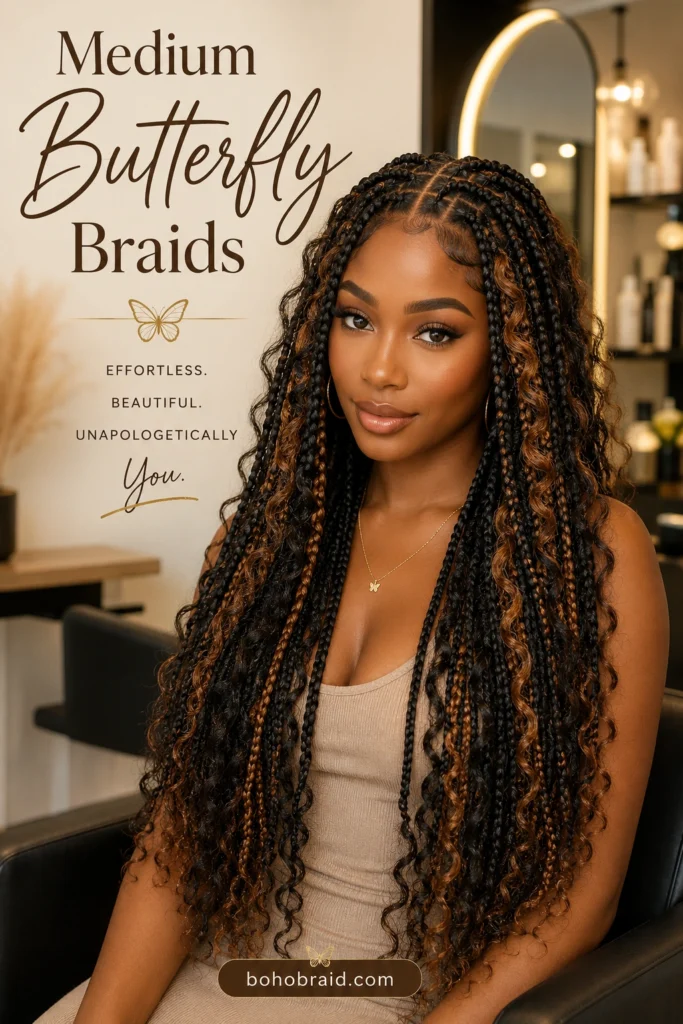
Medium butterfly braids offer a versatile balance between jumbo and small braids. They provide enough thickness to display the butterfly texture while remaining manageable for daily styling.
This size works well for many hair lengths and face shapes. Medium braids can be worn in a bun, ponytail, side-swept style, or half-up hairstyle without becoming too bulky.
They are also suitable for people trying butterfly braids for the first time. The installation is detailed enough to create a beautiful finish but typically requires less time than small braids.
Natural black is a timeless color choice, while warm brown, burgundy, caramel, and copper extensions can make the textured sections more noticeable. For a subtle highlighted effect, combine two similar shades rather than using one solid color throughout the hairstyle.
5. Butterfly Braids With Curly Ends
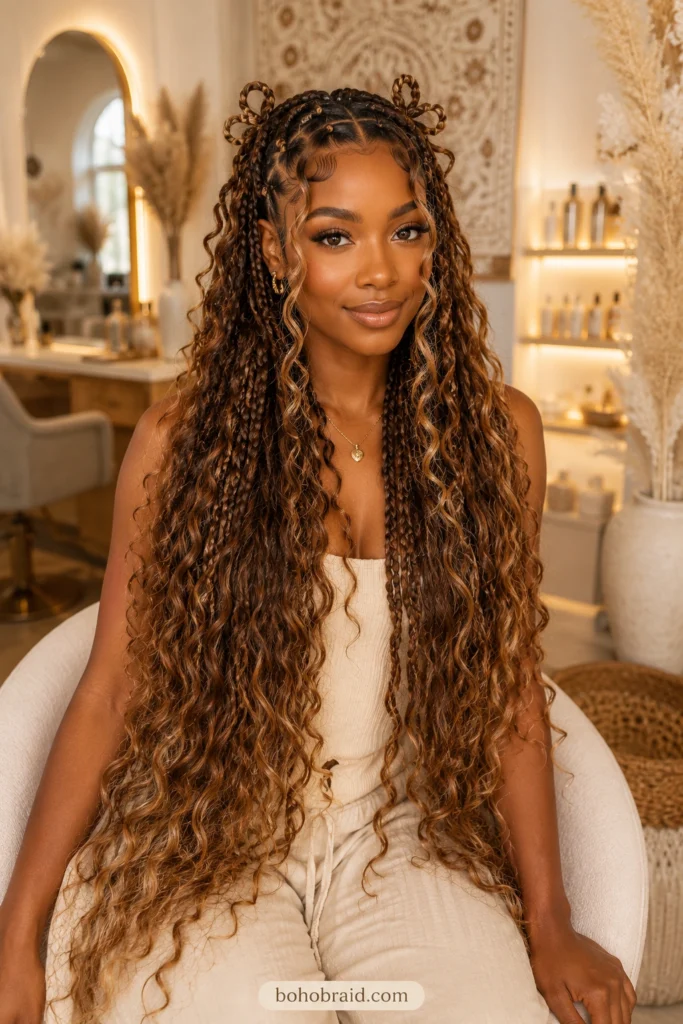
Butterfly braids with curly ends combine textured braids with soft, flowing curls. The braids may stop near the shoulders, chest, or waist before transitioning into loose spiral or wave patterns.
This variation creates a romantic bohemian appearance and adds movement to the hairstyle. It is particularly popular for weddings, vacations, birthdays, and summer events.
Water-wave or deep-wave extension hair can be used to create the curly sections. Human hair curls may offer a more natural appearance, but they often require additional maintenance and can be more expensive.
To prevent tangling, separate the curls gently with your fingers and apply a lightweight mousse when necessary. Avoid using thick products that may cause buildup. Sleeping with the curls in a loose satin bonnet can help preserve their shape and softness.
6. Butterfly Braids With Color
Color can transform butterfly braids from a classic protective style into a personalized statement. Popular shades include honey blonde, burgundy, copper, ginger, chocolate brown, platinum blonde, and deep red.
Ombré butterfly braids are another attractive option. The braids may begin with a dark natural shade at the roots and gradually transition into caramel, blonde, or another contrasting color.
For a subtle look, add colored strands to only a few braids around the face. This creates a highlighted effect without changing the entire hairstyle. Those who prefer a bolder appearance can use bright colors such as blue, purple, pink, or green.
When selecting a shade, consider your skin undertone, wardrobe, and maintenance preferences. Darker colors tend to look polished for longer, while very light extensions may show product buildup more quickly.
7. Butterfly Braids With Beads and Accessories
Accessories can make butterfly braids feel more creative and distinctive. Wooden beads, clear beads, gold cuffs, metallic rings, shells, thread, and hair jewelry can all complement the fluffy braided texture.
Beads are often added to the ends of shorter braids or placed on selected face-framing sections. Gold cuffs look especially elegant against black, brown, or burgundy extensions.
Avoid placing heavy decorations on every braid. Too many accessories may increase tension and make the style uncomfortable. Instead, choose several focal points around the front, sides, or ends.
Hair string can also be wrapped around individual braids to introduce color and pattern. For a coordinated appearance, select accessories that complement your jewelry, outfit, or event theme.
8. Butterfly Braids in a High Ponytail
A high ponytail is a stylish way to wear butterfly braids while keeping the hair away from the face. The textured braids create extra volume, giving the ponytail a full and dramatic appearance.
Before placing the braids into a ponytail, make sure the style does not feel too heavy. Gather the hair gently and secure it with a large, fabric-covered hair tie. Thin elastic bands may place excessive pressure on the braids.
Leave two or three braids loose around the face for a softer finish. You can also wrap one braid around the base of the ponytail to conceal the hair tie.
Avoid wearing a tight high ponytail every day. Regularly changing the position of the braids can reduce stress around the edges and help protect the hairline.
9. Half-Up, Half-Down Butterfly Braids
The half-up, half-down style is an easy way to showcase the length and texture of butterfly braids. The upper section can be arranged into a bun, ponytail, or loosely secured twist while the remaining braids hang freely.
This hairstyle works well for casual outings, parties, photo sessions, and formal occasions. It keeps some hair away from the face while maintaining the beauty of the full braided length.
For a balanced shape, avoid gathering too many braids into the top section. A smaller half-up ponytail usually feels lighter and creates a more flattering silhouette.
Decorative clips, gold cuffs, or a soft scarf can be added to the upper section. Face-framing braids may also be left loose to complement the relaxed butterfly texture.
10. Butterfly Braids With a Side Part
A side part gives butterfly braids a soft, flattering shape and creates natural volume around the face. It is a useful option for people who prefer an asymmetrical hairstyle or want to highlight one side of their face.
A deep side part can make long braids look glamorous, while a gentle side part creates a more casual everyday appearance. The front sections may be decorated with cuffs, beads, or subtle colored extensions.
The parting should be planned before the braiding process begins. Changing a fixed braid pattern after installation can be difficult and may cause the roots to pull in an uncomfortable direction.
Ask your stylist to create clean but comfortable sections. The braids around the part and hairline should not feel tighter than the rest of the hairstyle.
How Are Butterfly Braids Installed?
Butterfly braids can be installed using traditional individual braiding, a feed-in technique, or a crochet method. The exact process depends on the desired size, length, and texture.
The stylist usually begins by cleansing, detangling, and stretching the natural hair. The hair is then divided into neat sections. Synthetic braiding hair is added gradually while small loops are gently pulled out to form the butterfly effect.
For crochet butterfly braids, the natural hair may be braided into cornrows before pre-made extensions are attached with a crochet hook. This method can reduce installation time, although the final appearance depends on the quality and placement of the extensions.
The style should feel secure but not painful. Excessive tightness can cause discomfort, breakage, scalp irritation, and tension around the edges.
What Hair Is Best for Butterfly Braids?
Pre-stretched synthetic braiding hair is commonly used for butterfly braids because it is affordable, lightweight, and easy to blend. Kanekalon-style extensions are popular for creating the braided base.
Water-wave, deep-wave, or curly extension hair may be added to produce loose loops and curly ends. Some styles combine regular braiding hair with curly synthetic or human hair strands.
The amount of hair needed depends on the braid size, length, density, and installation technique. Jumbo braids require fewer sections but may use more hair per braid. Small braids require more individual sections and usually take longer to install.
Before purchasing extensions, discuss the desired style with your braider. This can help you select the correct texture, number of packs, and color combination.
How Long Do Butterfly Braids Last?
Butterfly braids commonly last between four and eight weeks, depending on the installation method, hair type, scalp care, braid size, and daily maintenance.
Because the style has an intentionally distressed appearance, slight frizz may blend naturally into the design. However, excessive buildup, tangling, loose roots, or an irritated scalp may indicate that the braids should be removed sooner.
Keeping protective styles installed for too long can lead to matting and make detangling more difficult. Pay attention to the condition of your natural hair rather than following a fixed timeline.
People with fine hair, fragile edges, or sensitive scalps may benefit from wearing the style for a shorter period.
How to Maintain Butterfly Braids
Proper maintenance helps butterfly braids stay attractive while protecting the natural hair underneath. Cover the braids with a satin or silk bonnet at night to reduce friction and frizz.
Clean the scalp gently with diluted shampoo or a scalp-cleansing product. Focus on the roots and rinse carefully to avoid leaving residue behind. Allow the braids and scalp to dry completely.
Apply a lightweight scalp oil only when necessary. Using too much oil, gel, or edge control can create buildup and make the braids appear dull.
For curly ends, separate tangled strands gently with your fingers. A small amount of mousse can help refresh the curls and control loose fibers. Avoid brushing the textured loops because this may damage the butterfly effect.
Are Butterfly Braids a Protective Style?
Butterfly braids can function as a protective hairstyle when they are installed and maintained correctly. They help reduce daily manipulation, protect the ends, and provide a break from frequent heat styling.
However, a hairstyle is not automatically protective simply because extensions are used. Braids that are too tight, too heavy, or left in for too long may cause breakage rather than prevent it.
Before installation, make sure the natural hair is clean, conditioned, and properly detangled. During wear, keep the scalp clean and moisturized without overloading it with products.
After removal, detangle carefully and remove shed hair before washing. Following a gentle removal process is essential for maintaining healthy natural hair.
Conclusion
Butterfly braids offer a beautiful combination of texture, volume, and protective styling. Their signature loose loops create a soft, bohemian finish that can be adapted to different lengths, colors, sizes, and personal styles.
From classic long butterfly braids and short bobs to colorful versions, curly ends, ponytails, and accessorized looks, there is an option for almost every preference. The best results come from lightweight installation, proper scalp care, nighttime protection, and timely removal.
Choose an experienced braider, communicate your desired length and tension level, and select extensions that support a comfortable finished style. With thoughtful installation and maintenance, butterfly braids can be a versatile and eye-catching addition to your hairstyle collection.
FAQs
What is the difference between butterfly braids and butterfly locs?
Butterfly braids maintain a visible braided structure with loose loops pulled from the braid. Butterfly locs are usually wrapped or crocheted to create a distressed faux-loc appearance.
How long does it take to install butterfly braids?
Installation may take approximately four to eight hours, although the exact time depends on the braid size, length, density, and technique used.
How many packs of hair are needed for butterfly braids?
The required amount varies according to the desired style and brand of extension hair. Many styles may require several packs of braiding hair, with additional curly hair for loops or ends. Ask your stylist before purchasing supplies.
Can butterfly braids be washed?
Yes. Clean the scalp gently with diluted shampoo and avoid aggressively rubbing the braided lengths. Rinse carefully and allow the hair and scalp to dry completely.
