
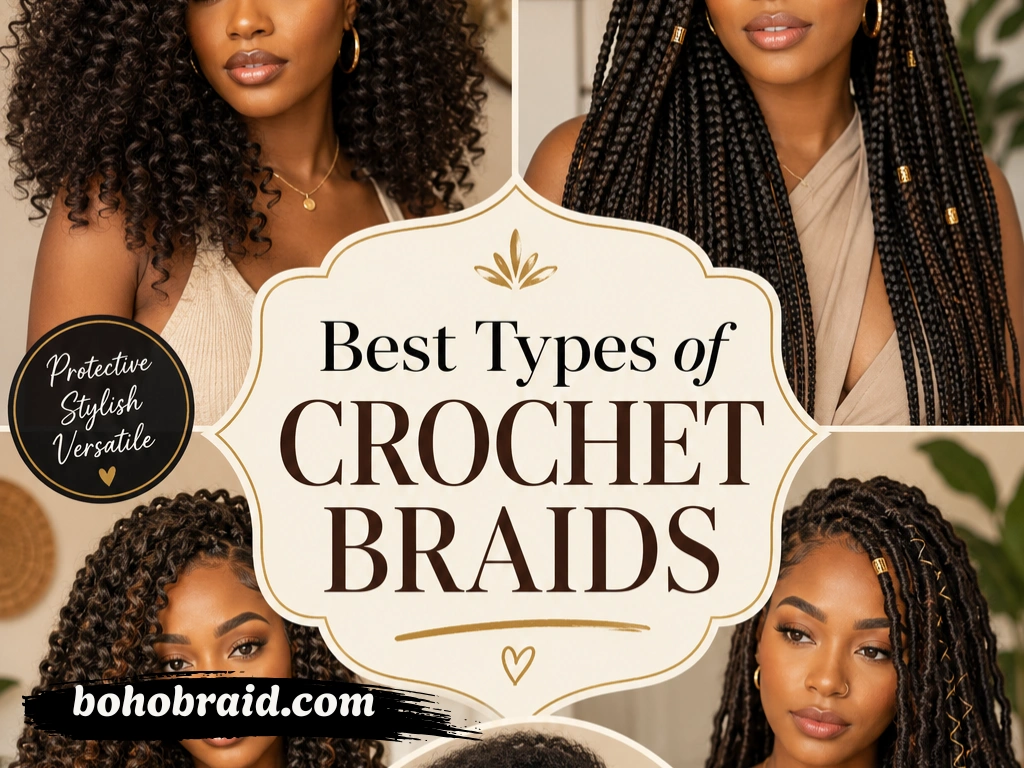
Crochet braids are one of the most versatile protective hairstyles for anyone who wants a stylish look without spending hours installing individual braids. This technique uses a crochet needle to attach pre-braided, twisted, or curly hair extensions to a cornrow base. The result can resemble box braids, bohemian curls, locs, twists, or natural textured hair.
Many people choose crochet braids because they are affordable, lightweight, easy to customize, and relatively quick to install. They can also protect natural hair from daily manipulation while offering countless styling possibilities.
Whether you prefer long flowing curls, short crochet hairstyles, soft waves, faux locs, or classic braided looks, there is a crochet style for nearly every personality, hair length, and occasion.
1. What Are Crochet Braids?
Crochet braids are a protective hairstyle created by first braiding the natural hair into cornrows. A crochet hook or latch hook is then used to pull hair extensions through the cornrows and secure them with loops or knots.
Despite the name, crochet braids do not always look like traditional braids. The technique can be used to install:
- Curly crochet hair
- Box braids
- Passion twists
- Senegalese twists
- Faux locs
- Water wave hair
- Deep wave curls
- Kinky or Afro-textured hair
- Straight crochet extensions
This installation method is popular because the extensions are attached to the braided foundation rather than braided individually from the scalp. As a result, the process is usually faster than installing traditional box braids or individual twists.
The final appearance depends on the type of crochet hair, the cornrow pattern, the amount of hair used, and the installation method.
2. Why Crochet Braids Are a Popular Protective Style
One of the main advantages of crochet braids is their versatility. You can create a dramatic waist-length style, a short curly bob, medium-length twists, or a natural-looking Afro using the same basic installation technique.
Crochet hairstyles are also popular because they can reduce daily styling and protect the natural hair underneath. When installed correctly, the cornrow base keeps the hair tucked away from frequent brushing, combing, heat styling, and environmental exposure.
Other benefits of crochet braids include:
- Faster installation than many individual braid styles
- Lower salon costs in many cases
- Easy access to the scalp
- A wide selection of textures and colors
- Less tension when installed properly
- Simple removal
- Reusable hair options
- Suitable styles for different ages
Crochet braids can be especially convenient for busy people who want a polished hairstyle that requires minimal daily effort. However, the style should not be installed too tightly, and the natural hair still needs moisture and scalp care.
3. Best Types of Crochet Braids to Try
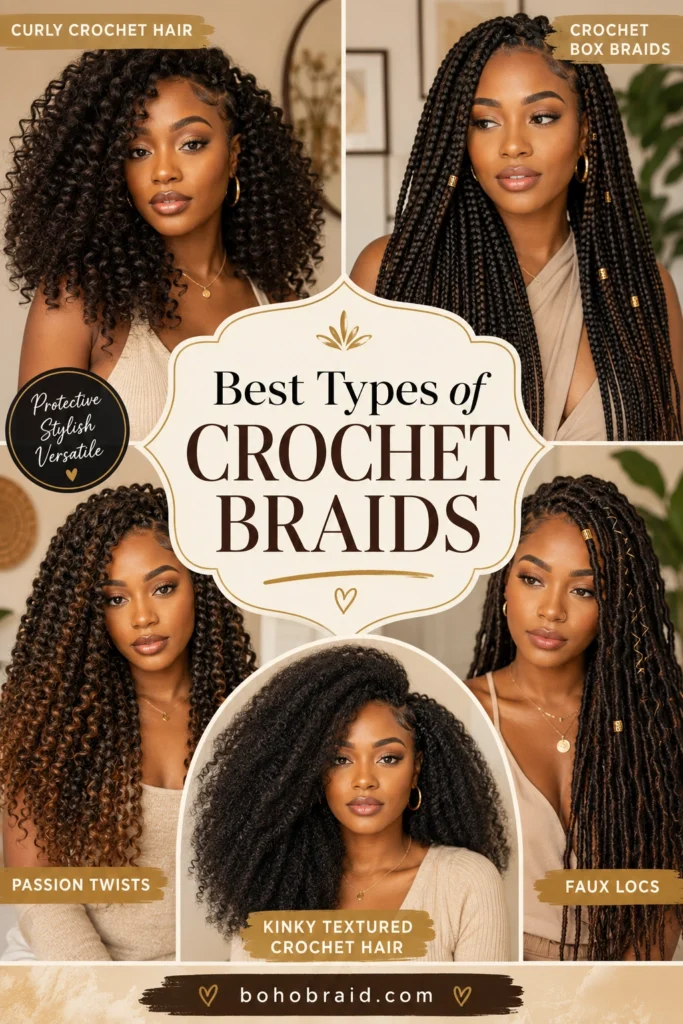
There are many crochet braid styles available, making it easy to find an option that matches your desired texture, length, and level of maintenance.
Curly Crochet Braids
Curly crochet braids create a soft, voluminous appearance. Popular textures include deep wave, water wave, spiral curls, and kinky curls. This style can look romantic, glamorous, or natural depending on the curl pattern.
Crochet Box Braids
Pre-braided crochet box braids offer the appearance of individual box braids with a quicker installation process. They are available in small, medium, jumbo, long, and bob-length versions.
Crochet Passion Twists
Passion twists combine loose curls with soft twisted sections. They are ideal for people who love bohemian and textured hairstyles.
Crochet Faux Locs
Crochet faux locs create the look of traditional locs without a long-term commitment. Options include butterfly locs, soft locs, goddess locs, and distressed locs.
Kinky Crochet Hair
Kinky or Afro-textured crochet hair can blend beautifully with natural hair. It can be styled into puffs, tapered cuts, twist-outs, or rounded Afro shapes.
Straight Crochet Hair
Straight crochet extensions create a sleek look and can be worn with a middle part, side part, layered cut, or shoulder-length finish.
The best crochet braid style depends on your lifestyle, scalp sensitivity, desired maintenance level, and personal taste.
4. Crochet Braids With Curls for a Soft, Natural Look
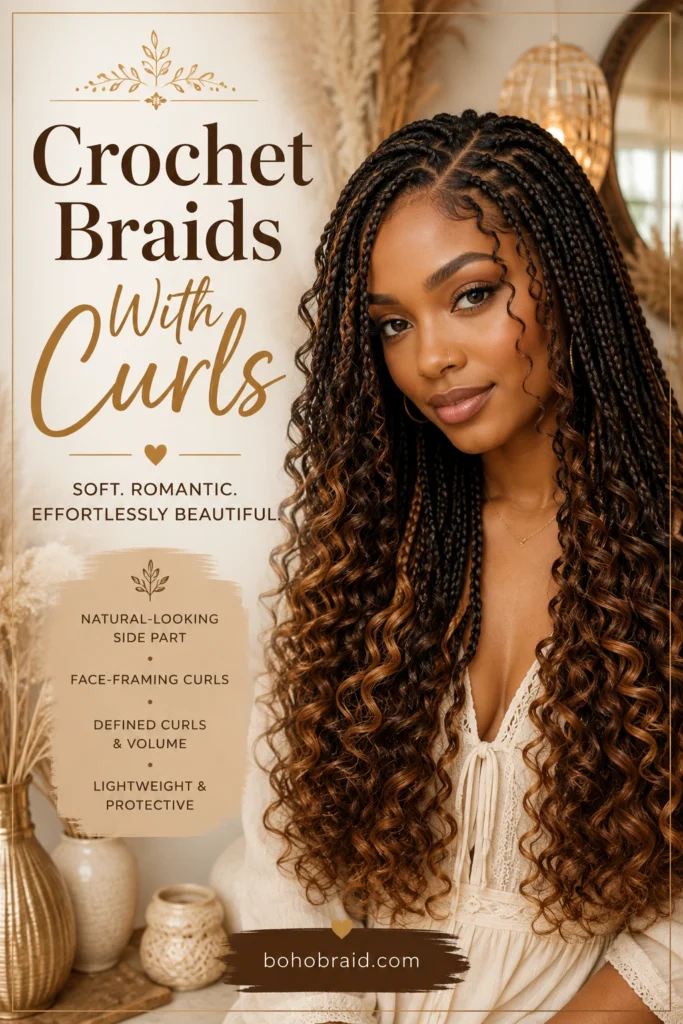
Crochet braids with curls are among the most requested crochet hairstyles because they create volume, movement, and a naturally textured finish. They can be worn long and glamorous or cut into a lightweight shoulder-length style.
Water wave crochet hair is often used for soft, loose curls, while deep wave hair provides a more defined pattern. Kinky curly crochet hair is ideal for achieving a fuller, natural-hair-inspired appearance.
To make curly crochet braids look more realistic, many stylists use the invisible knot method around the hairline and parting area. This technique helps hide the cornrow foundation and creates the appearance that the curls are growing directly from the scalp.
Curly crochet styles may require more maintenance than pre-braided options because the curls can tangle or become frizzy. Separating the hair gently, sleeping with a satin bonnet, and trimming tangled ends can help preserve the style.
A lightweight mousse or curl-refreshing spray may also improve definition, but heavy products should be avoided because they can cause buildup.
5. Short Crochet Braids and Bob Hairstyles
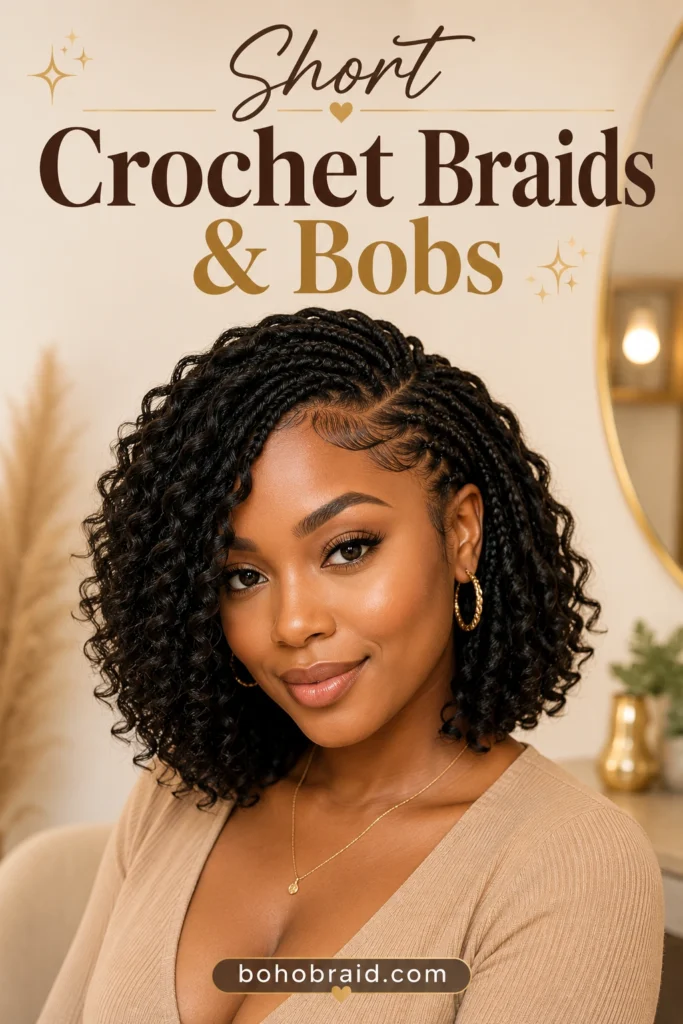
Short crochet braids are a practical option for people who want a stylish protective look without the weight or maintenance of very long extensions. Bob-length crochet styles can frame the face beautifully and are suitable for casual, professional, and formal settings.
Popular short crochet hairstyles include:
- Curly crochet bobs
- Short faux locs
- Shoulder-length passion twists
- Crochet box braid bobs
- Kinky curly tapered cuts
- Layered crochet curls
- Short spring twists
- Crochet hair with bangs
A short crochet bob can feel lighter on the scalp and may be easier to manage at night. It can also require fewer packs of hair, depending on the desired volume.
For a flattering finish, the hair can be shaped according to the face. Layers can add movement to round or square faces, while chin-length styles can highlight the jawline. Side parts create softness, while middle parts offer a balanced and modern appearance.
The ends should be trimmed carefully after installation to create an intentional shape rather than an overly bulky silhouette.
6. How Crochet Braids Are Installed
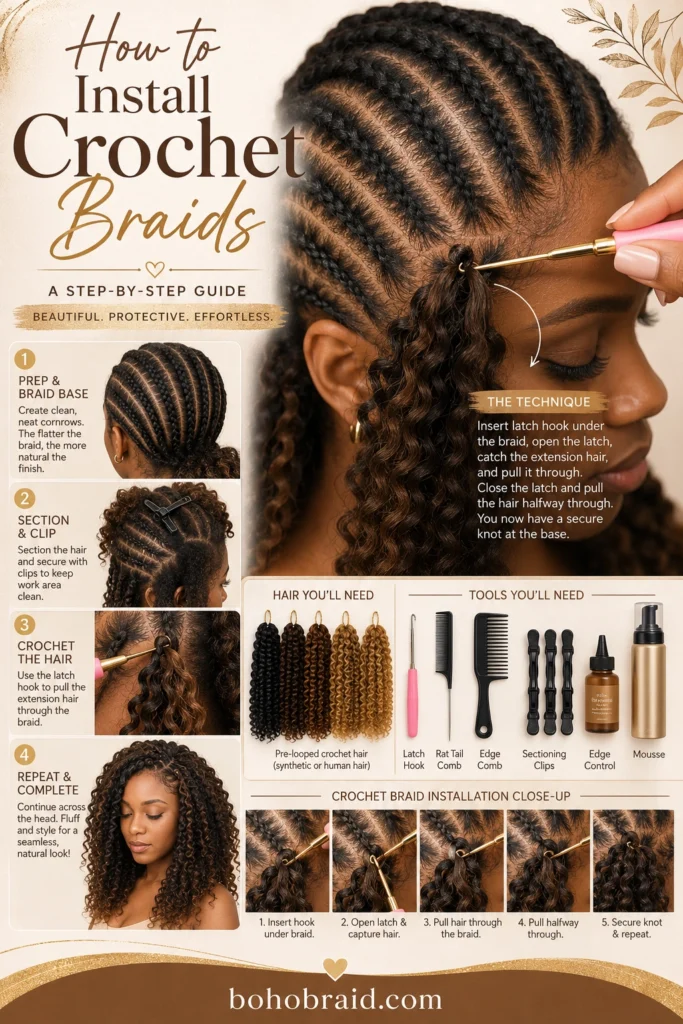
The crochet braid installation process begins with clean, detangled, and moisturized natural hair. The hair is then braided into cornrows that serve as the foundation for the extensions.
A typical installation includes the following steps:
Step 1: Prepare the Natural Hair
Wash and condition the hair thoroughly. A light leave-in conditioner or moisturizer may be applied before braiding. The hair should be completely dry before the extensions are installed.
Step 2: Create the Cornrow Base
The natural hair is braided close to the scalp. Straight-back cornrows are common, but more detailed patterns may be used to create middle parts, side parts, ponytails, or half-up styles.
Step 3: Insert the Crochet Needle
The latch hook is placed underneath a cornrow. A loop of extension hair is attached to the hook and pulled through the braid.
Step 4: Secure the Hair
The ends of the extension are passed through the loop and tightened. Pre-looped crochet hair simplifies this stage.
Step 5: Fill the Entire Head
The hair is installed in evenly spaced sections. More hair may be added near visible areas, while less hair is used at the back to prevent excessive fullness.
Step 6: Shape and Style
The finished crochet hairstyle is trimmed, separated, layered, or arranged according to the desired look.
A professional-looking result depends heavily on a neat foundation and balanced hair placement.
7. How Long Do Crochet Braids Last?
Crochet braids commonly last between four and eight weeks. The exact duration depends on the hair texture, installation quality, daily maintenance, scalp condition, and how quickly the natural hair grows.
Pre-braided crochet styles such as box braids, twists, and faux locs may remain neat longer than loose curly crochet hair. Curly textures can develop frizz or tangles more quickly, especially when exposed to frequent manipulation.
Several factors can affect crochet braid longevity:
- The tightness and neatness of the cornrow base
- The quality of the crochet hair
- The number of times the hair is restyled
- The nighttime protection routine
- Scalp oil production
- Product buildup
- Exposure to water or humidity
- The amount of new growth
Keeping crochet braids installed for too long can lead to matting, buildup, dryness, and difficulty during removal. Even when the extensions still look acceptable, the natural hair underneath may need washing, conditioning, and detangling.
Crochet braids should be removed when the cornrows become loose, the scalp feels uncomfortable, or the natural hair begins to tangle significantly.
8. How to Care for Crochet Braids
Proper maintenance can keep crochet braids fresh while protecting the natural hair underneath. The routine should focus on scalp cleanliness, moisture, gentle handling, and nighttime protection.
Moisturize the Scalp
Use a lightweight braid spray, leave-in mist, or diluted moisturizer on the scalp and cornrows. Avoid soaking the hair with thick creams or heavy oils.
Clean the Scalp Carefully
The scalp can be cleaned with diluted shampoo, a scalp-cleansing product, or a damp cloth. Focus on the cornrow sections and rinse carefully when necessary.
Protect the Hair at Night
Cover the crochet braids with a satin bonnet or scarf. Long styles may be gathered loosely into a high ponytail or pineapple to reduce friction.
Limit Daily Manipulation
Frequently pulling, brushing, or restyling crochet hair can create frizz and loosen the installation. Use your fingers instead of a fine-tooth comb when separating curls.
Trim Tangled Ends
For curly crochet braids, remove knots by gently separating the hair and trimming damaged sections with clean scissors.
Avoid Excessive Product
Heavy gels, oils, and creams can make synthetic crochet hair sticky and attract dirt. A small amount of mousse is often enough to refresh the style.
Consistent care helps maintain both the appearance of the extensions and the health of the natural hair.
9. Choosing the Best Hair for Crochet Braids
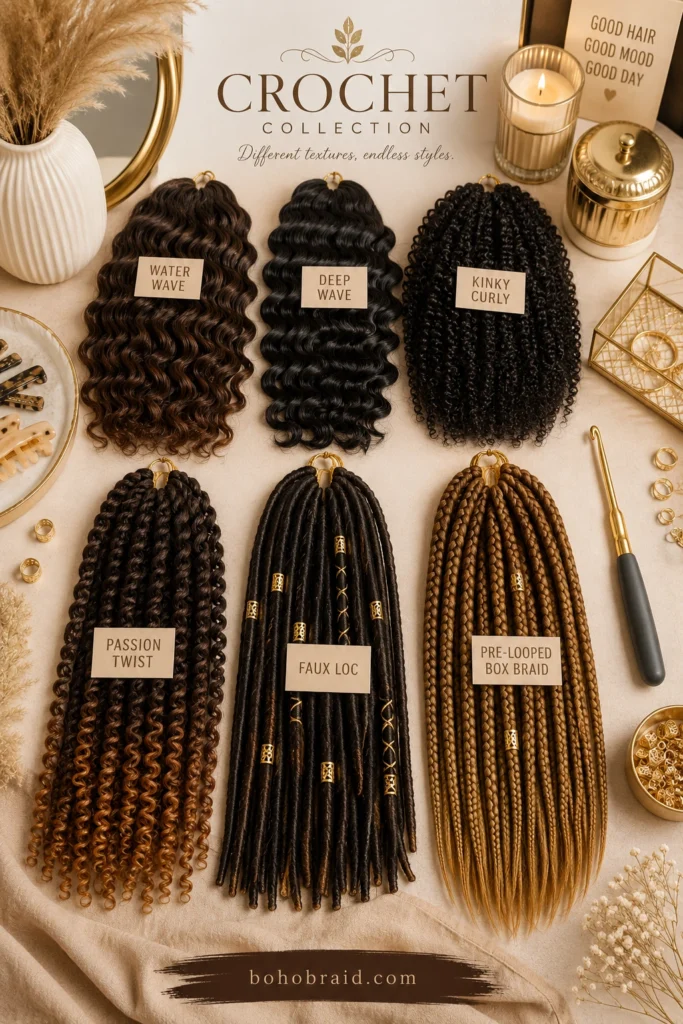
The best crochet hair depends on the style you want to create. Synthetic hair is the most common choice because it is affordable, widely available, and offered in many textures. Human hair can create a more natural look, but it is typically more expensive and may require additional maintenance.
When choosing crochet braiding hair, consider the following factors:
Texture
Choose a texture that matches the desired result. Water wave hair works well for bohemian curls, while pre-looped box braids are ideal for a structured style.
Weight
Heavy hair can place unnecessary tension on the cornrows. Lightweight extensions are more comfortable and may reduce pressure on the scalp.
Length
Long crochet braids create a dramatic appearance but may tangle more easily. Short and medium lengths are often easier to maintain.
Pre-Looped Design
Pre-looped crochet hair can shorten installation time and create more consistent knots.
Hair Quality
Low-quality synthetic hair may tangle, shed, or feel rough. Reading product information and customer feedback can help you choose a more manageable option.
Color
Crochet hair is available in natural black, brown, burgundy, blonde, copper, ombré, and mixed shades. Highlights can add dimension without coloring the natural hair.
The number of hair packs required varies according to the brand, texture, length, and desired fullness. Avoid installing excessive hair because it may create bulk and scalp tension.
10. Trendy Crochet Braid Styling Ideas
Crochet braids can be styled in many ways after installation, provided the cornrow pattern supports the desired look.
Middle-Part Crochet Braids
A clean middle part creates a balanced and elegant appearance. The invisible knot method can make the part look more natural.
Side-Part Crochet Hair
A deep side part adds volume and can create a glamorous, face-framing effect.
Half-Up, Half-Down Style
Gather the top section into a bun or ponytail while leaving the remaining hair loose. This works especially well with curly crochet braids and passion twists.
High Ponytail
Crochet braids can be installed with a cornrow pattern designed for ponytail styling. Lightweight hair is important for reducing tension.
Crochet Bun
Box braids, twists, and faux locs can be gathered into a high or low bun for an elegant finish.
Crochet Braids With Beads
Beads, braid cuffs, rings, and decorative thread can personalize crochet box braids, locs, and twists.
Ombre Crochet Braids
Ombre extensions create a gradual transition from dark roots to lighter ends. Popular combinations include black and brown, black and burgundy, and dark brown with honey blonde.
Layered Crochet Curls
Cutting curly crochet hair into layers adds movement and prevents the style from appearing too bulky.
When styling crochet braids, avoid pulling the hair too tightly. Gentle styling helps preserve the cornrow foundation and protects the hairline.
Conclusion
Crochet braids offer a flexible, attractive, and convenient way to experiment with protective hairstyles. From curly crochet braids and short bobs to faux locs, box braids, twists, and natural textures, the technique can create a wide range of looks without requiring every extension to be braided individually.
A successful crochet style begins with clean, moisturized natural hair, a secure but comfortable cornrow foundation, and lightweight extensions. Proper scalp care, nighttime protection, and gentle styling can help the hairstyle remain neat for several weeks.
Although crochet braids can reduce daily manipulation, they should not replace a healthy natural hair routine. Removing the style on time, detangling carefully, and giving the hair regular moisture and conditioning are essential for maintaining healthy hair between installations.
FAQs
Are crochet braids good for natural hair?
Crochet braids can be good for natural hair when they are installed without excessive tension and maintained properly. They reduce daily manipulation and keep the natural hair braided underneath. However, the scalp and cornrows still need moisture and gentle cleansing.
How long do crochet braids usually last?
Most crochet braids last approximately four to eight weeks. Loose curly textures may require earlier removal, while pre-braided twists, locs, and box braids may stay neat for a longer period.
Can crochet braids damage your hair?
Crochet braids may cause damage if the cornrows are too tight, the extensions are too heavy, or the hairstyle is kept in for too long. Proper installation and timely removal reduce these risks.
How many packs of hair are needed for crochet braids?
The number of packs varies according to the brand, hair length, texture, and desired fullness. Many styles require approximately four to eight packs, but pre-looped or very full styles may require a different amount.
Can you wash crochet braids?
Yes, crochet braids can be washed carefully. Focus on cleansing the scalp and cornrow base with diluted shampoo. Avoid rough scrubbing, and allow the natural hair underneath to dry completely.
