
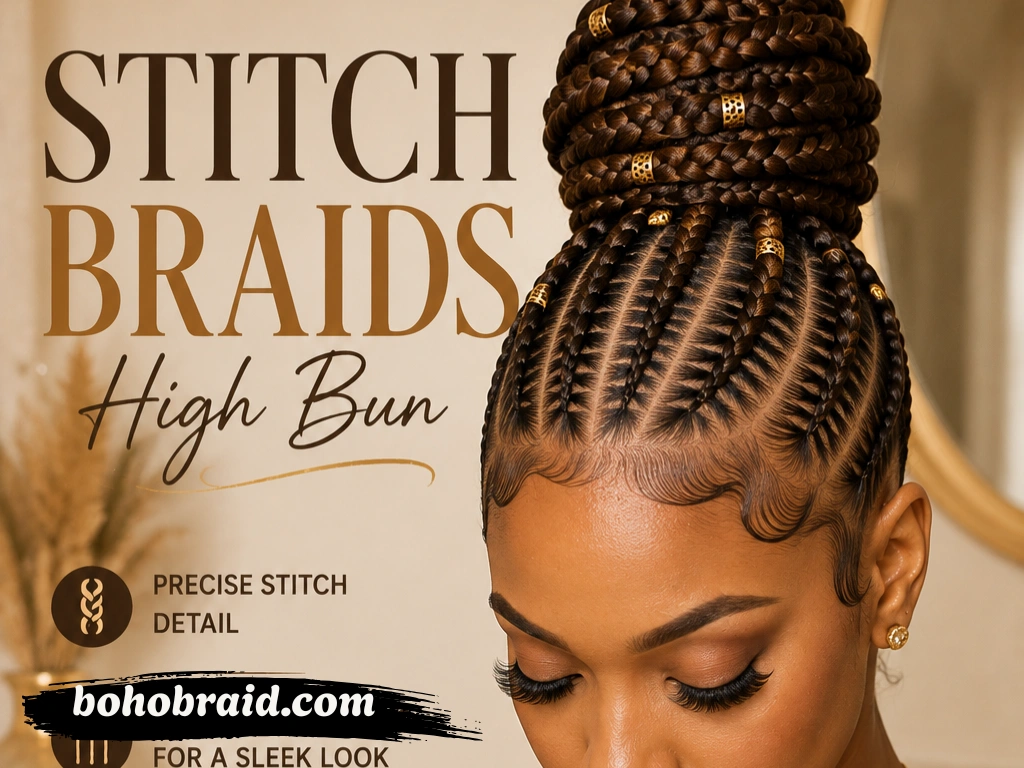
Stitch braids are one of the most polished and eye-catching protective hairstyles for anyone who loves clean parting, defined braid patterns, and versatile styling. Known for their signature “stitched” sections along the scalp, these braids create a structured cornrow effect that can be worn in ponytails, buns, straight-back styles, or creative curved designs.
Stitch braids work beautifully with natural hair and braiding extensions, making them suitable for different lengths, textures, and occasions. Whether you want a simple everyday hairstyle or an intricate salon-inspired look, this guide explores 10 popular stitch braid styles, maintenance tips, styling ideas, and answers to common questions.
1. Classic Straight-Back Stitch Braids
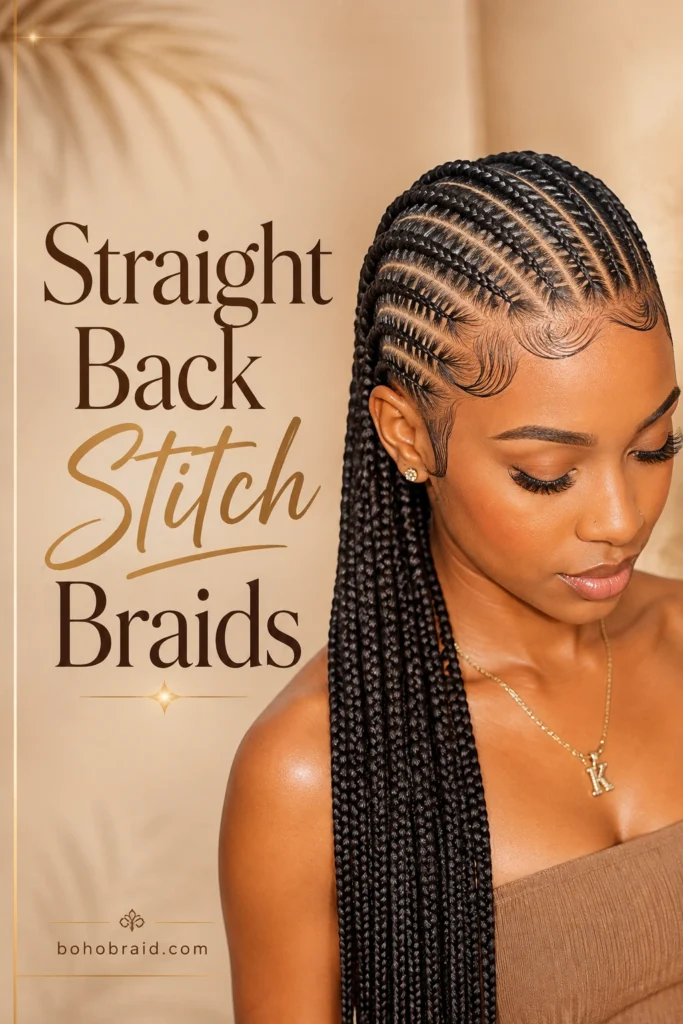
Classic straight-back stitch braids are one of the most recognizable versions of this hairstyle. The hair is divided into precise rows, with small horizontal sections added along each cornrow to create the signature stitched appearance.
This style is especially popular because it looks sleek without requiring complicated patterns. Depending on your preference, you can choose four large braids, six medium braids, or several smaller stitch braids.
Straight-back designs also highlight clean scalp sections, which makes professional braiding technique particularly important.
For a polished finish, stylists often use braiding gel or edge control to create sharp parts before feeding braiding hair into each cornrow.
Classic stitch braids work well for everyday wear, vacations, workouts, and casual events because they keep the hair neatly secured while maintaining a fashionable appearance.
2. Stitch Braids Ponytail
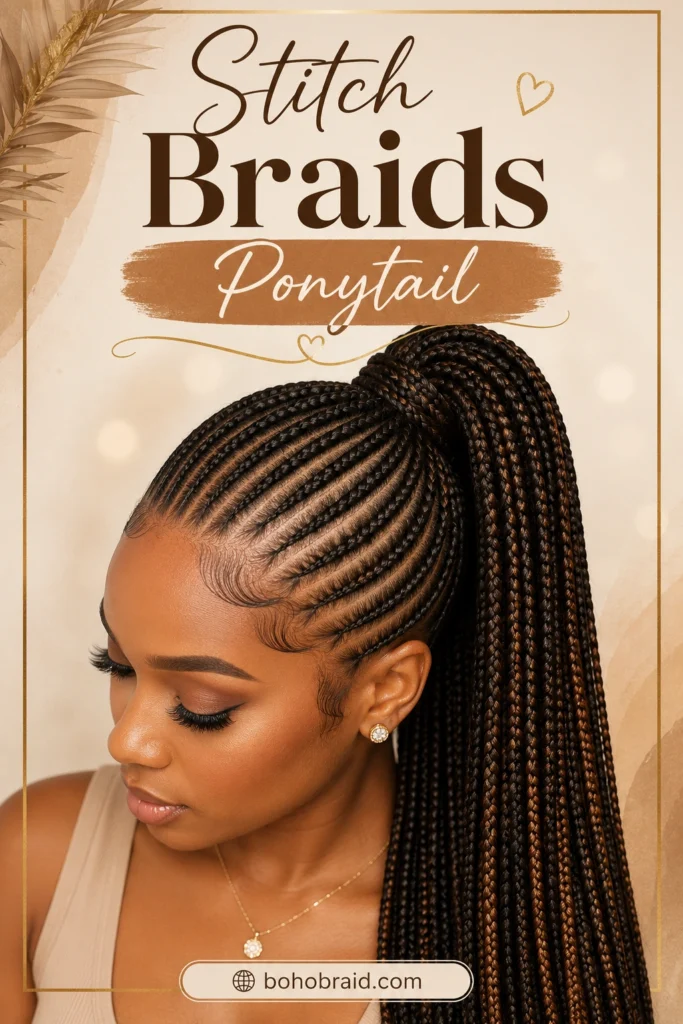
A stitch braids ponytail combines detailed cornrows with a sleek, elevated ponytail for a stylish and practical hairstyle.
Instead of braiding directly toward the back of the head, the cornrows are directed upward toward the crown. They are then gathered into a high or mid-height ponytail.
Long braiding extensions can be added to create dramatic length and movement.
Some women prefer a straight braided ponytail, while others add curls or loose extensions for a softer finish.
The hairstyle works particularly well when you want the structure of cornrows without leaving all the braids hanging down.
For special occasions, the ponytail can also be wrapped with one braid around the base to hide the hair tie and create a cleaner finish.
3. Small Stitch Braids
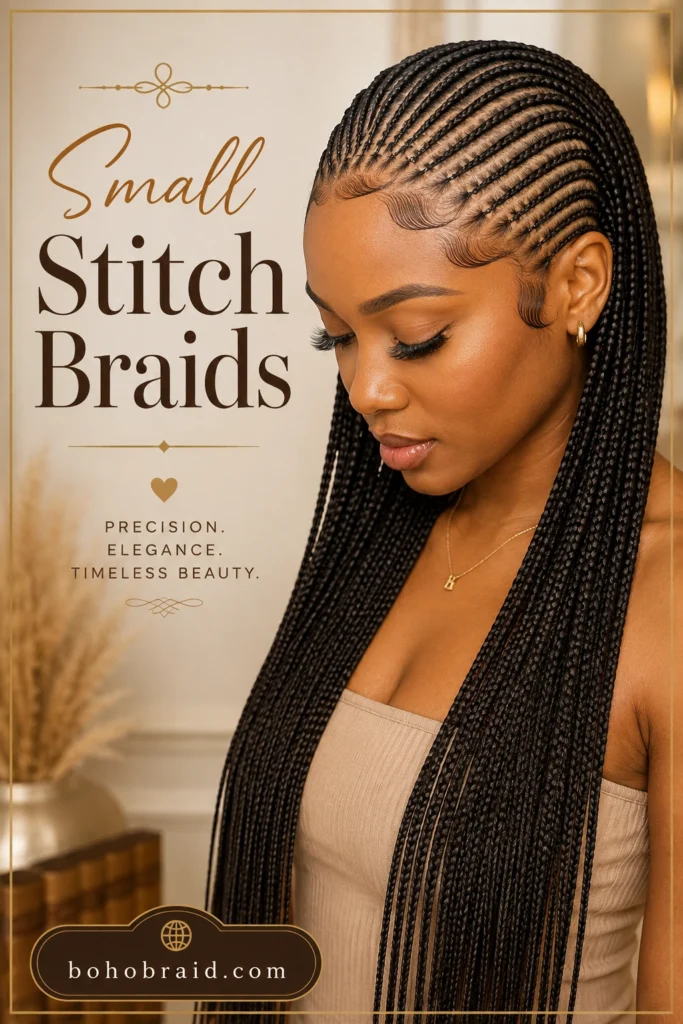
Small stitch braids provide a more detailed and intricate appearance than larger cornrow styles.
Because the braids are thinner, the stylist can create additional rows and more visible stitch sections across the scalp. The result is a highly defined braided hairstyle that can resemble small feed-in cornrows.
Smaller braids can also offer greater styling flexibility. You may wear them straight down, pull them into a ponytail, create a half-up hairstyle, or arrange them into a bun.
However, smaller stitch braids typically take longer to install because of the increased number of sections.
Proper scalp care is also important. Avoid installing the braids too tightly, especially around the hairline, where excessive tension may cause discomfort or unnecessary stress on the edges.
4. Large Stitch Braids
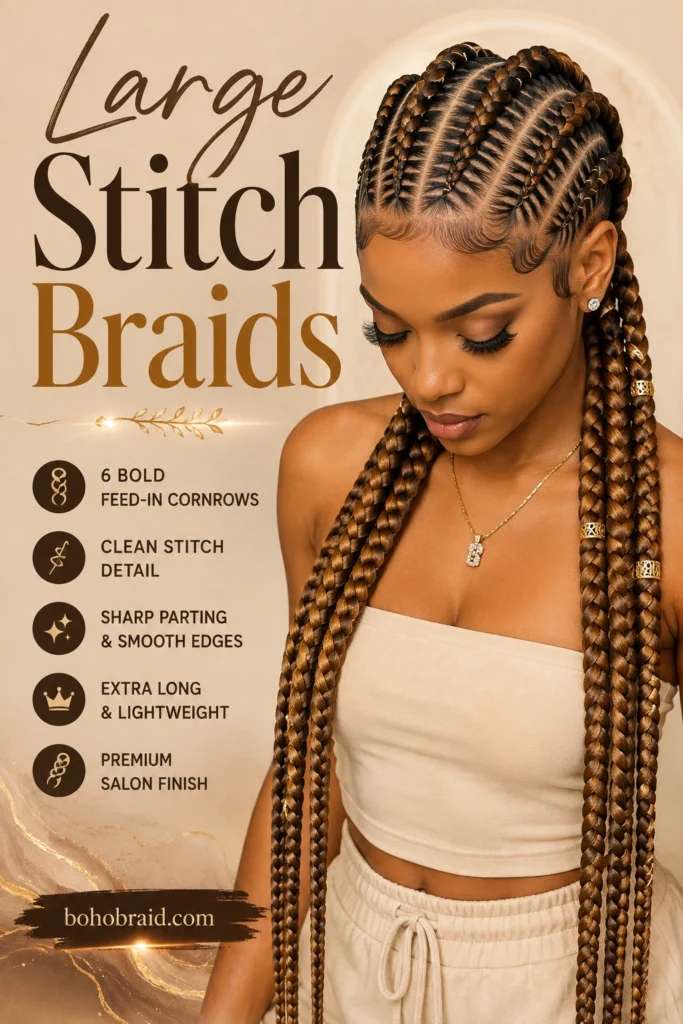
Large stitch braids are ideal for anyone who prefers a bold protective hairstyle with fewer individual cornrows.
Common variations include four, six, or eight large braids running from the front hairline toward the back.
Because the braid sections are wider, the stitched details become very noticeable, creating a strong geometric appearance.
Large stitch braids are often quicker to install than smaller styles, although the exact time depends on hair length, braid complexity, and the amount of extension hair used.
They also work beautifully with long braiding hair, allowing the ends to extend past the waist for a dramatic look.
For a modern finish, consider combining large cornrows with smaller accent braids placed between them.
5. Stitch Braids With Curls
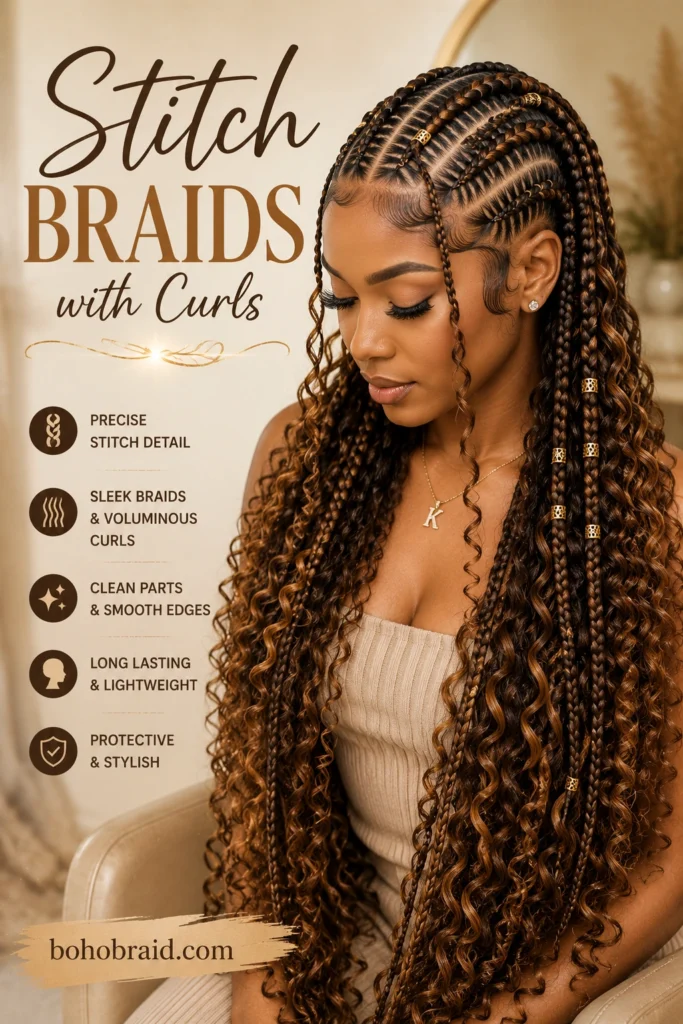
Stitch braids with curls combine the clean structure of cornrows with the softness and movement of curly hair.
The front or upper section of the hairstyle usually features stitch cornrows, while curly extensions are added through the ends, ponytail, or loose sections.
This combination creates a beautiful contrast between precise scalp braiding and flowing curls.
Popular curl textures include loose wave, water wave, deep wave, and spiral curls.
To maintain the curly sections, use lightweight mousse or curl refresher rather than heavy oils that may cause buildup.
Sleeping with a satin bonnet or scarf can also help reduce frizz and preserve the curl pattern.
This style is especially attractive for vacations, parties, summer hairstyles, and special occasions.
6. Stitch Braids Into a Bun
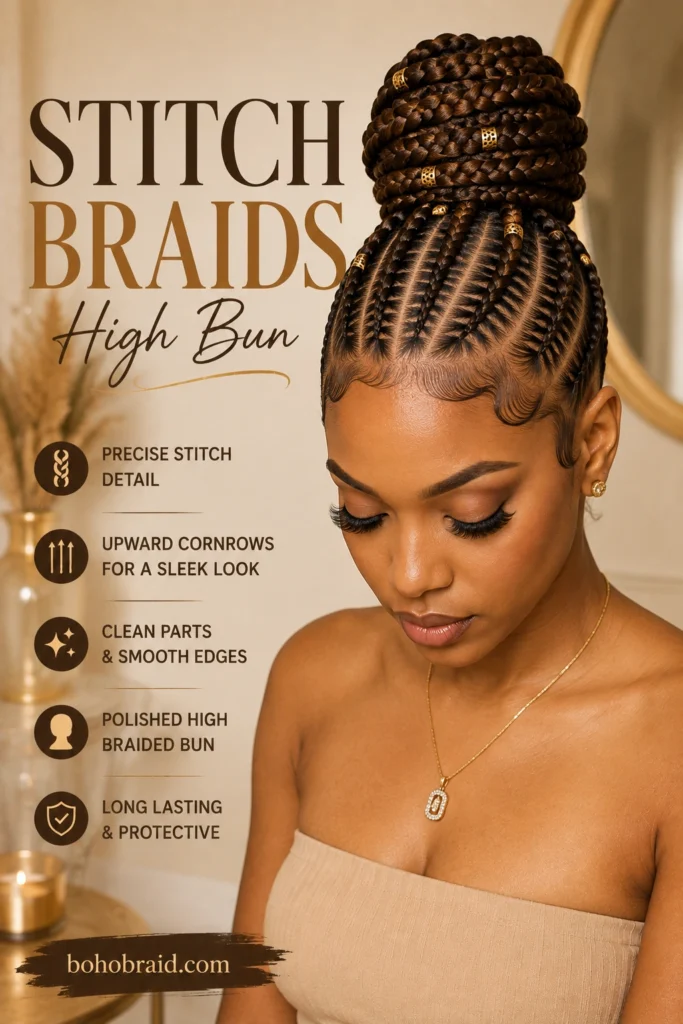
Stitch braids into a bun offer an elegant way to keep braided hair completely off the shoulders.
The cornrows are braided upward or backward toward a central point before being gathered into a high or low bun.
A high braided bun creates a bold, sophisticated appearance, while a low bun offers a softer and more understated look.
You can keep the bun fully braided or combine it with loose curly extensions for extra volume.
This hairstyle works beautifully with statement earrings because the hair remains away from the face and neck.
It can also be a convenient choice for professional environments, formal events, warm weather, or days when you want a secure hairstyle with minimal daily styling.
7. Side-Swept Stitch Braids
Side-swept stitch braids create a fashionable asymmetrical look by directing most of the braids toward one side of the head.
The stitch lines can follow straight, curved, or diagonal patterns depending on the desired design.
This style is especially flattering for people who want something more creative than traditional straight-back cornrows.
Side-swept braids may fall over one shoulder or transition into a side ponytail.
Adding small braids between larger cornrows can make the pattern even more detailed.
Accessories such as braid cuffs or subtle beads may also be added, although keeping decorations lightweight can help prevent unnecessary tension.
The result is a dramatic yet wearable braided hairstyle that works for both casual and dressier occasions.
8. Zig-Zag and Curved Stitch Braids
Creative parting patterns are one of the best ways to make stitch braids stand out.
Instead of creating only straight rows, stylists can incorporate zig-zag parts, curved cornrows, S-shaped patterns, or geometric sections.
These designs emphasize the craftsmanship behind stitch braiding because every section must remain clean and balanced.
Curved stitch braids can also be combined with straight-back cornrows to create contrast.
For example, two curved braids may frame the sides of the head while several straight cornrows continue toward the back.
Intricate designs generally require more installation time, so choosing an experienced braider is particularly helpful when requesting complex patterns.
Bringing reference photos to your appointment can also make it easier to communicate the exact style you want.
9. Stitch Braids With Beads
Beads can transform simple stitch braids into a more decorative hairstyle.
Clear beads create a subtle finish, while wooden, metallic, colorful, or transparent beads can make the hairstyle more noticeable.
Beads are usually attached near the ends of the braids rather than directly against the scalp.
This prevents excessive weight near the roots while still adding personality to the finished hairstyle.
You can decorate every braid or use beads only on selected accent braids.
Gold cuffs are another popular alternative if you prefer metallic accessories instead of traditional beads.
When choosing decorations, lightweight accessories are generally more comfortable for long-term wear and help prevent unnecessary pulling on the hair.
10. Stitch Braids With a Heart Design
Heart-shaped stitch braids have become a creative way to personalize cornrow hairstyles.
The heart pattern is usually created near the temple, side of the head, or back of the scalp using carefully curved parting lines.
The remaining hair can be styled into straight-back braids, a ponytail, or additional curved cornrows.
A heart braid works especially well as an accent rather than covering the entire hairstyle.
Creating a symmetrical heart requires precise sectioning and controlled braiding, so this design is usually best done by an experienced stylist.
The style can be customized further with colored braiding hair, small cuffs, or curly ends.
For anyone looking for a playful but polished braided hairstyle, heart stitch braids offer a distinctive option.
How Long Do Stitch Braids Last?
Stitch braids commonly remain neat for approximately **two to six weeks**, depending on installation technique, braid size, hair growth, lifestyle, and maintenance.
Smaller braids may maintain their shape longer than very large cornrows, although scalp buildup and new growth eventually become visible.
To extend the life of your hairstyle:
- Sleep with a satin or silk scarf.
- Keep the scalp clean.
- Apply lightweight scalp oil when needed.
- Use mousse to smooth occasional frizz.
- Avoid constantly pulling the braids into tight hairstyles.
- Protect the hair when swimming or exercising.
- Avoid excessive product buildup.
Even if the braids still look neat, they should not be kept in indefinitely. Giving your natural hair proper cleansing and conditioning between protective styles is important.
How to Care for Stitch Braids
Good maintenance can help stitch braids stay fresh while supporting scalp comfort.
Start by protecting the braids every night with a satin bonnet or scarf. This minimizes friction from cotton pillowcases and reduces frizz.
When your scalp needs cleansing, apply diluted shampoo carefully between the braid sections before gently rinsing.
Avoid aggressive scratching, which can irritate the scalp or loosen the braids.
A lightweight leave-in spray may be used to add moisture to your natural hair underneath the braids.
If your edges become uncomfortable or excessively tight, do not ignore the tension. Protective hairstyles should feel secure without causing ongoing pain.
Conclusion
Stitch braids combine precision, creativity, and versatility, which explains why they remain such a popular protective hairstyle. From classic straight-back cornrows and large stitch braids to ponytails, buns, curls, heart patterns, and decorative designs, there are countless ways to customize the look.
The best style depends on your hair length, desired braid size, maintenance preferences, and personal aesthetic. Clean sections and careful installation are especially important because the stitched pattern is the main feature of the hairstyle.
With proper scalp care, nighttime protection, and gentle styling, stitch braids can provide a sleek and manageable look while giving your natural hair a break from frequent daily manipulation.
FAQs
What are stitch braids?
Stitch braids are a type of cornrow hairstyle created using clearly defined horizontal sections along each braid. These small sections produce a stitched or segmented appearance across the scalp.
What is the difference between stitch braids and regular cornrows?
Traditional cornrows may be braided continuously without highly visible horizontal sections. Stitch braids emphasize precise parting and repeated sections that create their distinctive stitched pattern.
How long do stitch braids last?
Most stitch braid hairstyles can last around two to six weeks depending on braid size, installation quality, hair growth, and maintenance.
Are stitch braids a protective hairstyle?
They can function as a protective hairstyle because much of the natural hair remains braided and requires less daily manipulation. However, the braids should not be installed excessively tightly.
