
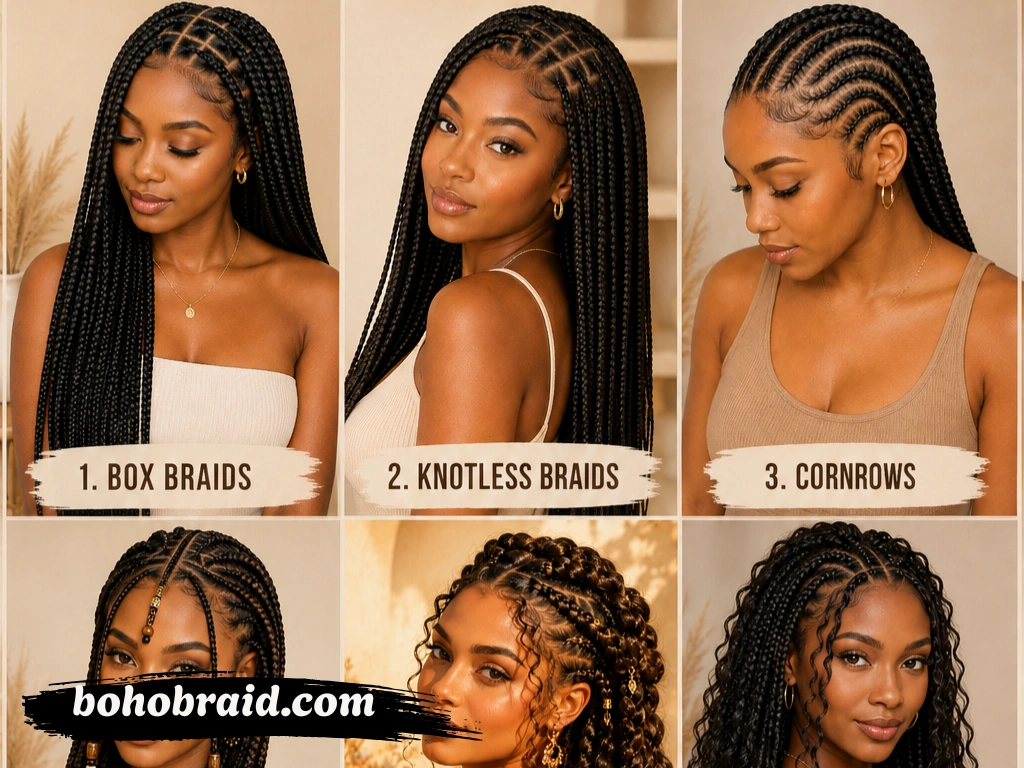
Braids are one of the most timeless, versatile, and protective hairstyles in the world. From simple everyday plaits to detailed protective styles, the different types of braids offer endless options for every hair texture, length, and personal style. Whether you want a low-maintenance look, a cultural hairstyle, a trendy beauty statement, or a protective style that helps reduce daily manipulation, braids can be adapted to fit your needs.
In this guide, you will discover the most popular braid styles, how they look, who they suit best, and how to care for them so your hairstyle stays neat, healthy, and beautiful.
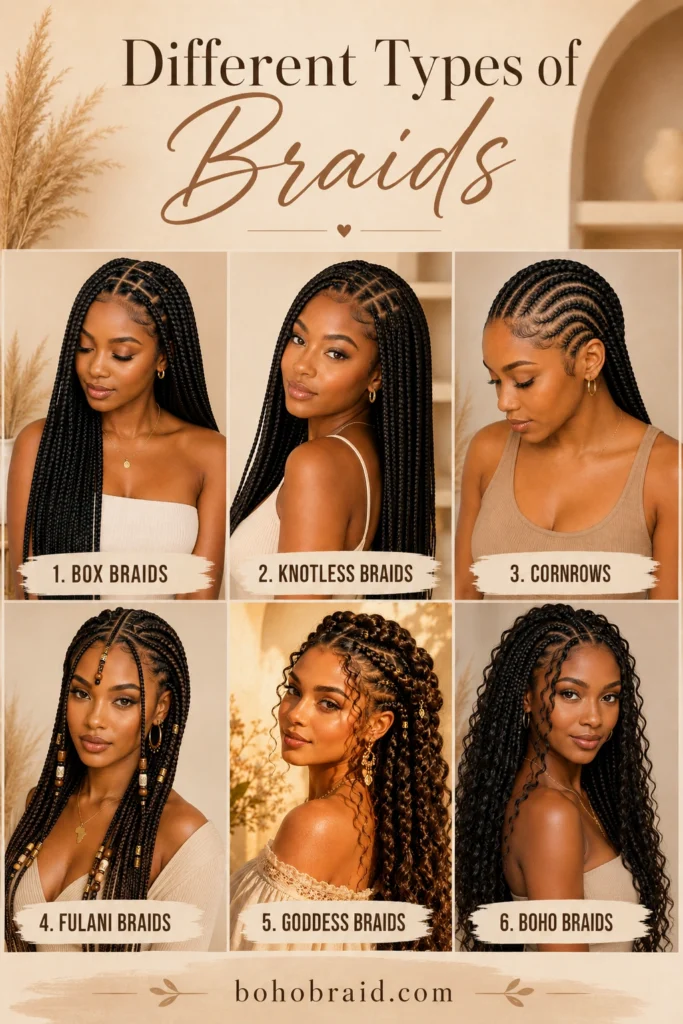
1. Box Braids
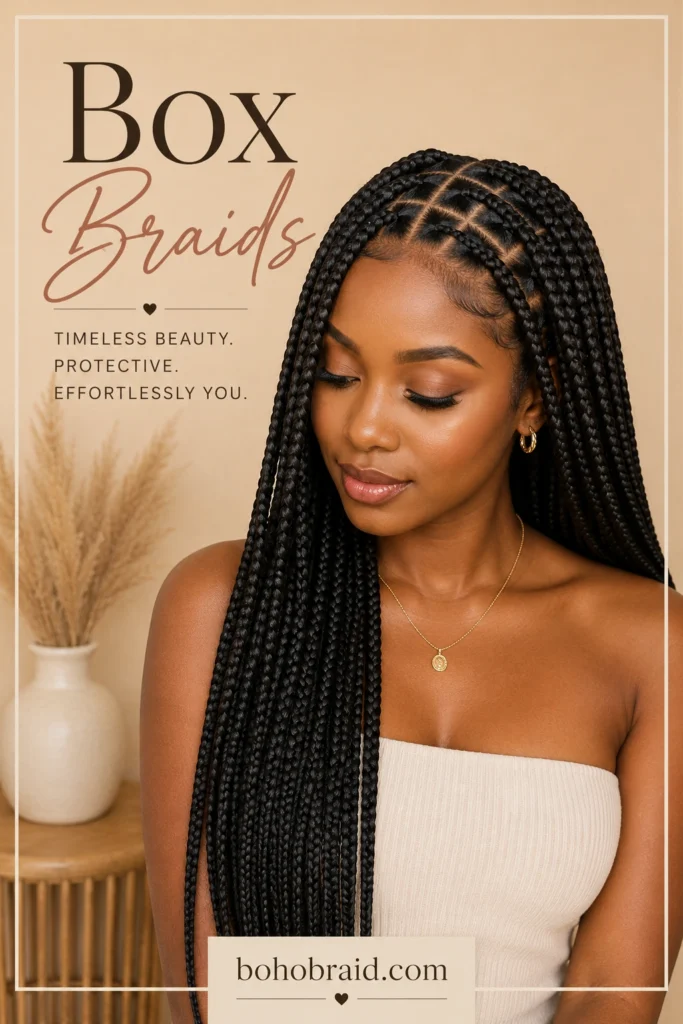
Box braids are one of the most popular types of braids, especially for protective styling. This hairstyle gets its name from the square-shaped parts used to section the hair before each braid is installed. Box braids can be small, medium, large, or jumbo, depending on the desired look and maintenance level.
One of the biggest benefits of box braids is their versatility. You can wear them long, short, in a bob, in a bun, half-up half-down, or styled into a ponytail. They also work well with different hair colors, beads, cuffs, and curly ends.
Box braids are ideal for people who want a long-lasting hairstyle that protects natural hair from daily styling. With proper care, they can last several weeks while still looking fresh and stylish.
2. Knotless Braids
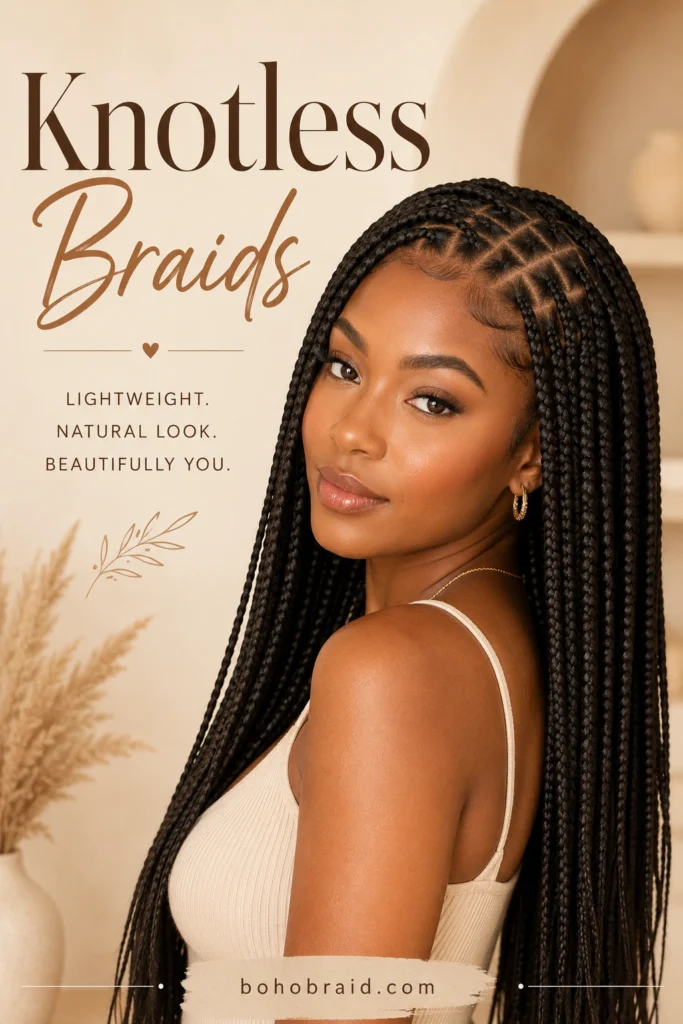
Knotless braids are a modern variation of traditional box braids. Instead of starting the braid with a knot at the scalp, the stylist feeds in extensions gradually. This creates a flatter, more natural-looking braid with less tension on the roots.
Knotless braids are loved because they feel lighter and more comfortable than traditional box braids. They are also a great choice for people with sensitive scalps or anyone who wants a more natural finish.
This braid style can be worn in many sizes, including small knotless braids, medium knotless braids, smedium knotless braids, large knotless braids, and jumbo knotless braids. They are perfect for everyday wear, vacations, and elegant protective styling.
3. Cornrow Braids
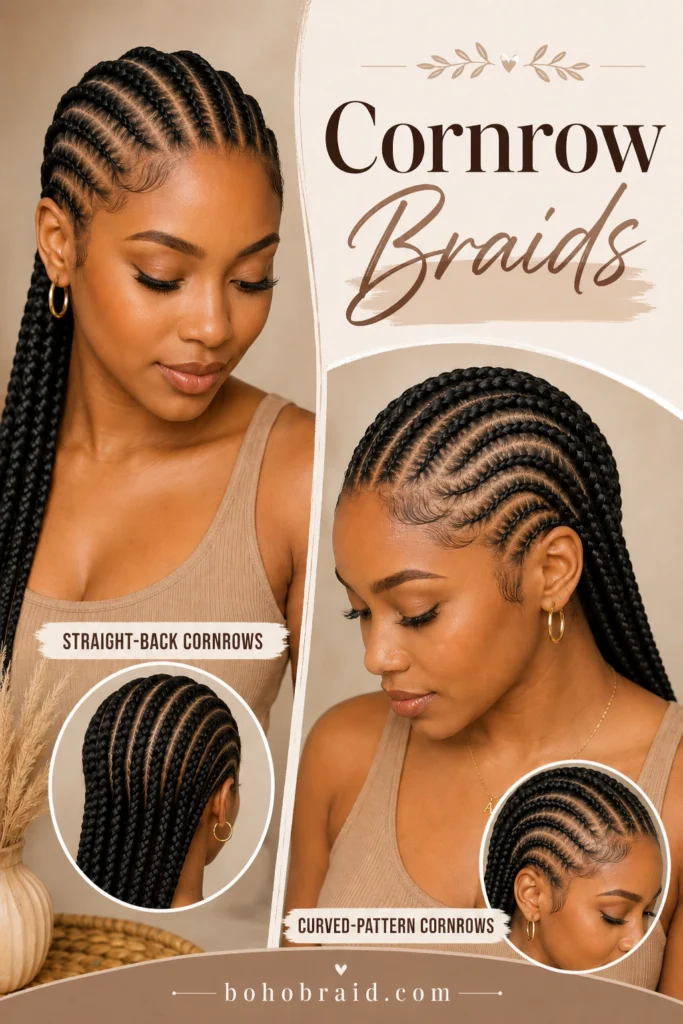
Cornrow braids are classic scalp braids created by braiding the hair close to the scalp in straight, curved, or creative patterns. They are one of the oldest and most culturally significant braided hairstyles, especially in African and African diaspora communities.
Cornrows can be simple and neat or designed with detailed geometric patterns. They can also be combined with extensions for longer length and extra volume. Popular versions include straight-back cornrows, feed-in cornrows, stitch braids, and cornrows with beads.
Cornrows are a great option for anyone who wants a clean, low-maintenance hairstyle. They are also commonly used as a base for wigs, crochet braids, and other protective hairstyles.
4. French Braids
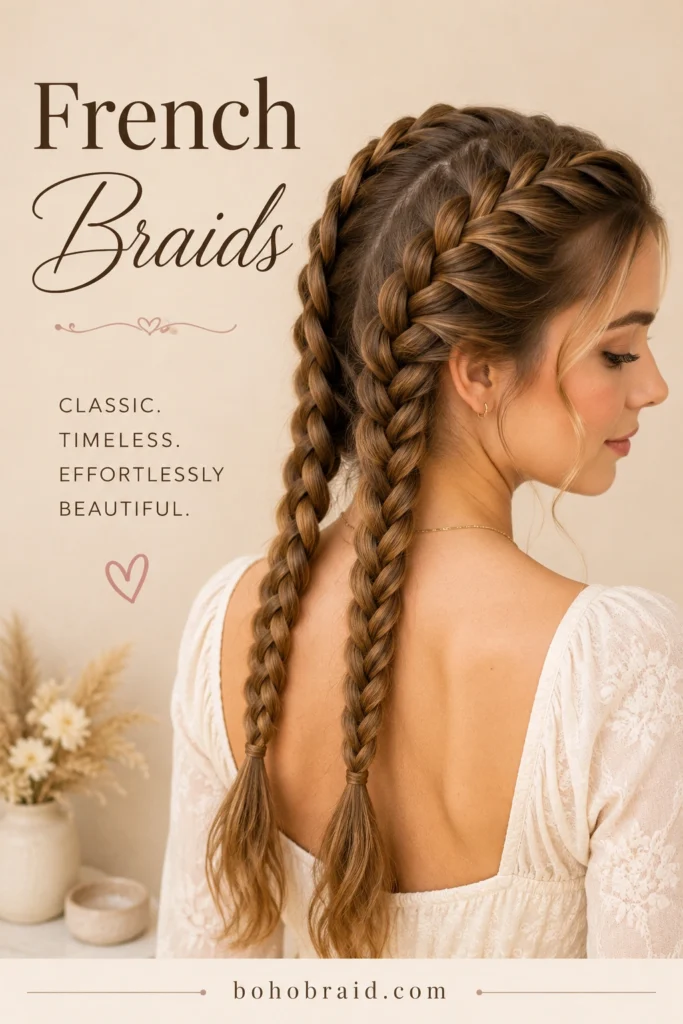
French braids are elegant, classic, and suitable for many occasions. This braid starts near the crown of the head and gradually adds sections of hair as the braid moves downward. The result is a smooth, woven style that stays close to the head.
French braids work well for casual days, workouts, school, weddings, and formal events. They can be worn as one single braid, two French braids, side French braids, or combined with buns and ponytails.
This style is especially useful for keeping hair neat and controlled. It works on straight, wavy, curly, and textured hair, although the final look may vary depending on hair type and thickness.
5. Dutch Braids
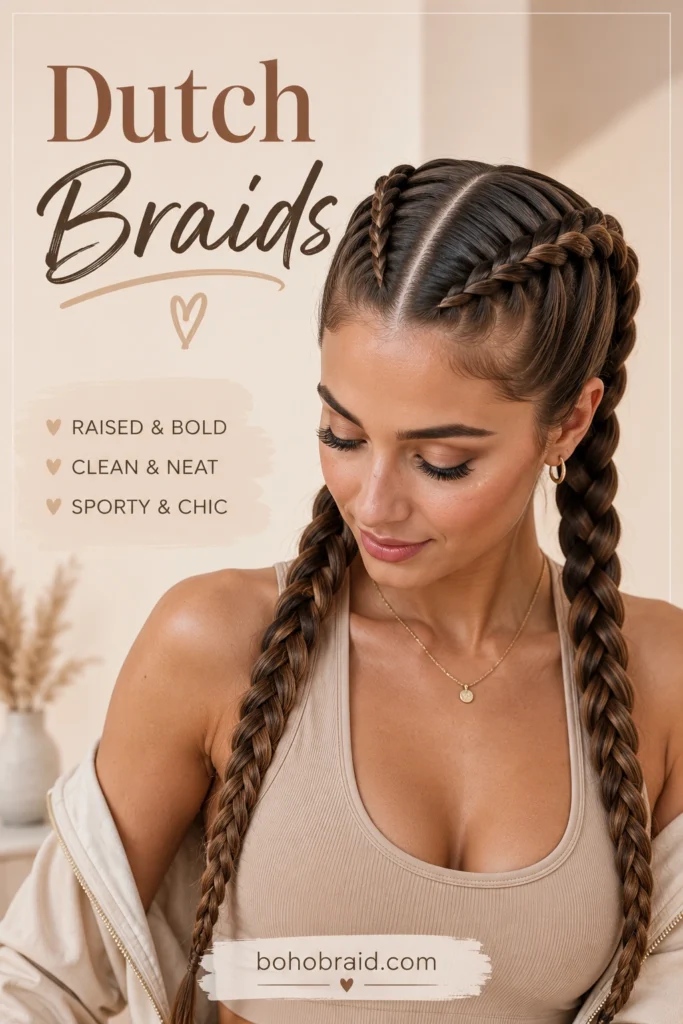
Dutch braids are often called “reverse French braids” because the hair is crossed under instead of over. This technique creates a raised braid that stands out more visibly on the head.
Dutch braids are bold, sporty, and stylish. They are popular for gym hairstyles, festival looks, casual outfits, and protective styling. Many people wear two Dutch braids for a clean and youthful look, while others use Dutch braid details in updos or half-up hairstyles.
This braid style is excellent for adding texture and dimension. It can also be loosened slightly for a fuller, softer appearance.
6. Fulani Braids
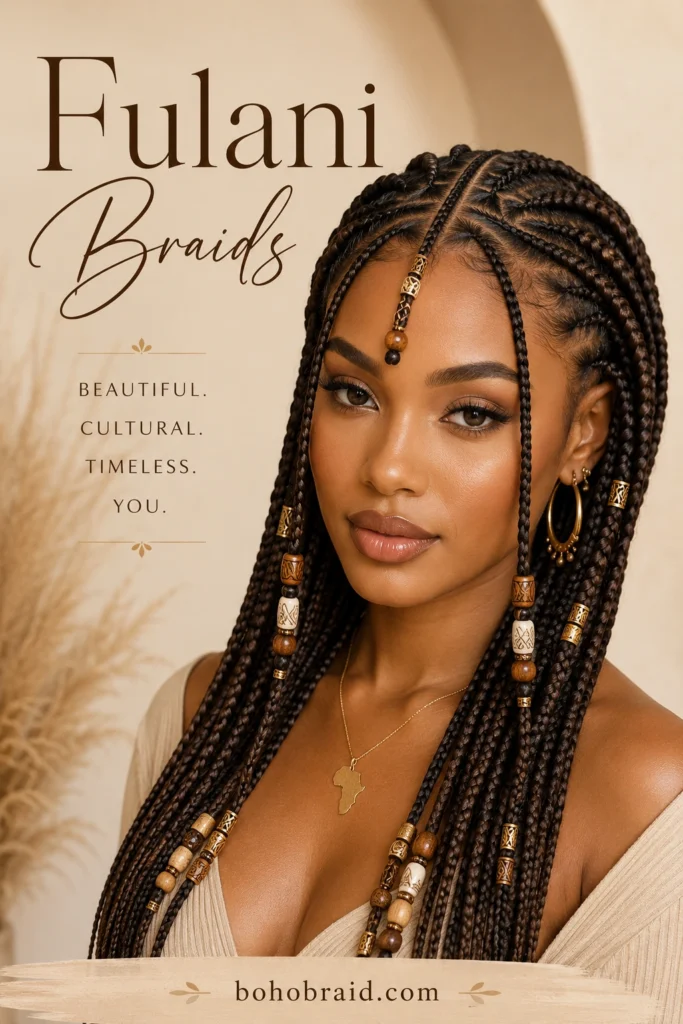
Fulani braids are a beautiful and culturally inspired hairstyle traditionally associated with the Fulani people of West Africa. This style often includes cornrows in the front, a center braid, side braids, beads, cuffs, and sometimes loose braids at the back.
Fulani braids are stylish, feminine, and highly customizable. They can be done with knotless techniques, curly ends, boho details, or colorful extensions. Many people love this look because it blends tradition with modern beauty trends.
This hairstyle is ideal for anyone who wants a statement braid style with personality. Accessories such as wooden beads, gold cuffs, shells, and clear beads can make the look even more eye-catching.
7. Goddess Braids
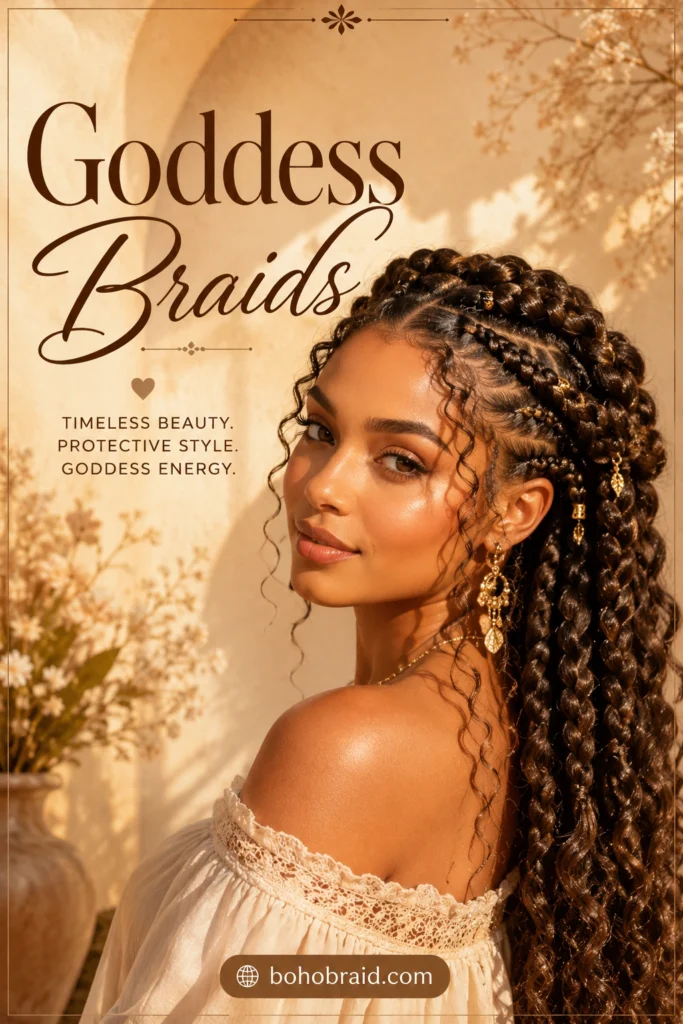
Goddess braids are large, thick braids that create an elegant and regal look. They can be braided close to the scalp like oversized cornrows or styled as long, flowing braids with curly details.
This type of braid is perfect for people who want a bold protective hairstyle without spending too much time in the salon. Because the braids are usually larger, installation can be quicker than smaller braid styles.
Goddess braids are often worn for special occasions, vacations, and everyday glam. They can be styled into buns, ponytails, crowns, or side-swept looks. Adding curls, beads, or gold accessories can make the style look even more luxurious.
8. Boho Braids
Boho braids, also known as bohemian braids, are trendy braids that include loose curly strands throughout the hairstyle. This creates a soft, romantic, and effortless look.
Boho braids are popular because they combine the structure of braids with the softness of curls. They can be created as knotless boho braids, boho box braids, boho Fulani braids, or goddess boho braids.
This style is perfect for people who love a relaxed, feminine hairstyle. However, the curly pieces need extra care to prevent tangling. Using mousse, curl spray, and a satin scarf at night can help maintain the style.
9. Lemonade Braids
Lemonade braids are side-swept cornrow braids that became widely popular after Beyoncé wore a similar style. These braids usually flow to one side, creating a sleek and fashionable look.
Lemonade braids can be thin, medium, large, long, short, simple, or highly detailed. Some versions include heart-shaped parts, zigzag designs, beads, or colored extensions.
This braid style is perfect for people who want a confident and stylish look. It is also a good option for protective styling because the hair is braided close to the scalp and requires minimal daily styling.
10. Crochet Braids
Crochet braids are a protective hairstyle where extensions are attached to cornrowed natural hair using a crochet needle. Unlike traditional individual braids, crochet styles can be installed faster and offer many texture options.
With crochet braids, you can achieve braided looks, curly styles, faux locs, twists, wavy hair, or afro-textured hairstyles. This makes crochet braids one of the most flexible protective styling methods.
They are a great choice for anyone who wants volume, length, and style without spending many hours in the chair. Crochet braids are also easier to remove than some traditional braid styles when done correctly.
How to Choose the Best Type of Braids for You
Choosing from the different types of braids depends on your hair goals, lifestyle, scalp sensitivity, and preferred look. If you want a lightweight and natural style, knotless braids may be the best choice. If you prefer a classic protective style, box braids are always a reliable option. For a clean and low-maintenance look, cornrows or stitch braids may work well.
If you love trendy and feminine hairstyles, boho braids, goddess braids, and Fulani braids are beautiful choices. For quick installation and versatility, crochet braids can be an excellent alternative.
Before getting braids, consider your hair health. Avoid styles that feel too tight, and always choose a stylist who understands proper tension and scalp care.
Tips to Maintain Braids
Proper braid maintenance helps your hairstyle last longer and protects your natural hair underneath. Keep your scalp clean by using a gentle scalp cleanser or diluted shampoo when needed. Moisturize your scalp and natural hair with lightweight oils or braid sprays.
At night, cover your braids with a satin scarf or bonnet to reduce frizz. You can also sleep on a satin pillowcase for extra protection. Avoid pulling your braids into tight ponytails every day because this can create tension around the edges.
For curly braid styles such as boho braids and goddess braids, apply mousse to refresh the curls and separate tangles carefully with your fingers.
Conclusion
The different types of braids offer something for everyone, from classic box braids and cornrows to modern knotless braids, boho braids, Fulani braids, and crochet styles. Each braid type has its own beauty, purpose, and maintenance needs.
Whether you want a simple everyday hairstyle, a protective style for natural hair, or a bold look for a special occasion, braids give you endless creative possibilities. The key is to choose a braid style that matches your lifestyle, protects your hair, and makes you feel confident.
FAQs
What are the most popular types of braids?
The most popular types of braids include box braids, knotless braids, cornrows, French braids, Dutch braids, Fulani braids, goddess braids, boho braids, lemonade braids, and crochet braids.
Which braids last the longest?
Box braids, knotless braids, cornrows, and crochet braids can last several weeks with proper care. The exact time depends on hair type, braid size, scalp care, and how well the style is maintained.
Are knotless braids better than box braids?
Knotless braids are often more comfortable because they create less tension on the scalp. Traditional box braids may feel more secure for some people, but knotless braids usually look more natural and lightweight.
What type of braids are best for natural hair?
Protective braid styles such as box braids, knotless braids, cornrows, Fulani braids, goddess braids, and crochet braids are great for natural hair when installed properly and not too tightly.
How long should I keep braids in my hair?
Most braid styles should be kept for about 4 to 8 weeks. Keeping braids in too long can lead to buildup, tangling, dryness, or breakage.
How do I stop braids from getting frizzy?
To reduce frizz, sleep with a satin bonnet or scarf, avoid excessive touching, apply mousse when needed, and keep your scalp moisturized. Neat nighttime care is one of the best ways to keep braids fresh.
Can braids damage your hair?
Braids can damage hair if they are installed too tightly, kept in too long, or removed roughly. When done correctly, braids can be a healthy protective hairstyle.
What braids are best for beginners?
French braids, Dutch braids, simple three-strand braids, and basic cornrows are good styles for beginners to learn. For salon styles, medium box braids and knotless braids are beginner-friendly options for everyday wear.
