
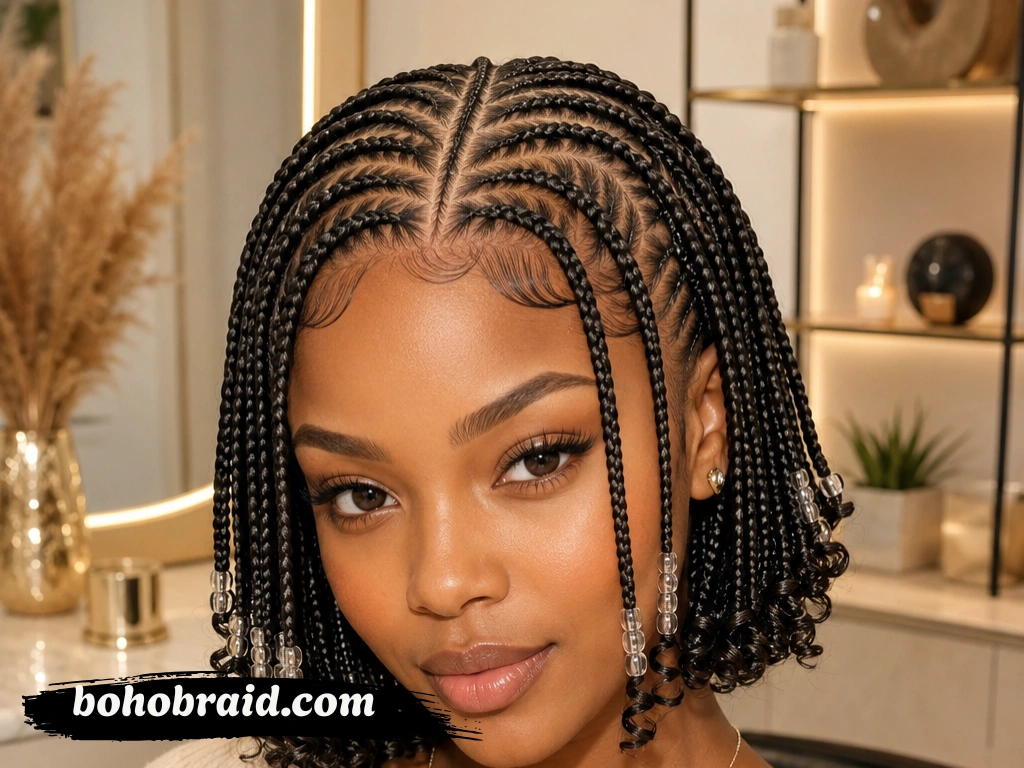
Fulani braids are one of the most recognizable and versatile protective hairstyles. Known for their detailed cornrow patterns, face-framing braids, beads, cuffs, and creative center parts, these braids combine cultural heritage with modern beauty trends. They can be worn long or short, simple or highly decorated, making them suitable for everyday wear, vacations, weddings, festivals, and special occasions.
Today, hairstylists continue to reinterpret traditional Fulani-inspired patterns with knotless braids, curls, colored extensions, ponytails, and decorative accessories. Whether you prefer a classic braided look or a softer bohemian finish, there is a style for nearly every hair length, face shape, and personal aesthetic.
In this guide, you will discover the most popular Fulani braid styles, how long they last, how to care for them, and what to consider before your salon appointment.
1. What Are Fulani Braids?
Fulani braids are a braided hairstyle inspired by the traditional hair designs worn by Fulani women across West Africa and the Sahel region. The style usually includes cornrows braided close to the scalp, one or more central braids, and individual braids positioned around the sides of the head.
Traditional Fulani hairstyles may also feature beads, coins, shells, rings, or other ornaments. Modern versions often combine these signature elements with contemporary techniques such as feed-in braids, knotless braids, curly ends, and braided ponytails.
Common characteristics of Fulani braids include:
- A center cornrow or braided middle part
- Side cornrows directed toward the back or temples
- Face-framing individual braids
- Beads, cuffs, rings, or shells
- Long braided extensions
- Symmetrical or geometric scalp patterns
Although every version does not include all these details, the distinctive combination of cornrows and loose individual braids helps separate Fulani styles from standard box braids or simple straight-back cornrows.
2. Classic Fulani Braids
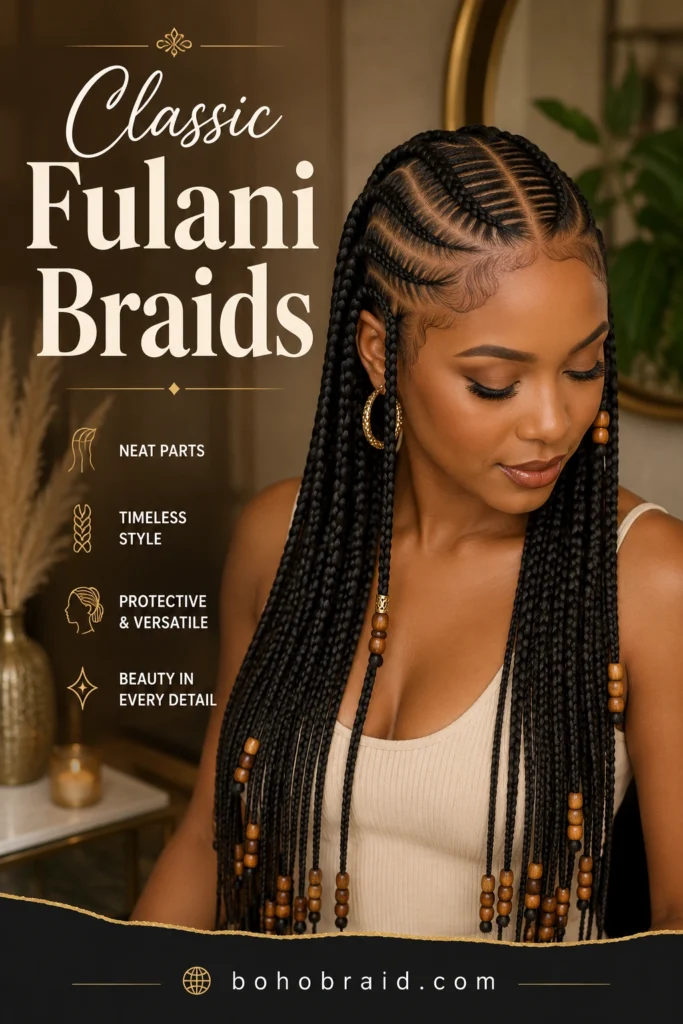
Classic Fulani braids are ideal for anyone who appreciates neat, structured hairstyles with traditional-inspired details. This version usually includes a prominent cornrow running through the center of the scalp, several smaller side cornrows, and long individual braids falling around the shoulders or back.
The face-framing braids are often decorated with wooden beads, clear beads, metallic cuffs, or rings. These accessories highlight the shape of the hairstyle and add movement around the face.
Classic Fulani braids work especially well in natural black, dark brown, or warm brown shades. The result feels polished without losing the cultural character that makes the hairstyle unique.
To create a balanced finish, ask your braider for:
- Evenly sized cornrows
- Clean scalp parting
- Lightweight braid extensions
- Two or more face-framing braids
- Beads placed securely at the ends
This style can be worn down, tied into a low ponytail, or gathered into a half-up hairstyle.
3. Fulani Braids With Beads
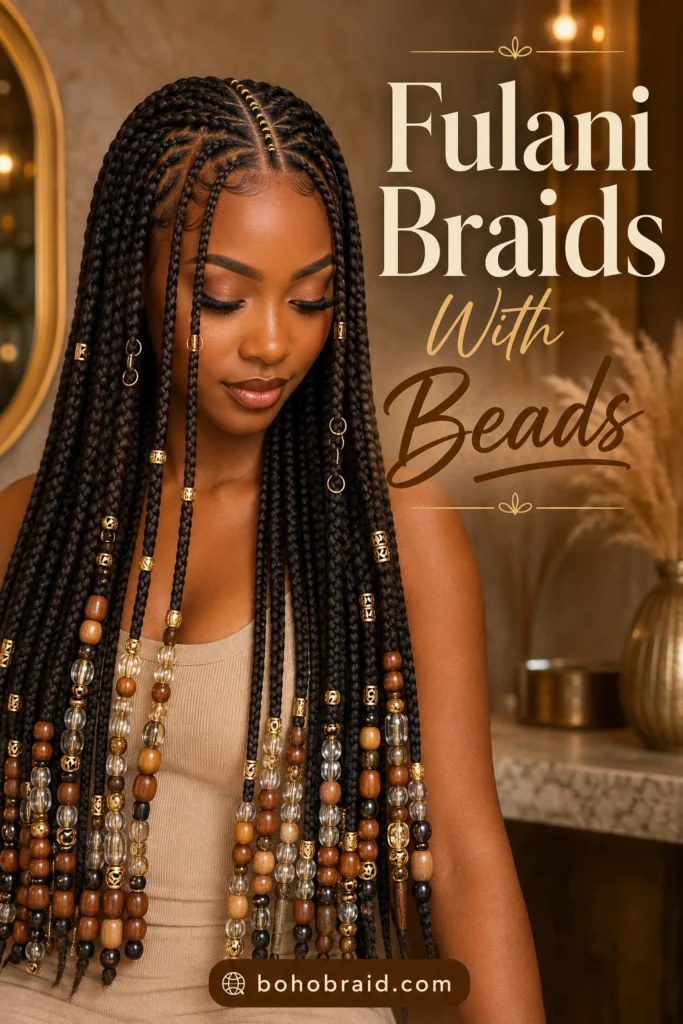
Fulani braids with beads are among the most popular variations because decorative accessories are a defining feature of the style. Beads can transform a simple braid pattern into a personalized and visually striking hairstyle.
Wooden beads create a natural, earthy appearance, while clear beads offer a clean and modern finish. Gold cuffs and metallic rings add elegance, making the braids suitable for formal occasions or evening events. Colorful beads are a playful option for summer, festivals, holidays, and younger wearers.
Popular accessory combinations include:
- Wooden beads with dark brown braids
- Clear beads with black braiding hair
- Gold cuffs with honey-brown highlights
- White beads with blonde extensions
- Mixed metallic rings with long braids
- Colorful beads on short Fulani braids
Avoid adding too many heavy beads to fine or fragile hair. Lightweight decorations are usually more comfortable and may reduce unnecessary pulling on the roots.
For a polished result, distribute the beads across the face-framing braids and selected braid ends instead of decorating every braid.
4. Fulani Braids With Curls
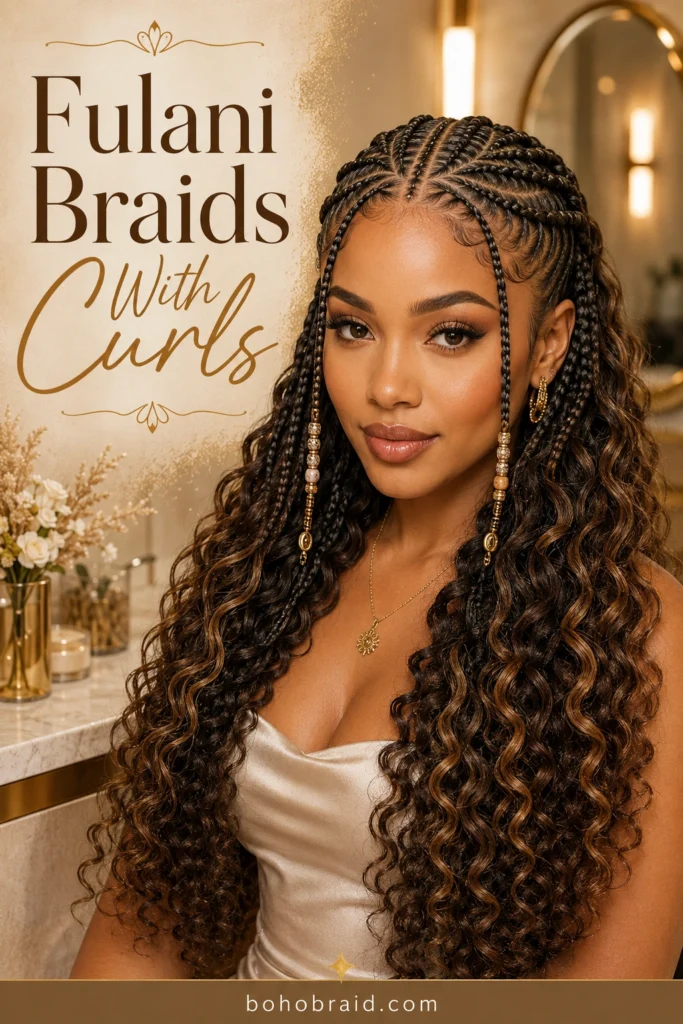
Fulani braids with curls combine structured cornrows with soft, romantic texture. The top and front sections remain neatly braided, while loose curls are added throughout the length or concentrated at the ends.
This style is sometimes described as Fulani goddess braids or Fulani boho braids. It offers a softer alternative to fully braided hairstyles and creates more volume and movement.
Curly pieces may be created with synthetic water-wave hair or human hair extensions. Synthetic curls are generally more affordable, while human hair can provide a more natural appearance and greater styling flexibility.
Popular curly variations include:
- Long Fulani braids with curly ends
- Short Fulani braids with loose waves
- Fulani knotless braids with bohemian curls
- Shoulder-length braids with deep-wave pieces
- Half-up Fulani braids with face-framing curls
Curly extensions require additional maintenance because loose hair can tangle or lose definition. Apply a lightweight mousse and separate the curls gently with your fingers instead of brushing them aggressively.
Sleeping with a satin bonnet can also help preserve the curls and reduce friction.
5. Fulani Knotless Braids
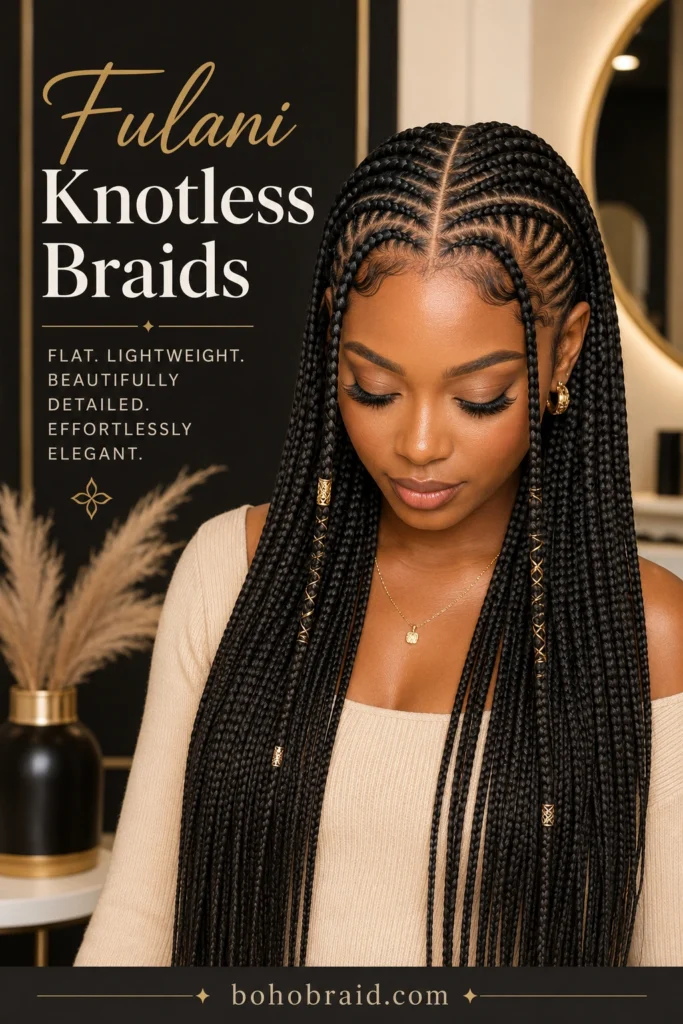
Fulani knotless braids blend traditional-inspired cornrow patterns with the lightweight appearance of knotless box braids. Instead of creating a visible knot at the root, the braider gradually feeds extension hair into the natural hair.
This technique can produce a flatter and more flexible finish. Many people find knotless braids easier to style during the first few days because the roots may feel less bulky than traditional extensions.
Fulani knotless styles may include:
- Small knotless braids with a center cornrow
- Medium braids with side patterns
- Long knotless braids with beads
- Knotless Fulani braids with curls
- Half-up knotless Fulani hairstyles
The installation process may take several hours, particularly when the braids are small or the scalp pattern is detailed. Bring reference photos to your appointment so your braider can understand the size, length, parting design, and accessories you want.
Knotless installation should still feel secure, but it should not create painful tension around the hairline.
6. Short Fulani Braids
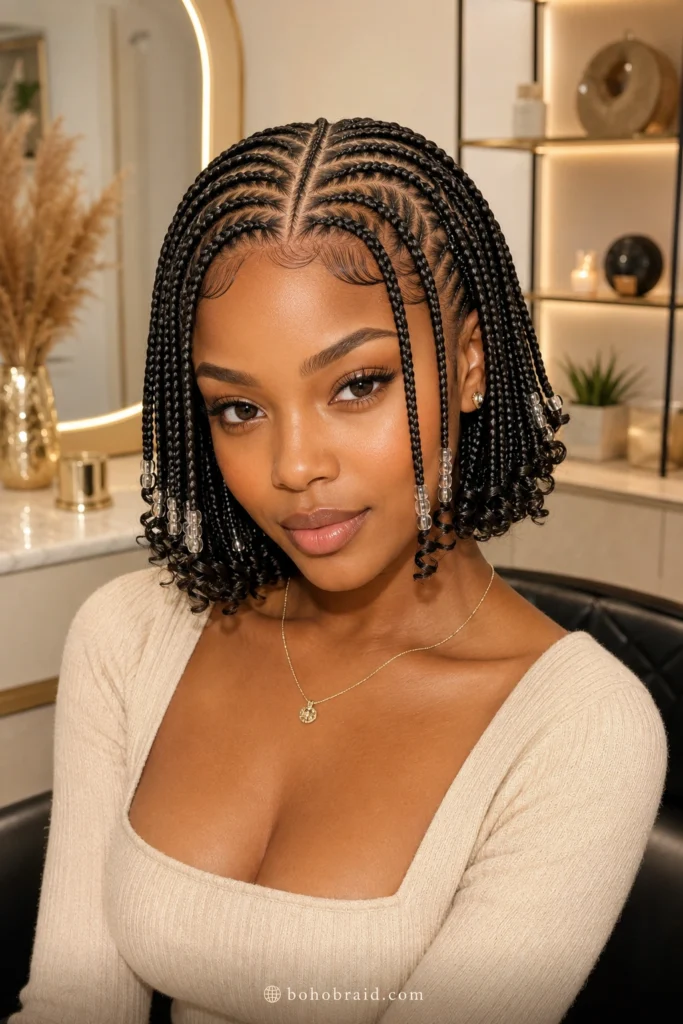
Short Fulani braids are stylish, manageable, and often lighter than waist-length extensions. They may fall near the chin, shoulders, or collarbone, depending on the desired look.
A short braided bob can create a modern silhouette while preserving the signature center braids, side cornrows, and decorative details associated with Fulani-inspired styling.
Short styles are especially attractive with:
- Curled or flipped ends
- Clear beads
- Wooden accessories
- Gold braid cuffs
- Side-swept cornrows
- A precise center part
Because there is less extension hair, short braids may be easier to wash, sleep in, and style. They can also reduce the heaviness sometimes associated with very long protective hairstyles.
For a fuller bob, choose medium-sized braids. Small braids create more movement and styling versatility, but they usually require a longer installation time.
7. Long Fulani Braids
Long Fulani braids create a dramatic, elegant look that highlights the full braid pattern. Lengths may range from mid-back to waist-length or even longer.
This style looks particularly beautiful when combined with symmetrical cornrows, smooth edges, subtle highlights, or carefully placed beads. Long braids can be worn down to showcase their movement or arranged into multiple hairstyles.
Styling options include:
- A high braided ponytail
- A low ponytail
- A large braided bun
- A half-up, half-down style
- Side-swept braids
- A loose crown-style arrangement
Before choosing extra-long extensions, consider the total weight of the hairstyle. Very thick or heavy braids can place unnecessary pressure on the scalp. A skilled braider can use lightweight extension hair and controlled section sizes to create length without excessive bulk.
At night, gather the braids loosely and cover them with a long satin bonnet or scarf.
8. Fulani Braids Ponytail Styles
A Fulani braids ponytail combines detailed scalp braiding with a practical, lifted finish. The front cornrows are directed toward the crown or back of the head, where the braids are gathered into a high, mid-height, or low ponytail.
This style keeps the braids away from the face while still displaying the decorative parting. It is suitable for warm weather, active days, travel, and formal events.
Popular Fulani ponytail ideas include:
- High ponytail with gold cuffs
- Low ponytail with curly ends
- Side ponytail with beads
- Half-up ponytail with loose braids
- Braided bun with two face-framing braids
- Jumbo Fulani ponytail
Avoid tying the ponytail too tightly every day. Repeated tension in the same area can make the scalp uncomfortable and may put pressure on the hairline.
Use a wide fabric hair tie or a few of the braids to wrap and secure the ponytail gently.
9. Fulani Braids Color Ideas
Color can completely change the appearance of Fulani braids. Natural black remains a timeless choice, but brown, blonde, burgundy, copper, and ombré extensions can add depth and personality.
Popular Fulani braid colors include:
- Jet black
- Natural black
- Chocolate brown
- Honey brown
- Caramel blonde
- Copper brown
- Burgundy
- Blonde and brown ombré
- Black with blonde highlights
- Mixed brown shades
For a subtle transformation, add color only to selected individual braids or curly pieces. This creates dimension without overwhelming the cornrow pattern.
Bold shades such as red, blue, purple, or pink can be added as accent braids for festivals or creative seasonal looks.
When choosing a color, consider your undertone, wardrobe, workplace, and maintenance preferences. Darker shades may show buildup less quickly, while very light extensions may require more careful product application.
10. How to Maintain Fulani Braids
Proper maintenance can help Fulani braids remain neat, comfortable, and attractive for several weeks. The exact routine will depend on your scalp, braid size, hair type, activity level, and whether the style includes loose curls.
Protect Your Braids at Night
Cover your hair with a satin or silk scarf before sleeping. A bonnet can protect the lengths, while a scarf helps keep the cornrows and hairline smooth.
Keep the Scalp Clean
Use a diluted shampoo or scalp-cleansing product to remove sweat, dirt, and excess oil. Apply it carefully between the parts and rinse thoroughly.
Avoid scratching the scalp with sharp nails or tools, as this may irritate the skin.
Moisturize Your Natural Hair
Apply a lightweight braid spray or water-based leave-in product to the scalp and natural hair. Heavy oils and thick creams may create buildup between the cornrows.
Refresh With Mousse
A small amount of styling mousse can smooth flyaways and improve the appearance of older braids. Wrap the hair with a scarf for several minutes after applying the mousse.
Care for Loose Curls
Detangle curly pieces gently with your fingers. Add a small amount of curl mousse or leave-in conditioner when needed. Avoid applying too much product, which can make the curls sticky or heavy.
Protect the Hairline
Do not repeatedly pull the braids into tight ponytails. If a braid feels painful, excessively tight, or unusually heavy, speak with your stylist rather than waiting for the discomfort to disappear.
Remove the Braids on Time
Keeping the style installed for too long may lead to buildup, tangling, and difficulty during removal. Take your time when undoing each braid and detangle the natural hair carefully before washing.
How Long Do Fulani Braids Last?
Fulani braids commonly last around four to six weeks, although some styles may remain wearable for a shorter or longer period. Smaller braids and well-maintained cornrows may stay neat longer than large or heavily curled versions.
Longevity depends on:
- The quality of the installation
- The braid size
- Hair growth rate
- Scalp oil production
- Exercise and sweating
- Nighttime protection
- Washing frequency
- The amount of loose curly hair
The front and side braids may begin to look loose before the rest of the style because these areas experience more movement. Some people choose to have the hairline or face-framing braids professionally refreshed.
The hairstyle should be removed earlier if there is persistent pain, excessive buildup, severe tangling, or visible strain around the roots.
How Much Do Fulani Braids Cost?
The cost of Fulani braids varies based on location, stylist experience, braid size, length, pattern complexity, and whether extension hair is included.
Small, waist-length braids with detailed cornrows usually cost more than short or medium-sized styles because they require additional time and materials. Curls, beads, special colors, and custom parting may also increase the price.
Before booking, ask your braider:
- Whether braiding hair is included
- What type of hair you should purchase
- How long the appointment will take
- Whether beads and accessories cost extra
- Whether hair preparation is included
- What maintenance products are recommended
A lower price does not always represent better value. Clean parting, controlled tension, secure braiding, and professional sanitation are important considerations when selecting a stylist.
Conclusion
Fulani braids are a beautiful combination of cultural influence, detailed craftsmanship, and modern styling flexibility. Their signature cornrows, face-framing braids, beads, cuffs, and creative patterns make them easy to personalize.
You can choose classic Fulani braids for a traditional-inspired finish, add curls for softness, select knotless braids for a flatter appearance, or experiment with ponytails, short bobs, bold colors, and decorative accessories.
The best results come from thoughtful preparation, an experienced braider, lightweight extensions, and consistent aftercare. By protecting the style at night, keeping the scalp clean, and avoiding excessive tension, you can enjoy a polished protective hairstyle while caring for your natural hair.
FAQs
Are Fulani braids a protective hairstyle?
Fulani braids can function as a protective hairstyle because much of the natural hair is braided and requires limited daily manipulation. However, the braids should be installed without excessive tension and maintained correctly.
How long do Fulani braids usually last?
Most Fulani braid styles last approximately four to six weeks. Small braids may remain neat longer, while styles with loose curls may require more frequent refreshing.
Can Fulani braids be done on short natural hair?
Yes, Fulani braids can often be installed on short natural hair if there is enough length for the braider to grip safely. The required length may vary according to the stylist and chosen technique.
What hair is best for Fulani braids?
Pre-stretched braiding hair is commonly used for the braided sections. Water-wave synthetic hair or human hair may be added when creating Fulani braids with curls.
Can I wash Fulani braids?
Yes. Clean the scalp carefully with diluted shampoo or a braid-friendly cleansing product. Rinse thoroughly and allow the braids to dry completely to prevent odor and buildup.
